Ender vs. Katniss: Let the Games Begin

Ender Wiggen vs. Katniss Everdeen

When I recently read Ender’s Game, I really wanted to root for him. He is the protagonist, after all! And so many people seem to really idolize him and the book. But perhaps he’s a creation of his time: we have a lot more YA heroes to look up to now!

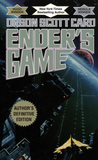
In that spirit, here’s a head-to-head comparison of Ender Wiggen in Ender’s Game with Katniss Everdeen in The Hunger Games.*
*Note: Just to make it fair, and because I’ve only read one of Orson Scott Card’s books, we’ll hold this to JUST the first book in each series. Also, this is books only.
Name Ender Wiggen Katniss Everdeen
Problem: Problem—Picked as a child to defeat the alien bugger race, because adults say so Has to fight to the death in an arena, because adults say so
Special Talent Being smart Skill with a Bow&Arrow
Character Flaws Accidentally harming others Being generally unlikeable
Age 6-13 16
Setting Future Earth/The Battle School/space Future United States (in the form of Panem)/The Arena
Parents Essentially check out of his life forever. Father deceased; mother mentally absent.
Sister Valentine Prim
Younger Friend Bean Rue
Semi-Friendly Adult Tutor Colonel Graff Haymitch
Adult Who Kinda Cares Mazer Rackem Effie Trinket
“Friends” Alai, Petra, Dink, Shen, Bean Peeta, Rue, Gale, Cinna
People to Fight All the other kids Almost all the other kids, except Rue and Peeta
The Twist Despite thinking he’s been in training, Ender has actually been fighting the buggers…and defeated them. Katniss exploits the system of the Hunger Games to keep, for the first time, two players alive, by defying The Capitol and risking her own life.

Who Wins?

Honestly, when I was reading Ender’s Game, I figured I’d do a post like this, and the “twist ending” would be that Katniss and Ender would instead decide they are so similar that they should just be BFFs, and together they would take down the adults.

But then… the end of Ender’s Game. Ender just keeps letting himself be manipulated, even when he’s an old man! He never really seems to act on his own, in that whole book, so I can only assume that if Ender Wiggen were placed in the Hunger Games with Peeta in that final pivotal moment, he would have killed Peeta because the Gamemakers said so and then felt sad about it.

If placed in Ender’s circumstances, I feel like Katniss would constantly try to rebel against the teachers at Battle School, and would ultimately lead a student rebellion, leading to peace with the distant bugger race.

For that reason, in a direct one-to-one contest, I’ve gotta give it squarely to Katniss Everdeen.

What do you think? Who’s the stronger protagonist?
9 Comments

Filed under Reading

Review: Ender’s Game

Ender's Game (The Ender Quintet, #1)Ender’s Game by Orson Scott Card

My rating: 3 of 5 stars

Ender’s Game is one of those books that everyone just assumes you read in school as assigned reading, then they look shocked when they discover you hadn’t. Well, now I have.

It’s an interesting science-fiction book, and definitely would be classified as “young adult” now. The story–in case you also are late to the party–is about Ender Wiggen, a genius-level boy who is selected by mysterious government men to join the Battle School. These men are entrusted with the care of many such excellent children, with the goal of training them to be perfect soldiers, and, in Ender’s case, the perfect commander, in the human fight against the alien buggers. Because of this, Ender is subjected to trial after trial, both interpersonal as well as intellectual. He is isolated and suffers much. Meanwhile, back at home, his also-genius and somewhat sociopathic siblings Valentine and Peter concoct their own schemes to meddle in Earth politics and gain power…even as children.

The book really shines in the zero-G/null gravity tactical battles, which, according to the preface written by author Orson Scott Card, was what started the whole thing anyway. Card tackles the challenges of combat–distance and hand-to-hand–in three dimensions, adding challenges we just won’t face on Earth (hopefully). It’s easy to see why directors thought this would make a great movie; these scenes are vivid and enthralling.

Otherwise, I found the story a little far-fetched. Ender a super-duper genius at just 6? He certainly doesn’t have interactions like a 6-year-old. I’ll accede that possibly he could be really smart and particularly verbal and accept the language as it is, but even super-geniuses need a certain level of human companionship. I also don’t know that I ever fully bought into the validity of the scheme of isolation to produce leadership, that having no friends was explicitly what was going to make Ender a good leader. Which is one of the main conceits of the book…

Card notes in his preface that, when the book was first published, he received angry letters from parents who claimed no gifted child would talk like that. I’m not sure I see anything that seems totally out of the realm of possibility…not just for gifted children, but for any children. Kids can be sadistic bastards, yo. (And I think we as a culture may have gotten over that squeamishness some, at least in fiction, with Harry Potter and Katniss Everdeen, among many others, being highly cogent.)

I love the space stuff, but don’t particularly love the overall message and themes of this book. Perhaps I’m too old to really appreciate the tortured-youth of it; the adults just seem like unforgivable assholes to me.

The ending–the final ending, after the buggers have been defeated–felt so horribly tacked-on and unformed that it really took a lot away from the book for me. It felt like Card desperately wanted a happy ending for this character he unduly tortured but didn’t know how to get there, so slapped together 20 pages of falderal so he can write sequels. While I’m glad I finally read this book, I don’t think I’ll be pursuing the others.

Card’s highly controversial/offensive personal views–he is an active Mormon and has been outspoken about his disgust toward homosexuality, and has been a generous donor to anti-gay marriage folks–is interesting. I bought this book second-hand because I don’t support his views personally and therefore didn’t want extra money going to him, and perhaps that made it top-of-mind for me…but for all that he was anti-homosexuality, his book could very easily be read as including it in a positive way. It’s something the reader would have to bring to the book, so to speak, but there’s an awful lot of male nudity (I wish I’d kept tabs on how often the word “naked” was used!) and there’s a fight scene in a shower featuring highly lathered and soapy naked teenage boys. There are barely two female characters in the whole book; it’s not a huge leap. Worth thinking about, anyway.

(Related: I found it interesting/odd that religion is apparently gone from this Earth at the beginning of the book–banned, it seems–except that Jews are held in high regard, and by the end Ender has inadvertently created a religion? That seemed inconsistent.)

View all my reviews

Leave a comment

Filed under Reading, Reviews

Authors, Stop Your Blogging

It’s that time of year where everything is fresh and cold and you think, “yes, this time I shall do it! Really!”
Well, authors, allow me to help you strike something off your list of intended resolutions: forget about blogging.
Maybe it seems disingenuous for me–who has had this blog for over two years, with two posts minimum a week–to say that. But I’m just trying to keep you from the treacherous path I was put on. (Save yourselves!)
When I started this blog, it was partially because I liked the habit of it and wanted a place to say things. But it was ALSO because everyone at the time, via other blogs, how-to-get-published books, authors on Twitter, and people I met at conferences, everyone said a blog was essential for a writer wanting to be published.
Why? To “gain a following” and “demonstrate your niche.”
Frankly, that honestly isn’t that good a reason to start a blog. So I’m going to talk you out of it.
Reasons You Should Not Blog
1. It’s hard. Particularly if you’re the kind of person who is frequently setting resolutions and then abandoning them. The number one thing about a blog is consistency: posting regularly, preferably about your niche subject matter. And that, honestly, is hard to do. Ostensibly this blog was supposed to be focused on finding the audience who would be into choose-your-own-adventure zombie novels for adults. I don’t know about you, but I have limited interest and motivation in spending all my time coming up with CYOA/zombie posts.
2. You can’t let up. You’ve got to write stuff all the time. Something big happening at work? You can’t stop blogging. Got married and left the country for more than a week? Better work extra hard so you have posts happen while you’re not there. Having a bad day? Suck it up, cupcake, and write another blog post.
It’s like resolving to go to the gym, every week. Ok, sure; you can probably do it for awhile, but eventually, it’s going to get hard…then what?
3. No one wants to read your stories. I know, I know; you want to disregard this because people WILL want to read your stories when they discover how BRILLIANT you are. Maybe so. It’s certainly happened before. But a lot more aspiring authors put out works that a) they’d rather sell for money rather than giving it away for free or b) aren’t really finished or polished yet. You just shoot yourself in the foot with the first and you can lose credibility with the second. By and large, people who are browsing stuff online are looking for something to help them–why should they want to help you?
4. You’d rather work on the stuff you want to get formally published. If you don’t want to blog…don’t blog! You’ll have more time and more creative energy for the stuff you really want to work on.
5. It won’t get you a platform/audience. Admittedly, it has happened sometimes. But from what I can see, the authors for whom blogging created a platform already had things published.* Rather than being a place to gather a prospective audience, the blog becomes a place for the existing audience to congregate. That’s a big difference. *Exception: Food blogs. Man, I’ve seen more food blogs become cookbooks than anything else. That seems to be a recipe for success (har har). However, that’s also a ridiculously crowded marketplace, so you have to really stand out.
Now, if you still want to blog after all that…go ahead. It can be fun. It can be nice to communicate with other authors, to push the boundaries of your abilities, to have physical proof that you’ve been doing something productive. Just don’t believe a lot of the notions put out there as “must dos.”
The worst thing you could do, really, is to start a blog… and then peter out, leaving it to die on the vine, forgotten but still ranking high on Google for your pen name. So if you start a blog and decide it’s not working as you wish, be sure to close it out, too.
Good luck in 2015.

Leave a comment

Filed under Publishing, writing

2014 Year in Books

I like to use Goodreads.com to catalog what I’ve read (and to write reviews for all of them). Sometimes I forget what I’ve read or wanted to read, and it’s a great app. This year, just like last, I participated in a self-appointed reading challenge: 30 books by the end of the year. I managed to get to 33. But as a bonus, all the books I read just in 2014 are in one neat little list.
Here are the stats:
Books read: 33
Graphic novels: 8*
Male authors: 14
Female authors: 13
Most-read author (page/word count): Margaret Atwood
Most-read author (titles): Gail Simone (5)
Genres: Fantasy, Non-fiction; Horror; Science-Fiction; Chick Lit, Literary; Graphic Novels; Mystery
Most common genre: Fantasy (12 titles)
Books by Genre: 
2014 books by genre
Favorite Book: The Song of Achilles, Madeline Miller
Most-Hated Book: Sick Puppy, Carl Hiasson
Comics read as single-issues (and therefore didn’t count as a “book” in Goodreads): SagaBlack Widow, Bitch Planet, She-Hulk, Star Wars, Sandman prequel
*The graphic novel count is tough: I didn’t input all the single issues I read (they seemed too short to count as full “books”) and the collection of all the issues of Transmetropolitan counted as 1 book…but would have otherwise been 10. As such, Warren Ellis also gets recognition as a most-read author (10 graphic novels in one collected book).
What does your Year in Books look like? Any surprises?

Leave a comment

Filed under Reading

Fisherman Jack

My grandfather recently passed away, quite suddenly and unexpectedly. I’ve had trouble expressing my feelings about it. But I did write this, in honor of him.


Fisherman Jack

There once was a man who liked to fish. He’d sit on the pier with a rod and a reel and coax silvery fish up out of the water. He’d stand hip-deep in frothy streams and fool whiskered, muddy fish with clever lures and intricate flicks of the wrist. By boat, he explored dark wallows and mysterious shadowed rivers. Jack was a man who liked to fish.

He took his sons out with him to the water and taught them the ways, the lines and the tricks. With his first son he traveled in a small dingy, the water rocking them along the river’s rocky bottom, so close beneath them. Jack taught his eldest son to sit quietly, to watch for the dark shadows. They baited hooks with writhing worms pulled from rich-smelling dirt and brought in crappie, bass, and brown trout. As they carried home their haul, Jack smiled and said, “That sure was a good day’s fishing, but I think there may be better.”

Later Jack took his second son out. Together they waded deep into chilly mountain waters. They arched their lines out overhead, landing lures lightly on the water’s shining surface. Jack showed his second son how to move the line, skipping like a fly. After a long day’s contest, they brought home their trout, walleye, and salmon, proud as could be. With a smile, Jack said, “That was a good day’s fishing, but I’ve heard there is better yet.”

With his third son, Jack took out the trawler loaded with gizmos, all the latest. He let the lad steer and showed him how the equipment found the fish in their shadowed depths. Together they drew the fish out of the murky dark and into the clear light of their shining, wonderful boat. Laden with fish, Jack smiled and said, “That was a good day’s catch, but I hear there’s one better. I’ll fish it, one day.”

The years wore on, and still Jack fished. He explored raging rivers and clear still waters; he plucked giants from backwood streams and sunk his line in ocean swells. He tried the great Mississippi and hiked through Yosemite. He stood under the big skies in Montana and on the muddy banks of Lake Pontchartrain. Everywhere he fished, he smiled and said, “There’s better yet to come.”

Jack’s visits to the water slowed as time ticked by. He taught his grandchildren how to bait his hooks and cast the reel; he was as pleased to scoop a minnow as a meal. He’d smile and say, “There’s yet one more I’ve yet to fish. The time is coming soon that I’ll try it.”

He hugged his dear wife and said goodbye to his sons as he packed his rod and reel. With a smile, Jack said, “I’m goin’ fishing, oh Lord. I know the way now.” He leaned back and let fly his hook, up up into that great big blue above. The hook caught, and Jack wound the reel. He fought as best he could, making it a fair challenge, pulling down against the upward tug, but knew this was his big catch. Up he went, caught by the Fisher of men, reeled just like those fish he’d caught through the years.

But Jack was not troubled. Elated, he grinned as he went up, pulled gently along. “Hallelujah,” he said, “I’m the best catch of all!”


1 Comment

Filed under Short Stories, writing

The Sound of the Season: Christmas Word Choices

The holiday season is rife with a particular vocabulary we don’t hear very often. Some of the words are “classic” (read: archaic) and evoke a reminiscence of a time that…well, maybe didn’t exist. The words we choose paint a particular picture of what Christmas means:
  • most wonderful
  • merry and bright
  • glistening
  • winter wonderland
  • babe in a manger
  • holy night
  • yon virgin
  • boughs of holly, gay apparel, Yuletide
  • newborn King
  • droll little mouth was drawn up like a bow
“Jingle Bells” even features the delightful term “upsot.”
We use these terms mostly because it’s traditional and because we’re singing some of the same carols, reading the same stories, we’ve enjoyed for hundreds of years–or at least since Charles Dickens made Christmas fashionable again.
But the way we talk about something has a profound effect on how we feel, too. Winter is often a rather bleak time; to recast it as “glistening” and “wonderful” can help us actually make it wonderful…or at least make you feel less crappy that it’s been four days since you’ve seen the son.
I got to thinking about the words we use at Christmastime for two wildly different reasons.
The first: The Turtle Creek Chorale’s performance of their song “PC Christmas.”
The Turtle Creek Chorale is a really great men’s choir here in Dallas; my husband surprised me with tickets. They’re a group of about 150 men who put on a performance of great humor and good cheer–no, really. (Interesting: all the men in the choir are gay. They made some jokes in that direction in the show, too.)
But the song that most struck me was “PC Christmas”: a song/show about Mabel (a man in fantastic drag), the harried and well-meaning HR director of the imaginary “Pegasus Corporation.” Mabel just wants to put on a Christmas party, but at every turn she is met with complainers who want their celebration to be represented at the official party. Hapless Mabel assures, via monologued emails, employees that the party will feature “traditional”…and secular Christmas songs….and Hanukkah songs….and a song for Kwanzaa… and at least one song celebrating the Moon Goddess…. until the whole shebang collapses in on itself and Mabel gives up.
It’s funny because it’s true: while Christmas is far and away the main event in Dallas (Fun fact: the sad and revealing book “Tinsel” was written from Frisco, Texas, just outside of Dallas), the intense and loud celebration thereof can be exclusionary, annoying, snobby, and basically rude to those who don’t celebrate.
That’s how we get all this nastiness over the well-intended phrase “Happy Holidays.”
—-
Number two reason I’ve been thinking about words:
My church decided to “mix things up” this Christmas: in lieu of a weekly sermon, has decided to do monologues from different Biblical “characters.”
Now, before this rant goes any further, let me be clear: I think this is a great way to breathe new life into an old and familiar story, to get some more people involved.
Except it’s been awful. I missed Joseph and the shepherd while traveling, but I managed to catch Elizabeth (Mary’s cousin, mother of John the Baptist) and “Martha” (the utterly fictional, not-in-the-Bible wife of the innkeeper).
Both of these women’s “stories” had an intense focus on pregnancy. Elizabeth on the great difficulty of being infertile and how happy she was to finally be pregnant; Martha on meeting Mary while she was super-pregnant and assisting all night with the birth.
In general, we use a lot of euphemistic and positive terms for pregnancy: “bun in the oven”; “bundle of joy”; “special delivery”, etc. We take this even farther for the miraculous pregnancies in this part of the Bible–maybe because the details are practically nonexistent, maybe because being the mother of God probably oughta come with some perks like an easy delivery.
For whatever reason, the scriptwriter for this series, however, decided to through out all those comfortable euphemisms, opting instead of explicit medical terms.
I’ll spare you, but let it be known that I never again want to hear about how the midwife “felt between her legs to feel the baby’s head” or Mary’s “screams so loud she woke up all the inn’s guests” or have the sweet baby Jesus described as being “green and gray from mucus as he left the birth canal.” (Seriously, I’ve started watching “Call the Midwife”–a show about being a midwife–and it wasn’t so gruesome.)
—-
Anyway, whatever you are doing today, I hope you are enjoying yourself, whether you’re under celebrating the Christ child, singing to O Tenenbaum, dancing with Frosty the Snowman, or seeing Mommy kissing Santa Claus.
Happy Holidays, Merry Christmas, Feliz Cumpleanos, Seasons Greetings, Yuletide Joy, and to all a good night!

Leave a comment

Filed under writing

Review: Dragonsong

Dragonsong (Harper Hall, #1)Dragonsong by Anne McCaffrey

My rating: 3 of 5 stars

Dragonsong is a quick light read that brings dragons big and small to life. This book would make a great transition for the How to Train Your Dragon lovers out there.

Despite this book having “Volume One” predominantly on the cover, I have no idea if this is the first book in the series or not: it reads like the first book in a variant series off an original, but I had the hardest time figuring out where to start. Since this one claimed to be a volume one, I jumped in here. But I may have guessed wrong.

Interestingly, it claims to be “science fiction,” but aside from the foreward, which tells the reader this takes place in an alternate Earth and mentions some sci-fi mumbo-jumbo, Dragonsong entirely reads like a YA fantasy novel. (In fact, the foreward mostly makes it seem like someone dared author Anne McCaffrey that should couldn’t sell fantasy as sci-fi. I guess she managed it…sorta?)

And that’s not at all a bad thing–particularly because it was written before “young adult” was even a genre.

The story focuses on the awkward and gangly Menolly, a girl from the Sea-Hold, a grim and rough sort of place. She is disparaged for having a talent in music and her parents–the leaders of her Hold–forbid it, for fear of disgracing the hold. After she badly cuts her hand, it seems music is out of the question anyway. In frustration and a fit of teenaged pique, Menolly leaves her home and stumbles into a nest of the secretive and mysterious fire lizards–pocket dragons, essentially. With her clever tunes and kind heart, Menolly wins the trust and adoration of the fire lizards, particularly nine, who follow her and are bonded to her. When she ultimately has to return to civilization out of necessity, she finds people respect and admire her for her skill with the fire lizards, and her music is appreciated rather than castigated.

This is the kind of story that I wish I’d written. I enjoy the storyline very much, but compared to modern similar stories, it’s barely sketched out, there’s not any closure or explanation (why did her father think it was wrong for girls to sing, but later other people think it’s more than ok?), and it just sort of mentions pivotal moments. It feels incomplete or hurried. I wish we could see a much longer version of this, with a great deal of backstory, richness, and detail. I want to know more about the dragons! I want to know why it’s so peculiar that she could impress nine! I want to know why some places are so closed-off but others are super-casual.

I may be in luck: McCaffrey has written a lot about the dragons of Pern, so maybe there is more for me to find out. As an introduction, this book was pleasant, easy, and… relatively insubstantial, more of an appetizer than a meal.

View all my reviews

Leave a comment

Filed under Reading, Reviews

Review: Stone Mattress

Stone Mattress: Nine TalesStone Mattress: Nine Tales by Margaret Atwood

My rating: 3 of 5 stars

Margaret Atwood’s collection of nine short stories retains her incredible ability with the written language. The writing cannot be faulted, but the collection is awash in quiet tragedy. Furthermore, when the first several stories are not stand-alone but overlapping narratives, but all the following are utterly separate the book feels… well, like half a book pasted together with a bunch of random stories.

I hesitate to say I didn’t like Stone Mattress–with such memorable and haunting prose, how couldn’t I?–but this maybe wasn’t the right time for me to read a book so sad.

Whether intentional or not, all the stories in this collection are threaded through with the slow tragedies and indignities of old age. And there are many: lost memories, lost sex drives, lost eyesight, lost independence, lost purpose, lost spouses… The losses weigh heavily.

Even the stories supposedly not at all about old age, such as “Lucus Naturae,” could be read as being about old age and its unstoppable reach, as insidious as fear of the different and the strange. And just as final in the end.

As I said, it’s not a bad time for me to read about old people being attacked by the young, their homes burned to make room for the younger, bitter generation. It’s not a good time to read about an old writer who has become unhinged from reality, choosing instead of let herself be dissolved into the fantasy land she spent her life creating. But then, is there ever a good time?

My grandfather passed away suddenly recently, and I finally got to visit my other grandfather, who is suffering from the effects of Alzheimer’s disease and could not remember who I am or why I was there. Between these two experiences, Stone Mattress is a very raw and close collection for me. It’s too much like the real tragedies I noticed in both situations.

There aren’t many books that tackle the hoary edges of time. We often assume, as a culture, that old age is the end of the line, that all stories must be told past-tense. For that reason, that bravery, Stone Mattress is a welcome treatise…even if I’m not ready to think on its meanings and significance. When you’re in a suitably contemplative mood, muster your strength and try this collection.

View all my reviews

Leave a comment

Filed under Reading, Reviews

What is the Point of a Thank-You?

While perusing the internet last week, I encountered a discussion about thank-you notes (on the inimitable Reddit). It was a suggestion that parents teach kids to write thank-you notes for their gifts, to foster a spirit of gratefulness when the kids are small.

It seemed pretty facile to me: write thank you notes, it’s polite. Easy enough, right?

And yet the responses to this suggestion were overwhelmingly “NOPE.”

Commenters went on and on about how it was just teaching kids to lie, how it was an out-of-date custom, how it’s just a form of parental extortion (write the note OR ELSE!), how nobody likes receiving those annoying formulaic notes anyhow, and can’t you just tell someone you liked their gift? Or, better yet, just keep sending presents and don’t you worry about whether or not I even liked it. Gimmie.

I was raised in a write-your-note-or-else house, and I’ve been pretty well indoctrinated. When I met my now-husband’s parents for the second time, they commented on how I’d written them thank-you notes…and how it made them feel guilty for not doing them. After writing the heap of notes for my wedding gifts, I’ve even developed a bit of a reputation as a writer of “great thank-you notes” (gee, exactly what I want to be known for).

So I fall pretty hard on the thank-you-note-writing side of the line.

I found myself wondering: am I making everyone uncomfortable by sending these notes, these notes I have been writing because I was taught that it was just the done thing, that I was a rude and ungrateful brat if I didn’t?

I took a poll of some friends and got a mixed bag: definitely for some occasions a note is welcome, getting mail that isn’t a bill is a nice thing, and a few “oops, I totally should have written that one.”

I admit one of the prime reasons I write thank-you notes is because I love getting mail. Physical mail, I heart you. I’m always thrilled to get something interested, something unexpected. It’s like mini-Christmas, every day of the year. (I seriously have a Birchbox just because I like to get the mail…)

I guess I agree with some of the complaints in the no-thank-you side: I think it’s weird when I get hand-written, formulaic thank-you notes from my mom via post office when I see her every week. And I think writing thank-you notes after a funeral gift is ridiculous and unfairly burdensome on the mourning, who have enough going on. I hate getting the literal fill-in-the-blank notes from little kids–or worse, the really-you’re-too-old-for-this teens (“Dear M.E., Thank you for the _____ I really loved it! Signed, Annoying Teenager”).

But all in all, I’m in favor of the thank-you note. Particularly because I don’t have much opportunity to see many of my friends and family right now; we live pretty far apart and see each other maybe once a year. The note is a way of saying “hey, you’re sweet to remember me! I got your gift! Also, I miss you.”

If it makes me outdated to like that, I guess I’m just going to have to be a bit musty, I suppose.

Where do you fall on thank-you notes: lovely courtesy or forced false gratitude?

7 Comments

Filed under Uncategorized, writing

Which Way to the Ladies’ Library? Turns Out Even Reading Is Gendered

Book-reading cataloguer Goodreads made some waves when they recently released a study about the gender of a reader compared to the gender of the authors they typically read.

Lots of good data to chew on there: men and women read about the same number of books, collectively rate their Goodreads books at an average of 3.94, women read a lot more new fiction, and men write a lot more really long fiction (500+ pages).

Here’s a stat I stumbled over, though: in the first year of publication, 80% of a female author’s audience will be women; 50% of a male author’s audience will be women. Interesting….

Women authors’ books were also rated, on average, a teensy bit higher than male authored books (just by 0.1, though).

But the 50 most-read books for each gender fall on starkly gendered lines: Of the 50 books published in 2014 that were most read by men, 45 are written by men. Of the 50 books published in 2014 that were most read by women, 45 (46 if you count stealth J.K. Rowling, which you should) were written by women.

That’s the odd one, to me.

A lot of commenters jumped in with “well I never pick a book based on the author.” Assuming that is true, what may be going on here? I’m guessing there are quite a few factors:

  • gendered genre: it’s pretty well-understood that certain genres traditionally tilt to one gender or the other–romance is heavily read and written by women, while “literary” fiction and science fiction both heavily favor men. It stands to reason that these topics would pull the average one way or another.
  • cover design: there’s been some funny/interesting looks lately at the way a book cover is gendered when it goes through a publisher. This is intentional; they’re trying to attract an audience, so they market the book–typically by old and stereotypical methods–to whomever they think it will appeal to. But that also means that a book that both genders really may enjoy equally could get shunted in one direction or the other just because of which photo someone decided to put on the cover. Lots to think about there.
  • the “Oprah effect”: book clubs. From what I can tell, book clubs are overwhelmingly female, tend to pick new authors, and follow recommendations from talk show hosts like Oprah in order to find their next “it” topic. This may be having a powerful effect. (Sue Monk Kidd has said book clubs were the driving force behind her book, The Secret Life of Bees, becoming a best-seller.) The downside may be that book clubs try to pick a certain kind of book…most authors may not be able to harvest the “Oprah effect.”
  • maybe people really do like reading someone of their own gender; maybe they are, even subconsciously, actively selecting for a gendered read.

Personally, I find this kind of breakdown fascinating…and a little scary. I want to read a variety of backgrounds, so sometimes I do actively try to mix up my reading list and get a different genre, gender of author, etc. But there are times I’ve noticed that I’ve read a lot of books written by, say, white males in the 1950s. That’s not a bad thing, but it probably is flavoring my tastes and my writing voice.

But it also worries me as a writer: I’m interested in sci-fi–the male-dominated genre unpopular with book clubs. Uh-oh.

What do you think about the “gendering” of books? Is it an issue at all? Is it surprising?

2 Comments

Filed under Reading, writing