As If It Never Was: What Happens to Writing on the Internet?

We tend to act like once something it put on the internet, it is there forever (and in some cases–most often things we wish weren’t around forever, it seems to be).

But the truth is, online writing is far more erasable and intangible than most other generations of the written word. An article published recently, All My Blogs Are Dead, explains what it can really be like, particularly if you write for other people.

In the article, the blogger explains that he’s written more than 2,000 blog posts since 2009… but there’s no evidence of them at all. The sites he wrote for, in a string of freelance positions, have all ceased to exist or were purposely overwritten. Poof. There went his whole career and all the examples of his work.

When I was in college, the internet was just really starting to take hold and make its presence known. Professors were distressed by the idea that a story might never actually be put on physical paper. Our clipbooks–compendiums of our work used to earn our final grade–had to be painstakingly cut out of the print newspapers and glued in for final presentations. No internet print-outs were acceptable. (I wonder what they have them do now; they’ve switched the school to internet-first publishing…) We were advised to save the URL of any articles we wrote, as well as the HTML, so at least we’d have proof that we published something, somewhere.

I’ve since switched overwhelmingly to PDFs when I want to document work I’ve done for a blog or site or other internet project, but it’s still distressing to think that my work could be so thoroughly wiped from existence. I imagine I’d have to do the same with any fiction work. (I wonder, would I need to print that out, too?)

Bloggers in particular are susceptible to this problem: if you stop paying for your blog space, stop updating for a long time, your blog could just vanish into the void. I know I’m not backing up each post as I go…what would happen to all that writing?

Do you think about this kind of problem? What do you do to protect the longevity of your work?

Leave a comment

Filed under Publishing, writing

Writing Despite The Bills

A recent piece on Salon highlighted one of the murky secrets of the writing life: who is paying the bills?

The piece, provocatively titled “‘Sponsored’ by my husband” (and the response “The price I pay to write“) discusses one of the topics a Southerner just isn’t supposed to discuss: finances. The first discusses how hard it was to try to have a regular life while also writing; the author is only able to currently manage hers because she married someone whose salary is “hefty.” The second piece has an infatuation with the HBO show girls but at least is taking a crack at working 9-to-5 while also being a writer.

But the nitty-gritty is one of the cruxes of a writing career: you still need something to eat, somewhere to sleep, and probably (at least in America) health care of some kind. Where ya gonna get that?

In the first article, Ann Bauer points out that several authors recently published talk like they’ve done it all themselves but really benefited either from inherited money or deep familial connections.

I practically swooned with jealousy: undeniably, both would help me a great deal. Particularly the connections—since getting an agent/publisher/people with purse strings to pay attention to you is the first obstacle to publication.

But the “having enough money to live off of” is a huge component, too. I talked about this when Hugh Howey, of Wool fame, first hit the radar. Yes he worked hard, yes he is more workaday than a millionaire, but he also had a wife who was mostly able to support them while he took a low-paying part-time bookselling job to give himself time to write. That is a huge luxury (and, luckily for them, it paid off big time.).

At conferences and online, I see a lot more of the kind of writer I am: fitting writing around everything else. And that kind of juggling is trying, at times. I have a full-time job, a spouse with a job he finds rewarding but which won’t pay the bills alone, a part-time career as a freelance editor, AND I have written three books I’m working on getting published. I’ve said it before: how exactly am I supposed to do those things and actually have a life of any kind? It feels overwhelming.

(Side note: I think a bunch of people who cater to authors are taking advantage, selling “must-have” products that “guarantee” success. They disgust me; I hope the people buying those products are independently wealthy.)

However, I have made my choice in how to get money to live while also being a writer. While, sure, I’d love to win the lottery next month or something, I don’t think I’d ever feel comfortable being “sponsored” by my husband or another patron; we are partners, and it is my responsibility to carry my weight in our relationship, financially, in the household, and otherwise. One of the main reasons I have an editing side business is that I can feel confident using the resulting income to pay for resources in my own publishing dreams (also, it is SUCH a kick to see a book I’ve edited actually go on sale. Some have even won wards!).

For me, the juggling is worth it, even if it’s challenging at times. I need to feel like I’m helping my family forward, even if that means my books don’t churn out as quickly. That’s a choice I’ve made.

What about you? How do you manage your household while writing? Do you wish you could do it differently?

Leave a comment

Filed under Publishing, writing

How Marriage is Different

wedding bouquet

I’ve been married about 8 months now, and I was trying to explain to a group of friends from college what it’s like. And I’m struggling. They are single or couples-living-together, and I desperately wanted to make marriage sound awesome. Because I like it pretty well!

But everything I could think of just made marriage sound lame and/or pretty much the same as a nonmarried couple that’s living together. Stuff like having someone to take care of you when you’re sick. Or being totally ok with staying in and watching marathons of a cartoon instead of putting on pants one weekend. Or not always having to be the one to do the dishes.

Like I said, I’m having trouble explaining why that stuff is all cool.

Even the governmental benefits of being married have either not yet manifested themselves (like managing dual property) or haven’t been too easy (filing married

-person taxes sucked this year, in part because taxes for writers are a little different).

So what’s the point?

The biggest boon I’ve personally experienced since getting married has been not the result of moving in together or of a piece of paper. It came from the public declaration: legitimacy.

Both my relationship with my partner and my relationship to society as an adult have become solidified, apparently, because I wore a white dress and he wore a suit and we made some promises to each other. People who have known me for years, since I was little, are starting to listen to me like I have actual input. New people I meet at work are a little more likely to relax a bit if I share a “husband story” at lunch. I give off the impression of being “settled down” (even if I don’t feel it!). We fit into a nice tidy societal compartment.

Sometimes conversations about marriage equality rights focus on the benefits, the legal stuff: undisputed hospital visitation rights, automatic powers of attorney, inheritance, health insurance, adoption, taxes. And those are all good, concrete things that–I believe–everyone who loves deeply should be able to acquire. But the most significant benefit of marriage, the one that will be most hard-won, will be that simple societal acceptance, being seen, officially, as one familial unit.

It’s a pretty great perk. And one of the reasons marriage is awesome…and why there should be more of it.

P.S. Congratulations to the newlyweds in Alabama today!

Leave a comment

Filed under Uncategorized

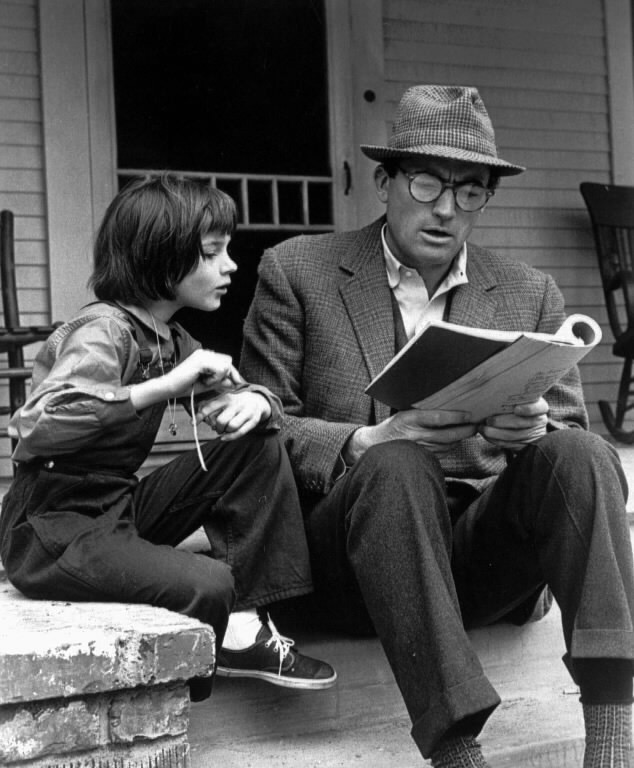
Something’s Hinky About The “New” Book by Harper Lee

To kill a mockingbird

Like everyone with a soul and a 4th-grade reading level, I love Harper Lee’s iconic book To Kill a Mockingbird. It’s a classic for good reason.

But I just can’t jump on the enthusiasm train for the news that HarperCollins will soon be publishing a “long lost” sequel.

Harper Lee is a notoriously private author, the exceptional writer who resisted publishing any further Mockingbird spinoffs for 50 years. What changed?

I’m not the only one to feel suspicious: some journalists have been digging up dirt and connecting the dots. Dots like the death of Lee’s sister and estate-guardian only three months ago, and Lee’s forgetfulness and confusion following a stroke in 2007.

You can read the article here.

I hope I’m wrong, but my gut feeling is this is a money grab that may harm the legacy of one of the most beloved American authors of all time.

I won’t be preordering.

Leave a comment

Filed under Publishing, Reading

Neil Gaiman on the Origin of Ideas

What would happen if a werewolf bit a goldfish?

Leave a comment

Filed under writing

Taxes For Writers

It’s almost tax time–time for writers and editors to circle up and figure out what the heck they owe the government! Yay!

Seriously, I know it’s not the most fun part of being a creative individual, but it’s an obligation-to-society thing. I know a lot of beginning writers/editors/freelancers just try to dodge the taxman entirely, but this is a) not doing your social obligation and b) likely to bite you in the butt later on if you do strike it rich…they’ll find ya.

So it’s better to just be on top of it from the beginning, yes? Before we go any further, allow me to clarify that I am NOT a tax expert in any way, shape, or form–I’m just a regular Jane who has to pay these taxes, too. And I know I was completely overwhelmed (and did it wrong) when I started.

If you read this list and it applies to you, it would probably be a good idea to talk to a tax professional and/or to read a helpful DIY guide (I learned a lot from My So-Called Freelance Life).

  • Self-Employed: If you are earning money as a writer or editor, you need to list yourself as “self-employed” and pay self-employment tax. You can even do this on years you didn’t bring in any money; this can give you a discount for some things (but don’t do it too often; it’ll increase the chances you’ll be audited).
    • You must pay self-employment tax if you make more than $400 a year through your business. In other words, most people probably owe self-employment taxes.
    • Write down every time you get paid for your work. How much, who from, and when. I have a spreadsheet that I use both to keep track of my work-in-progress and who has paid me what.
    • Set aside 25-30% of the money you earn and tuck it away in a savings account. (Which figure you choose has to do with your income bracket…and whether you’d rather accidentally overpay–and get a rebate check–or underpay and pay in come April 15. Personally, the 30% figure gives me more peace of mind, so that’s what I do.)
    • As a self-employed person, you have to pay estimated taxes quarterly, or risk being fined (the interest). This seems really unfair and scary if you’re used to a regular desk job–hey, why I gotta pay FOUR times?–but the reason is that your accounting department is paying the company taxes every month, so, since you’re being considered a business of one, you’re also expected to pay in regularly. To do so, you need the form 1040-ES, a Social Security number, and a check. (Here’s the info from the IRS.) You’ll pay in April 15, June 16, Sept. 15, and January 15.
      • If you’ve planned ahead, this totally won’t matter: you’ll have those owed taxes tucked away in that savings account, earning interest on your behalf. It’s easy enough to just withdraw that amount owed four times a year.
  • Discounts: The good news is, if you’re listed as self-employed and paying in what you owe, you can also get some tax breaks! For example:
    • Home Office: if you work in a designated part of your home, you can take a tax write-off for your rent/mortgage cost. You’ll measure the square footage and that percentage of your house is for your work, so you’ll get a little break there. All you have to have are basic supplies: a desk, a computer, paper, whatever. But you really do have to have a office set up.
    • Supplies: Bought a new pen for book signings? That’s a write-off! Paper and envelopes to mail in manuscripts? Keep the receipts and that’s a write-off! You can list the business expenses during a year, just like a big business would, and get a tax break. This can even include things such as a new outfit for cons (I met one person who dressed up as a steampunk character for books signings. Yup, her costume was a write-off!).
    • Car Miles: This probably has less effect for the most home-bound of us, but if you drive around for your business (and keep very good records) you can count the miles driven and gas paid as business expenses, further lowering your tax burden! For example, you may drive a lot for meetings with book clubs as you promote your book: track all those miles and you’ll have a discount you can take!
    • Gifts: There are rules about gifts, but basically, if your business gifts a business contact a gift, you can write off the entire cost! Those chocolates at Christmas that you sent to your editor are now helping you!

Paying taxes as a writer or editor is a little more complicated than your typical desk-job paperwork, but it doesn’t have to be a bad thing! While writing those quarterly checks can sometimes seem painful, I’ve kept good records of my business work in general and I typically get a bigger rebate at the end of the year than I expected…which is money I can safely put right back into my business.

All it takes to be a law-abiding taxpaying writer is a bit of record-keeping and awareness. (Besides, everyone who pays you more than $600 is also required to put that on their taxes…so they’re reporting your earnings one way or another!) The best tax-defense is a good offense: perhaps it’s time you made an appointment with an accountant?

Leave a comment

Filed under Editing, writing

‘Do a Lot of Work’: Ira Glass on the Creative Process

You’ve probably seen this before, but if not, this is a great reminder: sometimes you have to work through crap in order to work toward greatness. Just keep going.

1 Comment

January 27, 2015 · 9:57 am

Why Millennials Have Trust Issues

Yesterday I read yet another article analyzing the actions and reactions of my generation, Millennials.

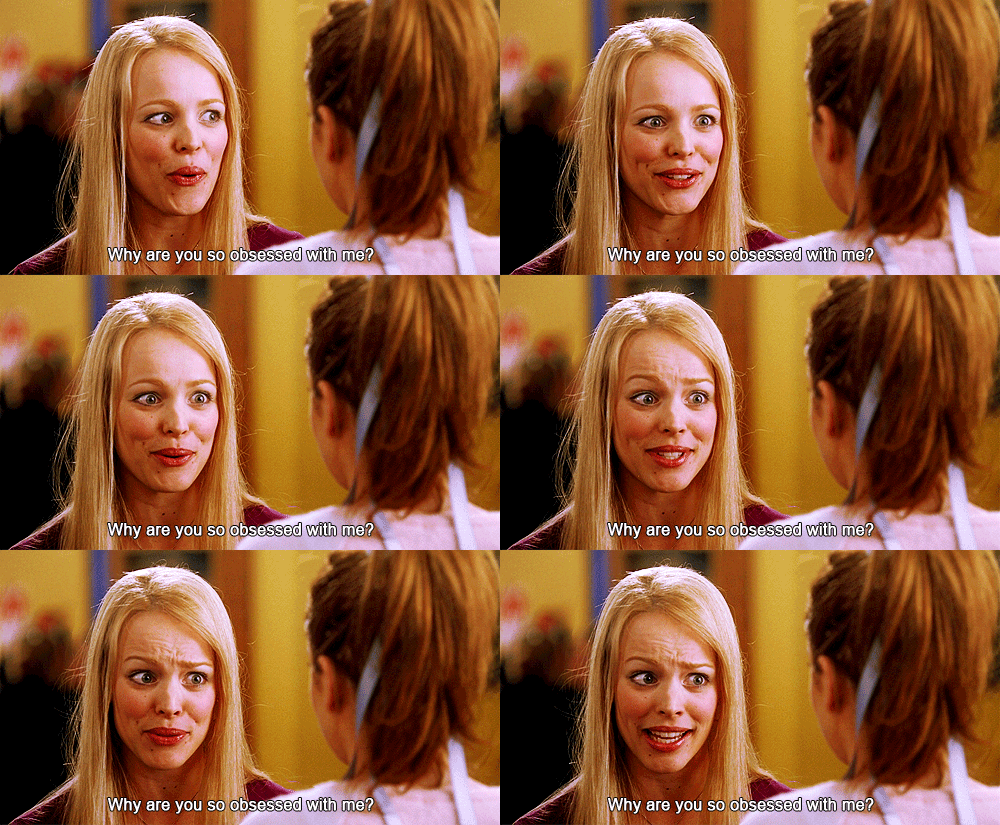
First and foremost, I’d like Regina George to speak to marketers and people of other generations on behalf of my people:
I mean we’re the most-studied generation. There have even been studies on that.
Anyway, here’s the inciting article: Why Millennials Don’t Trust Anything
Before even reading the article, I answered the headline’s implied question: Because we haven’t been given a really good reason why we should?
 
Let’s see:
  • Banks: Bunch of high-profile banking scandals blended thoroughly with a multitude of really terrible customer service experiences. Oh, and that little thing we’ll call the mortgage crisis of 2008.
  • Jobs: Our parents/we have seen too many cases where “loyal” people who gave their all to a company were summarily fired/had their benefits reduced. Doesn’t seem like the loyalty is reciprocated. Compound that with the many folk who are trained for a professional career but can’t find work in their area.
  • Owning a Home: It’s hard to own a home when you’re having job and money-related issues. And we’re prudent enough to be mistrustful in case we get trapped in the next wave of housing issues: no one wants to be “underwater.”
  • Marriage: It’s really expensive, everyone keeps telling us that we’re going to get divorced anyway (even though that statistic isn’t accurate), and we also want to feel “settled” as adults before we make a really adult financial decision.
  • Medical costs: They just suck. And all the very loud, loosely-fact-based political nonsense in the news doesn’t make anyone feel better.
  • The Environment: We’re still having fights about climate change. That’s just silly. Even if you “disagree” with the scientific fact about it, can’t we agree that it’s a good idea not to pollute?
  • Social Issues: A lot of young people (not all, I’ll say, with probability, but a lot) grew up with messages of acceptance and compassion for others (thanks, Sesame Street and Mr. Rogers!). Personally, I’ve been really disappointed in how this kind of stuff plays out in the real world, and how much intolerance there is, over really trivial crap. (I’m not even talking about Big Issues, necessarily. Even the level of “what game console do you play on?” can be fraught!) Plus there has been an awful lot of really bad stuff going on socio-politically around the world. I want to believe in Sesame Street‘s messages, but it sometimes feels like the world doesn’t want to agree with me.
So, this article in particular talks about “our” trust in blogs over traditional media. I’m a pretty big advocate for “traditional media,” having come from there education-wise. But it’s getting harder and harder to lobby on their side: I’m looking at you in particular, TV news.
That said, this is one thing I’ll disagree with: I trust traditional news sources for their veracity over blogs 95% of the time. Particularly on fact-related issues. I got in an argument with someone yesterday about a particular trendy news item, and posted a link to the New York Times. He posted back a link to an editorial on a website that sells crap…and called the NYTimes biased. Holy cow, that’s crazy.
I will say I go to blogs for more colorful types of reading, the types of things that used to be covered in the “Features” or “Lifestyles” sections of a newspaper. But sadly, that probably comes from a) the proliferation of those kinds of blogs and b) the fact that that department was the first to go when newspapers started getting budget cuts.
Do I think we’re “bashing tradition,” as the article says? Hell no. I think we’re just reacting in a very rational way.
What do you think? Is your generation maligned in articles? How?

4 Comments

Filed under Uncategorized

Review: When Bad Things Happen to Good People

When Bad Things Happen to Good PeopleWhen Bad Things Happen to Good People by Harold S. Kushner

My rating: 3 of 5 stars

This is one of the books on the “must-read” list for people struggling with grief of some kind (if there is such a list; dreadful). In it, Rabbi Harold Kushner endeavors to explain why, exactly, bad things happen to good people, and how we should react to it.

It’s clearly a book that has resonated with many people, and with good reason: Kushner doesn’t seem to be talking down to the audience at all, for he has known deep grief. The impetus for the book was the death of his son at 14 years old, having lived his short life with a terrible rare illness known as progeria. As a man of faith, a teacher in his community, and a man who has suffered great personal loss, he is uniquely positioned to address these questions from the same vantage as the reader.

He does an incredible job nailing the kinds of things people say in an attempt to make the suffering person feel better; perhaps an even better job explaining why these things are hurtful, and how they make the grieving person feel. I found myself nodding along; yes, yes, that is how it feels when that happens.

The crux of Kushner’s argument is that the story of Job is a blueprint of grief, and it posits three things:
1) God is all-powerful.
2) God is just.
3) Job (and humans in general) is good.

His theory says that all three things cannot be true: if God is all-powerful, his actions toward Job are unjust or Job is not actually good. If God is just, he may not be all-powerful. If Job is good, then God cannot be both just and all-powerful.

Kushner solves this riddle by deciding that God is in fact not all-powerful, that there are limitations on His power, some self-imposed in the form of allowing free will, and some created by the ambiguously named force “Fate.”

He says that his understanding of God is that God does not give people terrible wasting fatal illnesses, does not kill babies when they are new-born, does not test people’s faith with unbearable suffering for no reason. His understanding of God is that He gives the strength to go on despite these troubles, to encourage compassion and kindness.

For the first half of the book, I felt like this was a book every person of faith should read. But then we got to the second half, and I found myself disagreeing with Kushner, even while I liked what he said. I just can’t get behind it. For one thing, Kushner holds that God does not give people illnesses or kill people off: I have to wonder if he remembers anything from Exodus–the plagues, perhaps? He also seems to say that God doesn’t interfere with people’s lives directly, which is a fine enough thing to believe, I guess, but that also is directly contradicted by several Biblical stories–Elijah, Samuel, David, Moses, Noah, Ruth….lots of stories of direct intervention.

For me, Kushner’s argument just doesn’t quite hold up, for those reasons.

I hope this book gives comfort to those who seek it, but it just left me unsettled.

View all my reviews

Leave a comment

Filed under Reading, Reviews

Lifetime Movie: Unofficial Biography

Several months late, I just watched “Saving Mr. Banks,” the not-quite-biography of Mary Poppins author P. L. Travers, and it got me thinking: assuming I make it big, I don’t think I want to be movie-fied.
While it’s fun to think “who would play me in a movie of my life?” I’m not sure I’ve ever seen a movie biopic of an author that didn’t make them seem somewhat crazy.
Officially, of course, “Saving Mr. Banks” is about the making of the movie version of “Mary Poppins.” Really that is just an excuse, however, as the movie uses a lot of flashbacks to Travers’ childhood to explain her fears about the movie production.
(If you’re late to the movie, too, skip down until the line to avoid spoilers.)
The movie strongly implies–if doesn’t 100% outright say–that the whole reason Travers created Mary Poppins and the Banks family was to exorcize her childhood demons related to her loving, carefree, alcoholic mess of a father, who died when she was young and for whose death she has already blamed herself. This seems to embody her whole purpose of being, creating her into the rigid, unfriendly, unpleasant person she at first appears to be.
It isn’t until the magic of Mr. Walt Disney comes into her life and persuades her to let him try to make a movie that Travers is able to find some closure.
—-
Now I don’t know much about Ms. Travers’ personal life story, but I frankly find it hard to believe that her whole life was fixated on this one thing. Surely it takes more than a tragic backstory to create an enduring childhood fixture?
But Beatrix Potter perhaps has a worse treatment in her author-biography movie, “Miss Potter.” This one is an outright biography, no pussyfooting around with it, and serves up a large dose of personal tragedy, and then dogpiles onto her by making it seem like she literally talks out loud to her characters…essentially making her into either a sweet creator or, more realistically, a benign crazy person.
I think all authors can commiserate with the idea that our characters “speak” to us in some way or another, but animating Peter Rabbit and the like and having her literally talk to them makes her seem nutty.
Check out the trailer for a hint:
Perhaps tragedy is a requirement for a biopic to be made of you. I love/hate to watch “Finding Neverland” because poor J.M. Barrie is positively tortured. Allen Ginsberg fares a little better in “Howl,” but I’m not really sure it doesn’t make him seem less like a rebel with a cause and more like a drug-fueled lazy addict.
In short, I’m not sure I’ve ever seen a biopic where the author seems like someone you’d like to know. I don’t know what tragedy scriptwriters would concoct, dig up, or construct for my life, and I think I’d prefer it to stay that way.

Leave a comment

Filed under writing