Review: America in So Many Words

America in So Many Words: Words That Have Shaped AmericaAmerica in So Many Words: Words That Have Shaped America by Allan Metcalf

My rating: 4 of 5 stars

A book for word nerds if there ever was one! America in So Many Words is a marvelous diversion for those who love both history and language. It examines particularly American words and phrases from the colonies’ founding up through 1998, explaining a bit of etymology, usage, and sometimes an example of it in original writing. It is extensively researched and just downright delightful. It even features two appendices, one organized by year and one by word.(Ex. 1998’s word is “millennium bug,” even though it probably should have been the much-catchier “Y2K bug.” But it had enough foresight to explain the term two years early!)
I’m marking this book as “read” even though it’s actually a work-in-progress. It’s just not a book you’re going to sit down and read straight through in one sitting. It reads like a cross between an encyclopedia and a dictionary, except you’ve probably never chuckled or said “ah ha!” from either one as much as you will with this book. I’m keeping it in my bathroom, to be honest, because one to two entries provide more diversion than any magazine could, with the added bonus of making that time educational and productive.
Though you may prefer to put it on your desk, I do recommend American language-lovers at least page through it. It’s been my go-to source for watercooler conversation and “did you know” questions. If you even think you may be intrigued by the true origins of “hot dog” or the critical place the phrase “log cabin” has in the American presidency, you’ll need this book in your collection.

View all my reviews

Leave a comment

Filed under Reading

Review: The Hobbit

The Hobbit (Middle-Earth Universe)The Hobbit by J.R.R. Tolkien

My rating: 4 of 5 stars

I first read The Hobbit when I was in third grade (it took me the entire school year to get through The Lord of the Rings), but I haven’t reread it since. It was good to look at it fresh, with almost-new perspective (I admit, my view was slightly tainted by the Peter Jackson movies).
What I found was delightful storytelling, a really long hike, memorable characters…and sloppy or abbreviated action and a lot of out-of-nowhere problems and solutions. The deus ex machina really went wild for this book!

In case you’ve been living in a hole (hobbit or otherwise), The Hobbit is the prequel to J.R.R. Tolkien’s The Lord of the Rings trilogy. It features hobbit Bilbo Baggins, a comfortable chap who gets roped into a burglary quest for dwarven treasure guarded by the fierce dragon Smaug. He and his 13 dwarven companions (and occasional wizard friend Gandalf) undergo many trials just to get to the Lonely Mountain, and many more trying to get the gold and secure their victory. It’s particularly important in that it describes how the One Ring comes to Bilbo Baggins’ ownership, setting his nephew Frodo Baggins on his path in the subsequent books.

I know that pointing out some weaknesses in the story seems like blasphemy for a lot of people in the fantasy realm, or even loosely on the fantasy realm, but I’m just not sure The Hobbit held up compared to my idea of what The Hobbit was. I hadn’t remembered most of the end of the book, and I think there’s a good reason: the Battle of the Five Armies is just a handful of pages with little description, there are super-magical creatures coming out of nowhere to save the heroes, and then an overly detailed recap of a walk back that doesn’t really amount to anything. I thought I remembered a story with a lot more Smaug dragon awesomeness, but was disappointed to see that much of the action with Smaug is fairly minimal: it’s a lot of the dwarves or Bilbo guessing at what the dragon is doing while they cower in a dark tunnel.

In short, I can see why Peter Jackson felt the need to diverge from the source: it would have made a terrible movie (here are the dwarves, hiding in a cave. Meanwhile at Laketown, some guy you’ve never seen before is trying to be brave. Also, did you know there are talking crows?!)

It often seems like Tolkien didn’t know what he wanted to do with the story, or had written himself into a corner, so he just tossed in some other element and hoped it worked out. And it does, sort of, but when it happens again and again and again… it seems less convincing. Comparing the troll scene in the beginning of the book with the Battle of the Five Armies at the end–which ought to be much more epic and thus detailed–they are about the same descriptively. While the foundation is there, much of the major things are left entirely to the reader. (It’s odd, actually, what is described in detail and what is brushed over. War buffs need to look elsewhere for their reenactments, but if you want to know the full contents of a hobbit’s larder, you’re in the right place.) And, of course, if you’re in a tight spot, the Eagles will probably be along shortly.

Another flaw the movies tried to amend is the complete and utter lack of female characters. I think the only time women were even mentioned were in crowd scenes, mostly involving the desolation of Laketown. Oh good, they’re cowering in boats…. do women have nothing at all to contribute? I remember this bothered me even as a kid. Obviously The Hobbit was written in a different era, but it does make it a smidgeon harder to swallow as a modern reader.

I still very much enjoy this story. I miss this kind of narration style, where the author frequently interjects, speaking directly to the reader about things that have happened or will. It’s charming. Let’s bring that back. It makes it seem most like a story that needs to be read aloud over many dark nights next to a fire. Perhaps in the flickering flames, the listeners can better imagine the gold reflecting off a dragon’s hoard, or relate to the anxiety caused by a long trip far from home. Maybe those listeners will be able to feel more fond of this fantasy classic, unclouded with concerns about the structural issues.

Still, I don’t regret heading there and back again.

View all my reviews

Leave a comment

Filed under Reviews

Movie Review: Zombieland – 4 Juicy Brains!

I have a terrible confession: Even though I’ve written a zombie book, I really don’t like zombie movies. I’m actually a big ol’ weeny when it comes to gore. I can handle reading about it, more or less, but actually watching someone’s arm get ripped off and eaten is just too much for me. It’s why I haven’t been watching The Walking Dead: I saw the first episode, and got to that one zombie that was just a top torso with its spine swishing along behind it, and just noped right outta there (but was still interested, so I took to reading weekly recaps to follow the story. I’m such a nerd).

But having missed these zombie cultural touchpoints is just a character flaw, honestly, so I’m trying to repair it.

Starting with: Zombieland.


Zombieland poster

Premise: A few months after a zombie apocalypse, a young guy (Columbus) is just trying to survive, until he encounters a few other survivors: the wild and rough-edged Tallahassee, and the innocent-looking but cutthroat sisters Little Rock and Wichita. They team up to find family, a long-sought Twinkie, and the fleeting memories of childhood safety in what amounts to a zombie apocalypse roadtrip.

Zombie Characteristics: Virus is some variant of the mad cow disease, turning people into slavering, necrotic people-eaters within just a few hours of being bitten. They don’t mind pain and are pretty fast, as zombies go; these aren’t shufflers but joggers (keep up that cardio!). A blow to the head or a double-tap shot is the best way to kill them.

Apocalypse Level: Fairly low. Sure, lots of people are dead, but there are relatively few zombies (or people) in this movie at all. You’ve got to remember “the rules,” but no one is particularly worried about finding food to eat, having a place to sleep, siphoning gas, or having clean drinking water. All the electricity is on everywhere they go. You just have to keep an eye out for zombies.

Gore Level: Medium-low. This is hardly horror-movie fare. There were a few occasions that buckets of blood were called for, but it was pretty mild as zombie movies go. Not much worse than anything you’d see as roadkill.

Overall: Pretty funny and highly irreverent. I’m sorry I waited so long to see this one, particularly as the really clever “rules” technique interlaced through the film caught on as a pop culture reference. It was even a little heartwarming. Let’s just hope this is what a zombie apocalypse looks like; seems pretty safe. Just remember to work on that cardio in the meantime.

I give it 4 juicy brains!

juicy brains

juicy brains

juicy brains

juicy brains

2 Comments

Filed under Movie Review

Review: I Am Jackie Robinson

I am Jackie RobinsonI am Jackie Robinson by Brad Meltzer

My rating: 5 of 5 stars

If you have kids, or love history, or just love great books, you need to read all of Brad Meltzer’s “I Am…”/Ordinary People Change the World books. It won’t take you long, and it’s so worth it.

I bought “I Am Jackie Robinson” and “I Am Abraham Lincoln” as gifts for a baby shower, but I’m one of those people that reads anything she can get her hands on, so upon picking them up I immediately read them. They are powerful, colorful, accessible, historically accurate (works cited at the end, even!), and inspiring.

Each book features an American hero telling their life story from their perspective. The hero is drawn as a little-kid version of themselves, even as the people they interact with move from children to adults. In addition to the more serious story type, characters talk with each other through cartoon bubbles, leading to both poignant and funny details that would be fun for a kid to read aloud while a parent/friend reads the main text.

The hero talks about an experience he/she had as a child (in Jackie’s case, not being allowed to swim in the local pool because he was black; for Lincoln, it was kids abusing a turtle) that has resonance in their later life. Jackie’s sense of injustice helped him learn to be brave, the character value that “I Am Jackie Robinson” teaches; Abraham Lincoln learned to use his voice to have an impact.

Out of these two books, I most enjoyed the Jackie Robinson book. It does nothing to diminish the difficulty of discrimination; in fact, it will be a good vehicle for modern kids to understand the unfairness of segregation. Jackie’s sadness grabbed my heart and twisted; I cried a little at the end of the story.

Maybe Jackie’s story was just particularly powerful for me because of a small amount of family history: my grandfather met Jackie while Jackie was playing college ball. He tells the story like it was no big deal at all–my Pop was more interested in the ballfield owners’ daughter–but it’s a connection to the past that makes him more important in my mind. And his courage and resilience–as well his athletic excellence!–are just undeniable.

I look forward to buying more of these books for all the kids in my life, and I hope you’ll read and share them with a young (or old!) reader in your house, too.

View all my reviews


And then I got to meet Brad Meltzer! He’s on tour for his new book, President’s Shadow. We picked up a copy and I’m really excited to read it, but my husband called dibs. That’s fair, he “discovered” Meltzer for our household. Meltzer was incredibly nice, gregarious, and full of incredible facts. He seems like he’d make a great drinking buddy!

Meeting Brad Meltzer

I’m making my “OMG I’ve just met Brad Meltzer” face; he’s making the “OMG a reader” face!

2 Comments

Filed under Reviews

Goodreads Giveaway: Was It Worth It?

In an effort to drum up interest in my book, Undead Rising: Decide Your DestinyI took the advice of Writer’s Digest and created a Goodreads Giveaway. People love free stuff, so the idea is that you can let people know about your new book by giving some number away, thus attracting a lot of interest and getting those much-needed early reviews.

I decided to give away 5 copies of my book, and I took the WD advice that the advertising to lesser-served readers outside of America was worth the potential shipping costs and opened the giveaway to readers in the U.S., Canada, and United Kingdom. Because, really, what are the odds that one of those readers will win?

This was my first giveaway, so I wasn’t entirely sure how long to run it for, but I let it stay up for about 3 weeks (there was a bit of confusion about when it would be posted—hint: it doesn’t go live until Goodreads staff approve it, so the start date is a little fuzzy).

In three weeks’ time, 977 people requested it—with the “peak” entry times at the beginning and end of the contest, no surprise there—and many people put it in their “to-read” category, meaning they’ll hopefully get around to reading it anyway.

Goodreads randomly selected 5 winners out of that pool and sent me their addresses in an easy-to-read CSV.

Oops benedict cumberbatch

That’s right, very British Benedict. Oops is right.

…Out of the 5, one was in London and one was in Canada.

Oops.

All told, shipping cost me about $50 plus a nice lesson from a postal worker about how to fill out customs forms. I used bubble-wrap envelopes–Priority Mail for the U.S. readers and regular old bubble-wrap for the other countries–to ensure the books arrived safely, signed each book with a little note, and included a note thanking them for entering the contest and requesting they consider reviewing the book or otherwise letting me know what they think.

So, would I do it again?

I think so. But I’ll be better prepared next time!

While I really liked the idea of shipping Priority so that readers got their books as quickly as possible, it unnecessarily ratcheted up the price. I think it’ll be regular brown bubble envelopes for everyone from here out.

I’m not sure I’ll still allow entrants from the UK and Canada, though I do love the opportunity to get into that market. I’ll have to consider it carefully.

I think I’ll open the giveaway to more readers next time, which in turn may encourage more people to enter and show more people the book.

I’ll also do a better job of getting a well-targeted Goodreads ad up (again, I had a little confusion with how those worked and when they’d populate) so that more people will know about the Giveaway.

I’m not sure I’d tell authors to expect reviews from a Giveaway. Because the winners are randomized and they have zero obligation to review your book, you may get folks, as I did, who have very few (or no) reviews of books. So it was great to get the book in the hands of new readers, but not necessarily a guarantee of reviews. (Of the 5, only one has reviewed my book so far. But she seemed to like it!)

All in all, a Goodreads Giveaway was a little bit less of a slam-dunk, and shipping was a lot more nerve-wracking than I expected! I think I’ll try again, but I’ll be better prepared for the results (and have a bit more money stashed aside for shipping costs!).

2 Comments

Filed under Publishing, Undead Rising

Win a Free Copy of Undead Rising–Courtesy of Rachel Caine!

My husband is awesome. He honored our first anniversary this weekend with a very modern “paper” gift: he reached out to Rachel Caine, one of my very favorite and most inspirational authors, to ask her for a letter to me, to help me get over the first-book jitters.

And she’s proven she’s my idol for a reason: she way over-delivered!

First, she sent me a very beautiful reminder to just keep trying. Here’s part of it:

 There’s no “right” way to publish. We are all blind people in a dark room, bumping into things, making mistakes, learning, moving on… I’ve written under 3 other names in my career, and had to change and reinvent myself because my books weren’t selling, until they were. It’s a hard road, with lots of twists and turns, and it can seem like it *should* be easy, but it’s only easy from the outside.

(I’m keeping the rest, just for me!)

Then, she tweeted about my book (and anniversary!) to all her fans! As a bonus, she’s giving away 5 copies of Undead Rising: Decide Your Destiny.

Undead Rising Rafflecopter giveaway

Enter to win!

And my many, many thanks to Ms. Caine and my dear sweet husband. This is the best anniversary gift I could have ever asked for!

If you aren’t already reading Caine’s books, I can’t recommend them enough. I particularly love her Weather Wardens series, though she’s most famous for her Morganville Vampires series. She’s got another book coming out soon, too!

Leave a comment

Filed under Undead Rising, writing

How NOT to Deal With a Bad Review

Being an author comes with a lot of challenges, but one of the hardest may be managing our own egos. Namely, having the restraint to accept that bad reviews will happen, and the wherewithal to keep yourself from trying to argue.

Because every once in awhile an author comes along, and does that, and serves as a horrific example of what can happen.

It’s like watching a train wreck sliding into the Titanic at the instant it impacts an iceberg. It’s painful to watch but you are so struck that it still is happening that you can’t look away.

His first response to the negative review (which, remember, on Goodreads means “didn’t like it,” not “literally the worst”):

“This review is not good for my business, so unless your desire is to ruin my dreams, it would mean a great deal if you could remove this review from my work and forget about it. But if it’s your desire to hurt me financially and ruin my business, then it’s understandable why you would post such a harmful review.”

In addition to responding to the review at all, this guy really screws up when he implies that this person’s review was posted out of “desire to hurt [him] financially.” What? One bad review certainly won’t be your ruin. But he’s not done. The reviewer politely responded (more politely than I would have) and explained she would not be removing her review, as is her right, and went so far as to compliment aspects of his book. But he came back again:

“Leaving a 1 star review on a book says much more about what kind of person does such a thing, and then attacks it for being “pretentious,” which is an erroneous statement that is defamation at best.”

And then it goes steeply downhill from there. Let’s be clear: a review is about the content, not the author. I mean, no one is leaving a review to just be hurtful to some stranger they’ve never met. I review every book I read; all that says about me as a person is that I read a lot, and that I like to give reviews about it. There’s no moral judgement. Also this guy has no idea what “defamation” is (hint: 100% totally not that).

This schmuck just can’t stop digging a hole, though. He goes on, for another 11 posts, with his rants getting more and more loopy. Worse, he seems to make a bit of a habit of doing this. And may have scared of this (and who knows how many other) readers from ever trying out a new, indie author. That’s just unfortunate.

Now, I commiserate with the author a smidge; I had one one-star review show up on Goodreads. It didn’t even have a review for me to nit-pick and pout over, but it had been created at the same time as like 37 other reviews. I ranted to my husband for 20 minutes, then I closed the page and went to bed and didn’t think about it anymore. And you know what? The next morning, I had two 5-star reviews.

The winds of popularity can change that fast, which is why it’s important to keep perspective. A negative review isn’t the end of the world. And even if it was disastrous for your book, remember, even failure has its values.

But there isn’t anything to be gained from acting out. In fact, it looks like this particular author’s rant lowered his Goodreads rating from a solid 4 stars to a dismal 2 (and falling) in less than two days.

This is one of those lessons it’s good to learn from watching someone else go through it.

Don’t make this guy’s mistake; have some dignity and leave reviews—especially bad ones—alone.

3 Comments

Filed under Publishing, writing

Inclusion as Rebellion: Adding Diversity in Fiction

Tales from Earthsea poster

It shouldn’t be surprising that Hollywood made the cast white when they made a movie version. But apparently it’s also just a really bad film.

I didn’t happen to think much of Ursula LeGuin’s A Wizard of Earthsea, but I did absolutely love the author’s afterward. In it, she talks about writing A Wizard of Earthsea in 1967, and how she ever-so-quietly tried to subvert convention. Her rebellion? The main character, Sparrowhawk, and the vast majority of the “good guy” supporting cast, are all non-white people. The people who are pale are seen as the dangerous outsiders.

She writes: “I was bucking the racist tradition, ‘making a statement’—but I made it quietly, and it went almost unnoticed.”

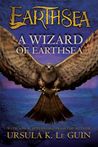
But LeGuin writes about how she was, is, somewhat disappointed. It seems her rebellion was a little too subtle, and didn’t attract the notice it deserved, most notably because cover artists tended to put a white person in the artwork, and apparently many readers didn’t pick up on the many small hints of the characters’ skin color. (My copy was released in 2012, and features a hawk, no people.)

She goes on to discuss the philosophical roots of her book, how the main action turns aside from battle and war, favoring instead to be a rather quiet hero’s journey of the self (which…ok. But I found it a little too detached). But I’m fixated on that concept of trying to push cultural boundaries with fiction.

The most notable and painfully glaring example is Rue from The Hunger Games. Despite many clear mentions of Rue and her companions as black characters, some movie-goers were rabidly furious when they showed up to the film and saw the (incredible, wonderful!) acting done by Amandla Stenberg. Not only were these people poor contextual readers, apparently (seeing as they missed this fact), they felt they actually had a right to be angry about a black actor being cast for a black character. It was stomach-churning.

It’s not the only example, either. Neil Gaiman makes a point of writing in non-white characters (my favorites show up in Anansi Boys) but even so, a challenge was famously issued to stop reading books by white men which prominently featured his (multicultural) book American Gods. When some readers/fans cried foul (either because they liked Mr. Gaiman or realized that the book’s character was himself nonwhite), Gaiman stepped in to say, “no, absolutely, go read those other books. Have at it.”

And if that’s not enough for you, this year’s Hugo Awards were hijacked by a group calling themselves “Sick Puppies” who felt, for whatever reason, that books featuring straight, white, men were being somehow maligned by authors who wrote other things or who themselves came from different backgrounds. They effectively rigged the awards and caused a lot of controversy. All because science fiction authors did what they are supposed to do: push cultural boundaries.

One good thing may have come from these incidents, at least: people are talking about the power of fiction in culture, the power to change culture, and the importance of inclusion. We need more stories, from more people; different stories, interesting stories. I know for my book I worked hard to create a diverse cast of background characters from different nationalities, while also working to ensure that the main character (the reader) remained gender-neutral and accessible to just about anyone who decided to pick up the book.

Do you attempt any cultural rebellions in your books or in the books you read? Do you see value in including a variety of characters of different skin colors? Or of breaking other boundaries? Let’s talk about it.

Leave a comment

Filed under Reading, Undead Rising, writing

Review: A Wizard of Earthsea

A Wizard of Earthsea (Earthsea Cycle, #1)A Wizard of Earthsea by Ursula K. Le Guin

My rating: 2 of 5 stars

This classic fantasy novel, written in 1967 by one of the world’s top sci-fi/fantasy authors… just didn’t grab me. It’s well-composed, with a nicely fleshed-out world and an interesting power structure for the wizards and some cultural details, but the story of the Sparrowhawk’s beginnings left me wondering, “so why should I care?”
I think I’m ruined for this book by the Harry Potter era. It’s just hard to get attached to a boy wizard in this style, after I’ve gotten accustomed to the very feelings, friendships, and trials of a different, more relatable wizard. The whole “true name” thing may have been a cool storytelling concept, but it just serves as one more layer between the reader and the character–what’s his name again? (The main character has no less than three different names throughout the book!). It’s also told in a rather detached third-person; we only vaguely get a sense of Sparrowhawk/Ged’s feelings at any given time, and we are invited not to feel with him but to watch as he fumbles around. Throw in the jumpy time setting (following not a calendar but whenever the action seems likely to hit) and you’ve got a story I just never felt comfortable in.
I finished the book for the lessons of the craft I could learn, not from any deep affinity for it. In fact, I found the author’s afterward far, far more compelling and approachable than the rest of the story–I’d have rated THAT 5-stars!
Maybe it’s me. Maybe it’s just that this book had its heyday in a different time, in a very different genre fiction landscape. It’s certainly not LeGuin’s fault; she’s a beautiful, if impassive, author who has my utmost respect. But I’m not sure I’ll bother picking up the rest of the series.

View all my reviews

2 Comments

Filed under Reviews

The Importance of Failure

I’ve been thinking a lot about bones lately. I’ve been thinking about what happens when you break one. A friend is a power lifter; he literally wrestled a bear once (for charity. Both he and the bear were fine). But he fell while trying to fix a toilet and broke his elbow and now has a very impressive-looking brace on it.

I was thinking about how, when a bone breaks, it hurts a great deal, and even after it sets it can throb and be sore for weeks. (I’m taking this on faith; I’ve never actually broken one and was unwilling to do it for science’s sake).

But then it begins to heal, and while it heals, a mass of bone surrounds the broken area. As a result, the place where a bone broke is temporarily stronger than it was before it was ever broken.

The effect isn’t permanent, or I imagine every athlete and soldier in the world would be throwing themselves down stairs to try to break-and-heal more, but it’s got me thinking about failure in general.

I was reading one of those stupid lists of “things everyone should do before ____,” and failure showed up there, too. Most of the list amounted to that: fail, and fail again, and learn from failures while you can. It also quotes J.K. Rowling, who famously was on welfare and at rock-bottom before she sold Harry Potter and became a hero to authors and readers everywhere. She told Oprah:

“I’ve often met people who are terrified—you know, in a straitjacket of their own making—because they’d rather do anything than fail. They don’t want to try for fear of failing,” she says. “[Hitting] rock bottom wasn’t fun at all—I’m not romanticizing rock bottom—but it was liberating. What did I have to lose?”

I wonder if perhaps it was her failure that allowed Rowling to succeed?

Resilience is one of the most amazing characteristics of humanity. Did you know that, psychologically speaking, there is a large segment of cancer survivors who say they are grateful for the cancer, as terrible as the experience was? That is failure of the body. There are many kinds of failure, some for which we contributed and some that happen for no reason at all. They all hurt wickedly, and are sore for a good long time after the event. But what if, like with a broken bone, we are stronger after we have healed from a failure? What can we do with the lessons we’ve learned from our failures, and what will we go on to achieve?

Leave a comment

Filed under Publishing, Science, writing