Category Archives: Reading

Review: Dragonsong

Dragonsong (Harper Hall, #1)Dragonsong by Anne McCaffrey

My rating: 3 of 5 stars

Dragonsong is a quick light read that brings dragons big and small to life. This book would make a great transition for the How to Train Your Dragon lovers out there.

Despite this book having “Volume One” predominantly on the cover, I have no idea if this is the first book in the series or not: it reads like the first book in a variant series off an original, but I had the hardest time figuring out where to start. Since this one claimed to be a volume one, I jumped in here. But I may have guessed wrong.

Interestingly, it claims to be “science fiction,” but aside from the foreward, which tells the reader this takes place in an alternate Earth and mentions some sci-fi mumbo-jumbo, Dragonsong entirely reads like a YA fantasy novel. (In fact, the foreward mostly makes it seem like someone dared author Anne McCaffrey that should couldn’t sell fantasy as sci-fi. I guess she managed it…sorta?)

And that’s not at all a bad thing–particularly because it was written before “young adult” was even a genre.

The story focuses on the awkward and gangly Menolly, a girl from the Sea-Hold, a grim and rough sort of place. She is disparaged for having a talent in music and her parents–the leaders of her Hold–forbid it, for fear of disgracing the hold. After she badly cuts her hand, it seems music is out of the question anyway. In frustration and a fit of teenaged pique, Menolly leaves her home and stumbles into a nest of the secretive and mysterious fire lizards–pocket dragons, essentially. With her clever tunes and kind heart, Menolly wins the trust and adoration of the fire lizards, particularly nine, who follow her and are bonded to her. When she ultimately has to return to civilization out of necessity, she finds people respect and admire her for her skill with the fire lizards, and her music is appreciated rather than castigated.

This is the kind of story that I wish I’d written. I enjoy the storyline very much, but compared to modern similar stories, it’s barely sketched out, there’s not any closure or explanation (why did her father think it was wrong for girls to sing, but later other people think it’s more than ok?), and it just sort of mentions pivotal moments. It feels incomplete or hurried. I wish we could see a much longer version of this, with a great deal of backstory, richness, and detail. I want to know more about the dragons! I want to know why it’s so peculiar that she could impress nine! I want to know why some places are so closed-off but others are super-casual.

I may be in luck: McCaffrey has written a lot about the dragons of Pern, so maybe there is more for me to find out. As an introduction, this book was pleasant, easy, and… relatively insubstantial, more of an appetizer than a meal.

View all my reviews

Leave a comment

Filed under Reading, Reviews

Review: Stone Mattress

Stone Mattress: Nine TalesStone Mattress: Nine Tales by Margaret Atwood

My rating: 3 of 5 stars

Margaret Atwood’s collection of nine short stories retains her incredible ability with the written language. The writing cannot be faulted, but the collection is awash in quiet tragedy. Furthermore, when the first several stories are not stand-alone but overlapping narratives, but all the following are utterly separate the book feels… well, like half a book pasted together with a bunch of random stories.

I hesitate to say I didn’t like Stone Mattress–with such memorable and haunting prose, how couldn’t I?–but this maybe wasn’t the right time for me to read a book so sad.

Whether intentional or not, all the stories in this collection are threaded through with the slow tragedies and indignities of old age. And there are many: lost memories, lost sex drives, lost eyesight, lost independence, lost purpose, lost spouses… The losses weigh heavily.

Even the stories supposedly not at all about old age, such as “Lucus Naturae,” could be read as being about old age and its unstoppable reach, as insidious as fear of the different and the strange. And just as final in the end.

As I said, it’s not a bad time for me to read about old people being attacked by the young, their homes burned to make room for the younger, bitter generation. It’s not a good time to read about an old writer who has become unhinged from reality, choosing instead of let herself be dissolved into the fantasy land she spent her life creating. But then, is there ever a good time?

My grandfather passed away suddenly recently, and I finally got to visit my other grandfather, who is suffering from the effects of Alzheimer’s disease and could not remember who I am or why I was there. Between these two experiences, Stone Mattress is a very raw and close collection for me. It’s too much like the real tragedies I noticed in both situations.

There aren’t many books that tackle the hoary edges of time. We often assume, as a culture, that old age is the end of the line, that all stories must be told past-tense. For that reason, that bravery, Stone Mattress is a welcome treatise…even if I’m not ready to think on its meanings and significance. When you’re in a suitably contemplative mood, muster your strength and try this collection.

View all my reviews

Leave a comment

Filed under Reading, Reviews

Which Way to the Ladies’ Library? Turns Out Even Reading Is Gendered

Book-reading cataloguer Goodreads made some waves when they recently released a study about the gender of a reader compared to the gender of the authors they typically read.

Lots of good data to chew on there: men and women read about the same number of books, collectively rate their Goodreads books at an average of 3.94, women read a lot more new fiction, and men write a lot more really long fiction (500+ pages).

Here’s a stat I stumbled over, though: in the first year of publication, 80% of a female author’s audience will be women; 50% of a male author’s audience will be women. Interesting….

Women authors’ books were also rated, on average, a teensy bit higher than male authored books (just by 0.1, though).

But the 50 most-read books for each gender fall on starkly gendered lines: Of the 50 books published in 2014 that were most read by men, 45 are written by men. Of the 50 books published in 2014 that were most read by women, 45 (46 if you count stealth J.K. Rowling, which you should) were written by women.

That’s the odd one, to me.

A lot of commenters jumped in with “well I never pick a book based on the author.” Assuming that is true, what may be going on here? I’m guessing there are quite a few factors:

  • gendered genre: it’s pretty well-understood that certain genres traditionally tilt to one gender or the other–romance is heavily read and written by women, while “literary” fiction and science fiction both heavily favor men. It stands to reason that these topics would pull the average one way or another.
  • cover design: there’s been some funny/interesting looks lately at the way a book cover is gendered when it goes through a publisher. This is intentional; they’re trying to attract an audience, so they market the book–typically by old and stereotypical methods–to whomever they think it will appeal to. But that also means that a book that both genders really may enjoy equally could get shunted in one direction or the other just because of which photo someone decided to put on the cover. Lots to think about there.
  • the “Oprah effect”: book clubs. From what I can tell, book clubs are overwhelmingly female, tend to pick new authors, and follow recommendations from talk show hosts like Oprah in order to find their next “it” topic. This may be having a powerful effect. (Sue Monk Kidd has said book clubs were the driving force behind her book, The Secret Life of Bees, becoming a best-seller.) The downside may be that book clubs try to pick a certain kind of book…most authors may not be able to harvest the “Oprah effect.”
  • maybe people really do like reading someone of their own gender; maybe they are, even subconsciously, actively selecting for a gendered read.

Personally, I find this kind of breakdown fascinating…and a little scary. I want to read a variety of backgrounds, so sometimes I do actively try to mix up my reading list and get a different genre, gender of author, etc. But there are times I’ve noticed that I’ve read a lot of books written by, say, white males in the 1950s. That’s not a bad thing, but it probably is flavoring my tastes and my writing voice.

But it also worries me as a writer: I’m interested in sci-fi–the male-dominated genre unpopular with book clubs. Uh-oh.

What do you think about the “gendering” of books? Is it an issue at all? Is it surprising?

2 Comments

Filed under Reading, writing

Review: Medusa’s Gaze and Vampire’s Bite

Medusa's Gaze and Vampire's Bite: The Science of MonstersMedusa’s Gaze and Vampire’s Bite: The Science of Monsters by Matt Kaplan

My rating: 2 of 5 stars

I had really looked forward to this book. Mythical monsters plus informative history, what’s not to love? I bought it for my husband as a gift and was delighted when I found it idling on his nightstand. But now I see why. It’s interesting in places, sure (hey, wanna read some kooky accounts about real zombies? I know I do!) but it’s a struggle to hold your interest. The story is artificially paced (why start an explanation with the wrong answer only to correct it a page later?), leans heavily on modern movies, and cherry picks when it will refer to social sciences.

If you love mythical beasts and know much about Greco-Roman literature, you’re going to come away from this book bored and/or annoyed.

The problem seems to stem from author Matt Kaplan’s unyielding insistence on two things: 1) all mythical beasts must be directly related to something observed in the natural world, and 2) once science has a logical explanation for something, it ceases to be frightening. I disagree with him on both counts.

While I agree that the original storytellers probably did see something that sparked a story in their minds, I disagree that there has to be some kind of one-to-one relationship. For example, Kaplan explains in length that massive boar mentioned in Greek mythology probably never existed, that there is no evidence of an actual super-boar who was impervious to weapons. I believe I speak for all the readers when I say: “no shit.” But why would there even have to be? Is it such a stretch to believe and accept that a creative thinker might have concocted the story entirely?

The boar and the Nemean lion, are, of course, just the most basic examples. I don’t need to believe anything remotely chimeric actually existed for me to believe that a storyteller could come up with the idea. Why the concept that a person found a pile of mismatched fossils in a stream bed and came to believe it was a terrible monster, is it not just as plausible that a storyteller looked around and invented the creature from the characteristics of other natural beasts? That perhaps this explanation came not from literal physical creatures but from symbolism? (Medusa is a great example as a symbol: a woman so beautiful she attracts a god’s unwanted assault is reborn–hence snakes–into a monster who drives all men away and can destroy them with but a look. We don’t need actual snake-haired people!)

I guess I’m offended that Kaplan has left so little room for human ingenuity. Particularly when there is so much evidence of it all around.

My second issue is that he believes people aren’t afraid of monsters that no longer seem realistic thanks to scientific discoveries. Perhaps they aren’t as prominent as monsters as we discover new things to be afraid of, but that discounts the many people who ARE afraid of those things and context. What do I mean by context? I mean, yes, if you ask me in the middle of the day what I’m afraid of, a big scary animal is not going to be the top of my list. But you bet when I’m in the dark in the woods I suddenly begin imagining I’m being stalked by a huge and terrifying predator (despite knowing full-well in my human brain how unlikely it is that a tiger is stalking me in the parking lot). Most irksome is that Kaplan’s evidence for the lack of fear-factor is overwhelmingly modern TV and movies. … Except he’s not watching the same stuff I am, apparently. I mean, Supernatural has many frightening episodes and chilling stories, for example, and I know it’s fiction. Just because Twilight told a different, non-scary story about vampires does not mean that the vampires in True Blood aren’t decidedly scary (ok, in moments. That show is all over the place). And Interview with a Vampire, which he cites in the book, was quite scary to me!

So I don’t know. I think this book might be a good lazy read for a TV and movie buff who has a light interest in Classics, or maybe for the Classics nerd who wants something different. But I don’t recommend seeking a deep understanding or passion from this monster montage.

View all my reviews


Undead Rising coverWant better monsters? Go buy Undead Rising: Decide Your Destiny, available in print and on Kindle. Your choices shape the story! When you die in the book, sometimes you rise again as a zombie, unlocking new adventures.

Leave a comment

Filed under Reading, Reviews

Books—Stardate 2364: Literature of Star Trek

Life has thrown up some really crappy events in the past weeks, meaning I’m not only not participating in NaNoWriMo this year but I’ve also missed updating my dear old blog for over a week for the first time in the two years since it was created. So that sucks.

Anyway, to get things rolling again, I present: Literary Moments in Star Trek.

I’m a big fan of Star Trek, particularly Next Generation. It was a family tradition in my house to sit together and watch it after dinner. I’m not sure we actually watched them in order—in fact I’m pretty sure we didn’t and were just at the mercy of the rebroadcast schedule—but it was tradition nonetheless.

That being said, I found this list of book references in the series surprising (except “Time’s Arrow.” I remember that Mark Twain!) Maybe I wasn’t old enough to catch the references: time for a rewatch?

That’s one of the joys of science fiction playgrounds like Star Trek: these shows (and movies, and books, and short stories) give us an excellent way to re-experience something we thought we understood, to provide deeper meaning.

Do you have a favorite book-to-TV crossover moment? (Aside from Wishbone, of course. That show was the bomb.)


Leave a comment

Filed under Reading

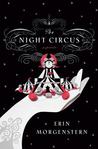
Review: The Night Circus

The Night CircusThe Night Circus by Erin Morgenstern

My rating: 3 of 5 stars

“Dreamlike” is the best adjective for this book about magic, secrets, and the wonders of the circus. Though the circus is rendered exclusively in black and white and shades of grey, The Night Circus bursts with color. The descriptions are truly the best part, capturing the allure of the circus, the vividness of life, and the way our struggles can make us feel. It’s a scrumptious read particularly suited to a cold winter’s night and a warm fire.

Erin Morgenstern’s tale follows two ancient, rival magicians who sign up two children for a life-long “game.” Without even explaining the “rules” of this game, or the point, or the stakes, the two children–Celia and Marco–learn magic. When they come of age, the arena for the game is set: a circus like no other. This circus, Le Cirque des Rêves (Circus of Dreams) operates only at night, is exclusively decorated in black, white, and greys, and features performances beyond Barnum & Bailey and the restrictions of reality. It is also a platform for the contest of wills between Celia and Marco.

But the original magicians don’t realize that their competitors are actually more similar than different, and what is intended as a fight turns into an all-consuming love, a love that imperils everyone who becomes ensnared in the circus.

The descriptions of late 1880-early 1900 America and Europe, the possibilities created by a circus without limits, the lush designs and ideas: these I love. I hope The Night Circus is someday made into a film, but the only suitable directors would be a) Terry Gilliam, b) Baz Luhrman, or c) Tim Burton, in that order. Those are the only directors I can see capturing the visual scope and detail Morgenstern puts out, so head’s up, guys.

However, I struggled with the plot. The first third of the novel just didn’t capture me, and with even the character’s names not being determined until later in the book–and not knowing what the game is or what the stakes may be–it was hard to “root” for anyone. The story moves forwards and backwards and sideways in time, making it a little confusing to follow. So it takes awhile for The Night Circus to work its magic on you–but magical it is.

View all my reviews

Leave a comment

Filed under Reading, Reviews

Gift from the Internet: LeVar Burton Reads Profane “Children’s Book”

Never again wonder about the power of reading, darlings, or of the internet: Here’s a video of LeVar Burton, of Star Trek: Next Generation and Reading Rainbow infamy, reading profane classic “Go the F*ck To Sleep” for charity.

Seriously, what could be better than childhood idols who support literacy efforts reading funny books to raise money for the Children’s Miracle Network?

He helped raise $240,000. Oh, and he’s wearing a Captain Planet t-shirt. Best. Ever.

1 Comment

November 1, 2014 · 9:10 am

Literary Horrors

I had the hardest time coming up with a Halloween costume this year. I wanted something at least a little offbeat, but of course you want to be semi-recognizable, too, otherwise, what’s the point? (True story: I went as a “Freudian slip” one year—a slip worn as a dress, decorated with Freud’s face and a bunch of psychology sayings—and it was a total disaster because no one could tell what it was. I’d put a lot of work into it, too!)

But I’m also behind and it was so close to Halloween that I didn’t have the time or the energy to sew something from scratch. And the pre-packaged ones are decidedly not appropriate for most locations.

But then a friend mentioned her idea, and it was so utterly brilliant I stole it (with permission. We live in different parts of the country, so it’s ok). I’m going as “the girl with the Green Ribbon.” It’s from a children’s book, “In a Dark, Dark Room and other Scary Stories.”

Here, have a listen if you don’t remember it:

I remember the book, vaguely, but I also think I heard it as a campfire tale. It’s perfect: it’s creepy, not too hard to do, work-appropriate, and—bonus!—literary. I’ll be wearing a Victorian-ish dress with a green ribbon around my neck, and a bit of makeup to make me pale, pale, pale, perhaps with a bit of bonus blood ichor seeping around the ribbon. (I’ll try to post a picture after I’ve got it all compiled.)

So what are you going as? Also, bonus points, let’s come up with some good literary horror/costume ideas for next year.

Perhaps:

  • The Cat in the Hat (cat costume + striped hat and bowtie)
  • Carrie, from Carrie, of course (white dress covered in blood dye + blood makeup?)
  • Harry Dresden, The Dresden Files (black trench coat + wizard staff)
  • The Velveteen Rabbit (rough-around-the-edges rabbit costume & tissues because you’ll make everyone cry)
  • Snow Queen from Narnia (though this year you’ll probably get confused with the Frozen crowd)
  • Pride And Prejudice and Zombies (what’s better than undead literature?)

(You know, it figures that I would come up with all these ideas only after I’ve got a costume figured out…)

Leave a comment

Filed under Crafts, Reading

Review: Juliet, Naked

Juliet, NakedJuliet, Naked by Nick Hornby

My rating: 4 of 5 stars

Sometimes I get disillusioned with the world and it starts to feel like the only way I’ll find that spark of beauty is with fantasy, by somehow altering reality, because I just can’t handle the mediocrity of it all.

When I feel like that, I ought to read something by Nick Hornby. He’s a master at looking at the same drab, dreary everyday world and turning up a gem.

Juliet, Naked chronicles what it means to be a fan of a piece of art–music, in particular–and how our perceptions of art can vary from person to person (even from creator to devotee) and what that can mean.

The story focuses on the work of imaginary temporarily famous ’80s rocker Tucker Crowe, who produced at least one album that seized the world with its intensity and then mysteriously stopped performing. The sudden absence of the artist–and the more than two decades with no news at all–leaves super-fans like the British low-tier professor Duncan grasping at rumors and imagination.

Duncan is the literal leader of an online Tucker Crowe fanclub, endlessly obsessed with and analyzing the old albums. His long-time girlfriend, Annie, just accepts that as part of her life–drab, dreary, not worth mentioning.

Until a “raw” version of Tucker Crowe’s hit album is released, sending Duncan into a premature delirium of excitement and Annie into her first real venture into Duncan’s online fandom. The album–and the feelings and thoughts and contemplation it triggers–sets off an unexpected chain of events and totally changes the world for Duncan, Annie, and even Tucker Crowe.

It’s a really great modern book. And when I say modern, I mean it: it’s still strange and wonderful when a book mentions everyday things like cell phones and, heck, the internet! And Hornby did a great job capturing the intensity of a super-fan and balancing that with the reactions of “everyday” fans. It made me think about my appreciation of music and art in general, and what it means to be a creator.

Juliet, Naked is both a thoughtful contemplation of the way music appreciation affects us as well as a deliciously jolly and realistic look at what makes life worth living.

View all my reviews

Leave a comment

Filed under Reading, Reviews

Hate A Book? Don’t Force It.

Author Nick Hornby has made waves with this article about highbrow books, and people’s enjoyment of them. (And it’s fortuitous, because I just started reading one of his books, Juliet, Naked, and he’s just phenomenal.)
Some people have interpreted that article to mean: “don’t read anything hard.”
But I don’t think it’s that at all. I think Hornby is trying to emphasize that reading should not be a chore (though, as I’ve said, sometimes it’s inordinately made into one in school). He’s saying that a book can be a “classic” or “highbrow” or “important” without necessarily being something you’re interested in and will benefit from.
I find it interesting that people are upset by this idea at all. If you replaced “highbrow” with a genre, people wouldn’t be at all surprised that not everyone likes it: ex. “If you don’t like a horror book, it’s ok not to read it. Horror may just not be for you.”
See? Is that scandalous? I don’t think so.
But sometimes we put certain kinds of books on a pedestal, sometimes just because they are challenging. I get the impression that some books–perhaps War and Peace?–are idolized not as books but as achievements to be checked off. “Oh, I read that.” Could you have a conversation about it? Did you enjoy yourself? Probably not, but you can check it off your bucket list.
And if that appeals to you, go ahead, have at it. But I’m 100% unabashedly in support of people reading because they like to read. (And, given enough latitude and choice, that everyone could be a reader if they were only given the opportunity to read the kinds of things they may like.)
Full disclosure: I didn’t get through more than 25 pages of Moby Dick. I know it’s an important and worthy book and all that, but I felt like I was being stabbed by ice picks when I read it. And I don’t feel like I’m missing that much, honestly.
What do you think? Should you buckle down during a hard read, or is it ok to put it aside?

3 Comments

Filed under Reading, writing