Category Archives: Reading

At What Speed Do You Read?

Staples, of all places, came out with this cool little test to see how many words a minute you read. See how you do!

ereader test
Source: Staples eReader Department

I think it’s a smidge disengenuous because it tells you to read at your normal speed, then clocks you against speed readers (as well as the national average), but I LOVE the part at the end that estimates how quickly you’d finish various books. It estimated I’d read Harry Potter and the Sorcerer’s Stone in less than 3 hours (at 455 words per minute), and I’m pretty sure I did!

How fast do you read? I know I’m slower on some kinds of stories; other ones speed me up because they’re so much fun!

Leave a comment

Filed under Reading

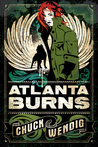
Review: Atlanta Burns

Atlanta Burns (Atlanta Burns #1-2)Atlanta Burns by Chuck Wendig

My rating: 3 of 5 stars

Atlanta Burns is what Veronica Mars would have been if, instead of growing up in sunny California with an understanding father, she’d been transplanted suddenly into “Pennsyltucky”—the rural/backwoods center of Pennsylvania—with an impoverished lost-soul mother and no one to fall back on. Atlanta Burns is Veronica Mars with red hair, a cut lip, dirt all over her face, and the vocabulary your momma wouldn’t approve of.

The story is good, but rough, hard to take. Atlanta is still recovering from the sexual assault she suffered at the hands of her mother’s boyfriend, and her unwanted legendary status she earned with a well-placed shotgun hit to his bait-and-tackle. It is in part because of this reputation, however, that she attracts the downtrodden, the friendless, and begins to help them fight back, too.

The only thing you can really say Atlanta has going for her is grit. She’s not always the smartest girl; she’s into way more drugs than I am even familiar with, often in tandem; she makes really shitty decisions and has a hard time remembering who her friends are. But she doesn’t give up, doesn’t back down, even as she stumbles into bigger and greater crimes against those who can’t fight back.

Chuck Wendig spins a good story, but I think he inserts a little bit too much of himself sometimes, making his agenda too clear and creating a gap in the fourth wall, like when his drug-dealing lowlife happens to be a frequent reader of Margaret Atwood. I don’t disagree with his message, and, true, it’s one of these clear agenda items that makes up the overall story arch, but there were times it drew me out of the story and had me rolling my eyes.

Overall, Wendig does good work here: it doesn’t always get better. Sometimes the bad guys are too big to fight. Sometimes you’re the dog in the ring, just having to fight to survive. It’s a good story, with a hard message to swallow, but it’s a bit too gritty and intense for me. Tread carefully, readers; this is a solid book but you’re going to need a steel stomach to get through it.

View all my reviews

Leave a comment

Filed under Reading, Reviews

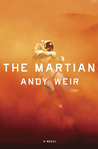
Review: The Martian

The MartianThe Martian by Andy Weir

My rating: 5 of 5 stars

The Martian is a gem, an instant science-fiction classic that will blow your mind and make you long for (and fear) space travel. If this book (and its soon-to-be-produced movie) isn’t enough to reignite interest in NASA’s Mars mission, I don’t know what will.

The plot is simple: Mars astronaut Mark Watney is left behind on Mars after an accident; he is on his own to survive until NASA can figure out a way to pick him up…years later.

What’s particularly amazing is that with any other author, this book could have been an exhausting, emotionally-draining beat-down. It could have focused on how much it would suck to be totally alone on Mars; Watney could have spent the whole book being a pathetic, barely-surviving drag.

But “The Martian” is surprisingly funny, the kind of funny that means you’ll be laughing aloud and poking your spouse to share it with him. Watney is completely sarcastic, a naturally buoyant personality who, when faced with adversity, says, This is going to suck, but I am going to survive, damnit.
And then he’ll name rock formations on Mars after himself and declare himself King of Mars. And maybe institute worship of duct tape.

Another way this book distinguishes itself from pretty much all fiction is how clearly it was written by a science- and math-inclined mind. Author Andy Weir saves the reader from all the equations, but it is no less clear that there is intense math right under the surface; he even provides the variables used, in case another math-inclined person wants to try to figure it out, too. Most science-fiction, it need not be said, is more of the fiction, less of the science. But Weir is a world-class nerd of the best kind, and the hard science backbone to “The Martian” is what makes it so utterly believable.

“The Martian” is an outstanding book. What may make it truly great is its ability to transcend normal book-readers and reach those who care about hard numbers, math, and science, as well as those who could use a good laugh. It’s first-class writing that makes me believe we can send a man to Mars (but hopefully not leave him there).

View all my reviews

Leave a comment

Filed under Reading, Reviews, Science

Review: Bossypants

BossypantsBossypants by Tina Fey

My rating: 4 of 5 stars

I’m late to the Bossypants party, but luckily Tina Fey knows how to keep the party thumpin’. Bossypants is hilarious, smart, and deeply insightful. But mostly it’s hilarious.

Bossypants is less a biography and more a brilliant stream-of-consciousness into the life of Hollywood-stomping Fey. It’s loosely organized by periods in her life, with a brief bit on her childhood, including irreverent stories about who she met on the first day of school, all the way up into her ongoing surprise that “30 Rock” turned out to be a sleeper hit. She’s humble about her achievements, making Fey seem even more like the person you’d most like to have a beer with. This sounds stupid, but she really is “just like everyone else,” and it seems that maybe a little of that midwestern awareness of the ridiculousness of NYC culture/TV writing insanity is what makes her brand of humor so fresh and entertaining. She’s the girl next door who makes you laugh so hard you nearly pee.

But just because it’s funny—and it IS funny, the kind of funny that’ll have you tapping your husband on the shoulder at midnight to read “just one more line” aloud—doesn’t mean this is an idle book. Fey wraps her humor around sometimes biting criticism, particularly about gender roles. She’s a feminist icon for a reason, and she’s very aware of the limitations (and benefits) of being a woman who is also funny.

The only criticism I have is that I wish there were more, particularly about the writing process for “Mean Girls,” the smash-success movie about teenage girls’ social structure that has, for me at least, left lasting ripples. There’s a scant reference to it, with a lot more time devoted to “30 Rock,” which I have been negligent about seeing (I’ll be fixing that soon).
More, Ms. Fey, always more. I love you and can’t wait for more.

View all my reviews

2 Comments

Filed under Reading, Reviews

Review: America in So Many Words

America in So Many Words: Words That Have Shaped AmericaAmerica in So Many Words: Words That Have Shaped America by Allan Metcalf

My rating: 4 of 5 stars

A book for word nerds if there ever was one! America in So Many Words is a marvelous diversion for those who love both history and language. It examines particularly American words and phrases from the colonies’ founding up through 1998, explaining a bit of etymology, usage, and sometimes an example of it in original writing. It is extensively researched and just downright delightful. It even features two appendices, one organized by year and one by word.(Ex. 1998’s word is “millennium bug,” even though it probably should have been the much-catchier “Y2K bug.” But it had enough foresight to explain the term two years early!)
I’m marking this book as “read” even though it’s actually a work-in-progress. It’s just not a book you’re going to sit down and read straight through in one sitting. It reads like a cross between an encyclopedia and a dictionary, except you’ve probably never chuckled or said “ah ha!” from either one as much as you will with this book. I’m keeping it in my bathroom, to be honest, because one to two entries provide more diversion than any magazine could, with the added bonus of making that time educational and productive.
Though you may prefer to put it on your desk, I do recommend American language-lovers at least page through it. It’s been my go-to source for watercooler conversation and “did you know” questions. If you even think you may be intrigued by the true origins of “hot dog” or the critical place the phrase “log cabin” has in the American presidency, you’ll need this book in your collection.

View all my reviews

Leave a comment

Filed under Reading

Inclusion as Rebellion: Adding Diversity in Fiction

Tales from Earthsea poster

It shouldn’t be surprising that Hollywood made the cast white when they made a movie version. But apparently it’s also just a really bad film.

I didn’t happen to think much of Ursula LeGuin’s A Wizard of Earthsea, but I did absolutely love the author’s afterward. In it, she talks about writing A Wizard of Earthsea in 1967, and how she ever-so-quietly tried to subvert convention. Her rebellion? The main character, Sparrowhawk, and the vast majority of the “good guy” supporting cast, are all non-white people. The people who are pale are seen as the dangerous outsiders.

She writes: “I was bucking the racist tradition, ‘making a statement’—but I made it quietly, and it went almost unnoticed.”

But LeGuin writes about how she was, is, somewhat disappointed. It seems her rebellion was a little too subtle, and didn’t attract the notice it deserved, most notably because cover artists tended to put a white person in the artwork, and apparently many readers didn’t pick up on the many small hints of the characters’ skin color. (My copy was released in 2012, and features a hawk, no people.)

She goes on to discuss the philosophical roots of her book, how the main action turns aside from battle and war, favoring instead to be a rather quiet hero’s journey of the self (which…ok. But I found it a little too detached). But I’m fixated on that concept of trying to push cultural boundaries with fiction.

The most notable and painfully glaring example is Rue from The Hunger Games. Despite many clear mentions of Rue and her companions as black characters, some movie-goers were rabidly furious when they showed up to the film and saw the (incredible, wonderful!) acting done by Amandla Stenberg. Not only were these people poor contextual readers, apparently (seeing as they missed this fact), they felt they actually had a right to be angry about a black actor being cast for a black character. It was stomach-churning.

It’s not the only example, either. Neil Gaiman makes a point of writing in non-white characters (my favorites show up in Anansi Boys) but even so, a challenge was famously issued to stop reading books by white men which prominently featured his (multicultural) book American Gods. When some readers/fans cried foul (either because they liked Mr. Gaiman or realized that the book’s character was himself nonwhite), Gaiman stepped in to say, “no, absolutely, go read those other books. Have at it.”

And if that’s not enough for you, this year’s Hugo Awards were hijacked by a group calling themselves “Sick Puppies” who felt, for whatever reason, that books featuring straight, white, men were being somehow maligned by authors who wrote other things or who themselves came from different backgrounds. They effectively rigged the awards and caused a lot of controversy. All because science fiction authors did what they are supposed to do: push cultural boundaries.

One good thing may have come from these incidents, at least: people are talking about the power of fiction in culture, the power to change culture, and the importance of inclusion. We need more stories, from more people; different stories, interesting stories. I know for my book I worked hard to create a diverse cast of background characters from different nationalities, while also working to ensure that the main character (the reader) remained gender-neutral and accessible to just about anyone who decided to pick up the book.

Do you attempt any cultural rebellions in your books or in the books you read? Do you see value in including a variety of characters of different skin colors? Or of breaking other boundaries? Let’s talk about it.

Leave a comment

Filed under Reading, Undead Rising, writing

How to Support an Author

Bestseller and ebook trailblazer Hugh Howey had a blog post that I think bears repeating: What’s the Best Way to Support Your Favorite Authors?

The answer may surprise you: while buying stuff is absolutely great (and hey, you can buy my book here!), but it isn’t actually the best way to support someone.

Howey says:

“If you really want to support your favorite authors, my advice is simple: Read their books. Spread word-of-mouth. Write reviews. Email them and express your delight.”

The best–and easiest–way to support an author, be they independent, with a small publisher, or from one of the big publishers, is to tell someone else how great the book was. Despite all our gizmos and features, we still value word of mouth most. Telling your friends, neighbors, coworkers, and others how much you liked a book is powerful mojo. Tweeting about it, blogging, sharing on Facebook, or writing up a review on Goodreads or Amazon or anywhere else are all bonus ways to share with more people all at once.

It’s humbling, really, to know that the most powerful way to boost your favorite authors (or even your most recent read) is just to tell someone else about it. I review every book I read on Goodreads. How do you show your support?

1 Comment

Filed under Reading, Undead Rising

Should Books Come With Trigger Warnings?

Neil Gaiman’s most recent book was a collection of short stories under the title Trigger Warning. He opened the book with a short discussion of “trigger warnings” (an internet phrase that is used to indicate that there may be objectionable or deeply troubling content to follow, to allow readers to “opt out” if they feel unprepared for it). Gaiman comes out neither for or against trigger warnings—he basically says if someone will be greatly upset by something, they do have a right to avoid it, but that sometimes it is good to introduce ourselves to troubling things, in order to grow as people—and I didn’t think too much about it beyond “hm.”
Then I read Ship of Destiny. Not to spoil too much, but there is a sudden and unexpected rape scene in the story. Much like a real rape, it occurred practically without warning. It was not a particularly graphic scene, violence-wise, but the word choices and the trauma of the victim that played out over the next several chapters deeply troubled me.
I think I would have liked to have had a trigger warning that there would be a rape in the book. I think I would have still read it—it was very well executed, sensitive to the victim, and made it clear that the villain was a deeply conflicted, messed-up person—but I would have liked some warning, so I could have emotionally prepared myself.
I struggle with rape scenes in all genres. I was interested in Girl with a Dragon Tattoo until I heard there was a graphic rape scene, and I know myself well enough to know I just can’t handle that. I had to stop watching a movie (I think it was The Missing?) because it looked like the main female character was going to be raped–I ran out of the room crying and couldn’t bear to finish.
Someone I know has told me she wishes TV shows and movies came with trigger warning-esque labels: she has a crippling anxiety about people being shot in the head after someone close to her died that way. I can’t blame her for that.
But of course, content creators may not want their work to be labeled in this way. (Publishers probably wouldn’t!) It might put off potential book-buyers. People might protest something that, if they just read it in context, would be fine. There’s a danger inherent to telling people your work might be challenging to them.
I don’t know that I feel that all books should carry a trigger warning. After all, I found Kushiel’s Dart …troubling… but it was still a great book and I’m glad to have read it. (The difference between that and Ship of Destiny? Kushiel’s Dart had lots of clear warnings about what I was getting into!)
I agree with Gaiman that sometimes we have to push our boundaries a little, and that may mean reading something we find unnerving. But I also think people do have a right to protect themselves, particularly that very delicate emotional scared place we all have.
What do you think? Would you want your book to have a trigger warning?

Leave a comment

Filed under Reading, Short Stories, writing

Review: Rat Queens: Sass and Sorcery

Rat Queens, Vol. 1: Sass & SorceryRat Queens, Vol. 1: Sass & Sorcery by Kurtis J. Wiebe

My rating: 3 of 5 stars

When you’re looking for an afternoon of ribald violence featuring sharp-dressed ladies, Rat Queens is the comic for you!
Abandon all illusions you may have of comics/graphic novels as being the province of children, or any idea that a female character must act like a “proper lady,” because Rat Queens goes out of its way to demolish both concepts. In addition to featuring Dungeons & Dragons-style questing and violence, Rat Queens is rife with drunken, foul-mouthed, wantonly sexual storylines and images. It’s delightful because of that, of course, because there just aren’t a lot of books at all that would allow every female character in their book to have some kind of vice, but it also suffers because it sometimes feels like it’s pushing it a little too far.
The art is genuinely great. I love that the characters are each so different, so fab, and so feminine, with so much diversity. I love that they have big hips and broad shoulders and that I believe they could really heft a sword. Rat Queens highlights the many stereotypes we see again and again and again in other art by just being different. It’s beautiful.
I’m a little bit of a terrible comic book fan, because I really prefer to read them as complete volumes, like this one, even though such volume would never exist if someone didn’t buy the weekly trades. But I dramatically enjoy buying a thing just once and getting to follow the complete flow of a storyline. Weekly trades just don’t do it for me.
That said, even as a collection, Rat Queens is unusually abrupt, lacking much transition between characters and leaving me frequently wondering if my pages were stuck together or something (they weren’t. It just does that). You’ll be following one character when boom, we’re with someone else, doing something else, with nary a “Back at the Batcave” to warn you.
Overall, Rat Queens was a fun light afternoon read. I don’t know if I would buy more of it, but I would absolutely borrow it from a library/bum it off my more comic-inclined friend.

View all my reviews

Leave a comment

Filed under Reading, Reviews

10 Reasons Why You Should Read Undead Rising: Decide Your Destiny

Undead Rising: Decide Your Destiny is now available in print and for Kindle! But why should you, a reader of things, actually buy it or download it or read it? There are lots of choices out there; why this one? I’ve got some ideas.

  • Your choices shape the story. Sure, most of the time as a reader you’re just there passively accepting the story. Well, with Undead Rising, you don’t have to–you decide what happens next. That’s real power.
  • There are 45 different endings. Seriously, how many books can say that?
  • It’s free! Until Saturday, May 9, you can download the Kindle version of the book for exactly $0. So even if you hate it (you won’t), there is absolutely no impact on your wallet.
  • It’s funny. Not many apocalypses make you laugh. This one will warrant a chuckle, though.
  • Survival is hard. Much like a real crisis, not every choice is easily decided. But that’s just a reason to test it out in a safe, written environment.
  • Even when you die, the story continues. Most of the time, the story has to stop when the main character dies. Not so in Undead Rising. You just unlock a whole new range of choices! What will zombie-you do next?
  • You can be a hero. Will you be the salvation of others… or will you be their undoing? Will you be selfish, or selfless? You can get some answers.
  • It doesn’t take much time. You lead a busy life with lots of things demanding your attention. Luckily, with a book like this, you have time. Storylines are short; within 15 minutes you can find a resolution.
  • If you don’t like the ending, just try again. Most books, you don’t like the end, you don’t like the book. This one,  you just try again. It’s that easy.
  • You’ll be able to tell your friends, with certainty, that you survived the zombie apocalypse. Who else can say that?

Undead Rising coverSo what are you waiting for? Get your copy of Undead Rising: Decide Your Destiny today!

Leave a comment

Filed under Reading, Undead Rising