Category Archives: Publishing
On the Precipice of Publication
Filed under Publishing
Layout Design for eBooks vs. Print
- Font: You may want to choose a different font for your digital composition. While they’re getting better and better, not all fonts are available for digital. You also want to pick something that is easy on the eyes, because digital readers can provide more eye strain (look for something with serifs, like Times New Roman–compared to the straight-edged Arial). Similarly, you may have to abandon the fancy typefaces you used in print, to make sure readers can actually read your font in digital form. (Sad, I know. Maybe one day!)
- Page Numbers: You don’t need them for a digital book! Particularly because ereaders come with the ability to resize typeface for the reader, setting a hard page number on every page will just mess up the formatting. Take ’em off!
- Table of Contents: Now that you don’t have reliable page numbers to tell a reader where to go, you need to swap out your ToC of page numbers to one that links directly to the start of that chapter. You can do this with Microsoft Word’s Bookmark feature, which will let readers “jump” directly to that page. It’s pretty neat.
This is particularly important for books like mine. I don’t need or want a Table of Contents (that would kinda ruin the point!), but I do need to have lots (and lots and lots!) of working links between sections. To move to the next section, readers will just click a hyperlink–just like on a website. (The future is now!) - Front matter: This is a bit subjective, but you may want to reorganize your book’s front matter; the dedication, copyright page, prologue, etc. I moved some of those pages to the back of the book, because on an ereader I have very few pages to get the reader into the story, so I want to make the most use of those pages. I also doubled-up content on the copyright page, adding a “Survival Tip” exclusively for Kindle readers, to help explain the best way to read my book on that device. It’s a whole new world of book design, so it’s ok to rearrange things if you want! (You DO still need to keep the title page and the copyright page toward the front, however. But it doesn’t have to match the print 1:1.)
- Images: If you have images in your book, you’re going to want to take extra care with them to make sure they are properly embedded in the document and don’t end up “floating” in the wrong puddle of text!
- Reach Out: Particularly with an ebook (but also in print) you should provide the satisfied reader at the end of your book with a link or means to contact you to read more of your work! If you already have other books out, here’s your chance to drop in a referral link so they can click over and instantly read more of your stuff!
Filed under Publishing
Publishing Nightmares: When the ‘What Ifs’ Come To Get You
I couldn’t sleep last night. It was my book, Undead Rising: Decide Your Destiny. Out of nowhere, I was just struck with this sickening realization that my book is, at its core, stupid. I mean, I knew that, all along: it’s supposed to be stupid-fun to imagine you’re being chased by zombies in New York; it’s supposed to be stupid-fun that you’re choosing what will happen next in the story, because that’s a rarity and a hefty dose of nostalgia. It’s stupid because no one really expects to have to put their zombie plan into place. In fact, I wrote it, at least in part, because it was a stupid idea that made me laugh and I had a great time doing it.
But last night, for whatever reason, I was swallowed by a tidal wave of shame. And because it was late and I was tired and fears were coming out of the depths of my brain, it ballooned. OMG, I thought. I can’t publish that. It’s not serious literature. Everyone will know me as ‘that author who writes really stupid books. I’m doomed.
I’m blessed in that I have a very forgiving husband. Because he moaned in his sleep, so I decided he was awake, so I woke him up. I told him I was going to publish a stupid book and no one would ever take me seriously ever again.
He told me it would be fine and to go back to sleep already.
This isn’t the first time he has had to talk me down from some big scary publishing fear that came out of nowhere. I keep finding more, actually. There’s a lot to be intimidated and afraid of.
I wish I could tell you that my fears were stupid by the time I woke up, but I can’t. My book is still kinda stupid. Fun, absolutely. But it will never be studied in high school English classes (and we can all be thankful for that). It’s not “serious.” But it wasn’t meant to be. There are lots of “not-serious” authors out there who nonetheless had a huge impact on readers (for example, the recently deceased Terry Pratchett. May his books be read forever.).
So it may not be bad to be a “not serious” author.
It probably won’t be the last time self-publishing wakes me up with a nightmare. What are your self-publishing fears? Why are they unfounded?
Filed under Publishing
All Laid Out: You May Need a Designer for Your Book
I’ve just spent an hour adding dropcaps to my book—I may be a little crazy.
Let me explain.
A goodly time ago, I decreed that I was giving up on the agent game and was going to self-publish. (Yep, I wrote that in September.) My first goal was just wildly unrealistic, and then I got paralyzed by life circumstances, fear, and options.
Nevertheless, I got back on track.
Step one was research where, exactly, to self-publish. From what I’ve read, it seems like a multi-pronged approach is the best tactic. Because I’m familiar with the system, I decided to start with Amazon’s CreateSpace, from whence it’s a natural transition to KDP for the epub, and then on to other epublishers (more research needs to be done).
Because my book uses the choose-your-own-adventure model, I felt it was good to have a print copy and a hyperlinked digital version, to catch the types of readers who prefer to flip through pages versus the newer ones who are brave enough to try the same thing on a digital device–no page flip required. But that format also means a lot of work.
I drafted a battleplan:
- format for print
- format for online
- create cover
- buy ISBN(s)
- upload to CreateSpace
- upload to KDP/ebook pub
- update website
- buy new business cards
You’ll notice that this battleplan is not ALL the steps to self-publishing, but it IS a lot more steps than I originally thought it would be.
But that first bullet there is why I ended up making dropcaps for an hour. It’s also why I’d encourage other people who are looking to self-publish to go hire a layout designer. Yes, it’s money, but it’s also hard, particularly if you’re not entirely sure what you’re doing.
Luckily, I do have some experience in that direction, but it was still both overwhelming and ridiculously tedious. Some things you have to consider:
- What typeface will you use? What message does it send the reader?
- What size will your typeface be? Can readers in your target age group actually read that size print?
- Is it legible?
- Where on the page will you start your chapter?
- What are your margins?
- Where will you put your page numbers? What will they look like?
- Do you need dropcaps?
- Do you know what a dropcap is?
- How will you manage your widows and orphans?
- Will you put a blank page between chapters?
- Are there any weird formatting things you’re going to have to deal with?
- If you find a small typo while working on one version of your book, how will you ensure that error is fixed everywhere it appears?
- Suggestion: Keep a master file and make ALL changes there. Then use the master file to create the second and third and fourth, etc., versions. (I had a client who didn’t do this, and it was terrible.)
If you know all that kind of thing and don’t mind, then you may be perfectly fine DIY-ing it. CreateSpace offered a template to help match the book size you select, which was awesome. But if that list up there sounds overwhelming, or if you’d rather not waste a whole day doing that kind of thing, do yourself a big favor and pay an expert.
I particularly like the freelance author site Writer.ly. (Note: I also sell my editing services there. Look me up sometime!)
Did you hire someone to design the layout of your book? Why or why not?
Filed under Publishing
Enter to Win a Pitch Critique
I just got an email about this–the NaNoWriMo Pitchapalooza. It’s a quick contest (partially luck) to get your book pitch reviewed by “The Book Doctors,” to have it improved online as an example of what makes a good pitch, and then to possibly get a personal introduction to an editor in the genre of your book. Past winners are now published, which is incredible!
It’s almost over, so enter soon! Just check it out here.
I’ve not used them personally, but they have really informative emails and seem to have a great track record. And really, why not enter? You could win!
Filed under Publishing
As If It Never Was: What Happens to Writing on the Internet?
We tend to act like once something it put on the internet, it is there forever (and in some cases–most often things we wish weren’t around forever, it seems to be).
But the truth is, online writing is far more erasable and intangible than most other generations of the written word. An article published recently, All My Blogs Are Dead, explains what it can really be like, particularly if you write for other people.
In the article, the blogger explains that he’s written more than 2,000 blog posts since 2009… but there’s no evidence of them at all. The sites he wrote for, in a string of freelance positions, have all ceased to exist or were purposely overwritten. Poof. There went his whole career and all the examples of his work.
When I was in college, the internet was just really starting to take hold and make its presence known. Professors were distressed by the idea that a story might never actually be put on physical paper. Our clipbooks–compendiums of our work used to earn our final grade–had to be painstakingly cut out of the print newspapers and glued in for final presentations. No internet print-outs were acceptable. (I wonder what they have them do now; they’ve switched the school to internet-first publishing…) We were advised to save the URL of any articles we wrote, as well as the HTML, so at least we’d have proof that we published something, somewhere.
I’ve since switched overwhelmingly to PDFs when I want to document work I’ve done for a blog or site or other internet project, but it’s still distressing to think that my work could be so thoroughly wiped from existence. I imagine I’d have to do the same with any fiction work. (I wonder, would I need to print that out, too?)
Bloggers in particular are susceptible to this problem: if you stop paying for your blog space, stop updating for a long time, your blog could just vanish into the void. I know I’m not backing up each post as I go…what would happen to all that writing?
Do you think about this kind of problem? What do you do to protect the longevity of your work?
Filed under Publishing, writing
Writing Despite The Bills
A recent piece on Salon highlighted one of the murky secrets of the writing life: who is paying the bills?
The piece, provocatively titled “‘Sponsored’ by my husband” (and the response “The price I pay to write“) discusses one of the topics a Southerner just isn’t supposed to discuss: finances. The first discusses how hard it was to try to have a regular life while also writing; the author is only able to currently manage hers because she married someone whose salary is “hefty.” The second piece has an infatuation with the HBO show girls but at least is taking a crack at working 9-to-5 while also being a writer.
But the nitty-gritty is one of the cruxes of a writing career: you still need something to eat, somewhere to sleep, and probably (at least in America) health care of some kind. Where ya gonna get that?
In the first article, Ann Bauer points out that several authors recently published talk like they’ve done it all themselves but really benefited either from inherited money or deep familial connections.
I practically swooned with jealousy: undeniably, both would help me a great deal. Particularly the connections—since getting an agent/publisher/people with purse strings to pay attention to you is the first obstacle to publication.
But the “having enough money to live off of” is a huge component, too. I talked about this when Hugh Howey, of Wool fame, first hit the radar. Yes he worked hard, yes he is more workaday than a millionaire, but he also had a wife who was mostly able to support them while he took a low-paying part-time bookselling job to give himself time to write. That is a huge luxury (and, luckily for them, it paid off big time.).
At conferences and online, I see a lot more of the kind of writer I am: fitting writing around everything else. And that kind of juggling is trying, at times. I have a full-time job, a spouse with a job he finds rewarding but which won’t pay the bills alone, a part-time career as a freelance editor, AND I have written three books I’m working on getting published. I’ve said it before: how exactly am I supposed to do those things and actually have a life of any kind? It feels overwhelming.
(Side note: I think a bunch of people who cater to authors are taking advantage, selling “must-have” products that “guarantee” success. They disgust me; I hope the people buying those products are independently wealthy.)
However, I have made my choice in how to get money to live while also being a writer. While, sure, I’d love to win the lottery next month or something, I don’t think I’d ever feel comfortable being “sponsored” by my husband or another patron; we are partners, and it is my responsibility to carry my weight in our relationship, financially, in the household, and otherwise. One of the main reasons I have an editing side business is that I can feel confident using the resulting income to pay for resources in my own publishing dreams (also, it is SUCH a kick to see a book I’ve edited actually go on sale. Some have even won wards!).
For me, the juggling is worth it, even if it’s challenging at times. I need to feel like I’m helping my family forward, even if that means my books don’t churn out as quickly. That’s a choice I’ve made.
What about you? How do you manage your household while writing? Do you wish you could do it differently?
Filed under Publishing, writing
Something’s Hinky About The “New” Book by Harper Lee
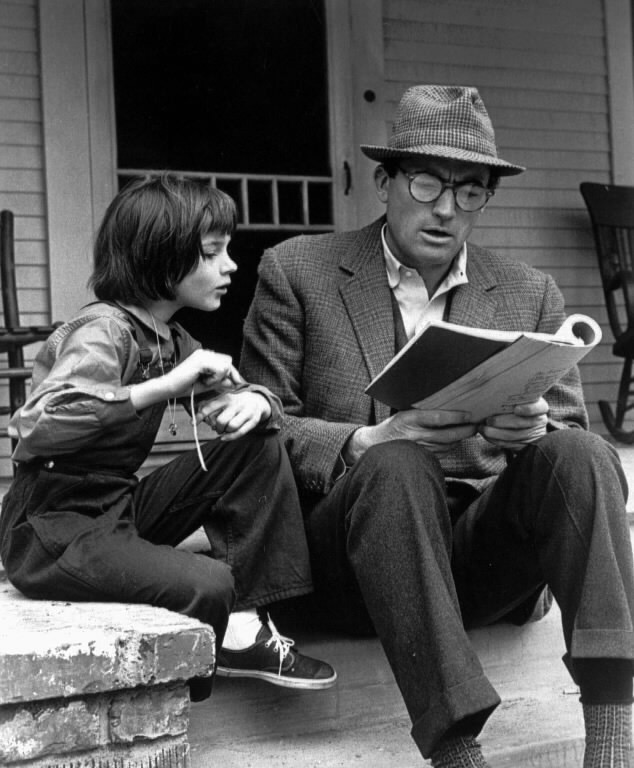
Like everyone with a soul and a 4th-grade reading level, I love Harper Lee’s iconic book To Kill a Mockingbird. It’s a classic for good reason.
But I just can’t jump on the enthusiasm train for the news that HarperCollins will soon be publishing a “long lost” sequel.
Harper Lee is a notoriously private author, the exceptional writer who resisted publishing any further Mockingbird spinoffs for 50 years. What changed?
I’m not the only one to feel suspicious: some journalists have been digging up dirt and connecting the dots. Dots like the death of Lee’s sister and estate-guardian only three months ago, and Lee’s forgetfulness and confusion following a stroke in 2007.
You can read the article here.
I hope I’m wrong, but my gut feeling is this is a money grab that may harm the legacy of one of the most beloved American authors of all time.
I won’t be preordering.
Filed under Publishing, Reading
‘Do a Lot of Work’: Ira Glass on the Creative Process
You’ve probably seen this before, but if not, this is a great reminder: sometimes you have to work through crap in order to work toward greatness. Just keep going.
Authors, Stop Your Blogging
Filed under Publishing, writing