Tag Archives: fantasy

Review: Ship of Destiny

Ship of Destiny (Liveship Traders, #3)Ship of Destiny by Robin Hobb

My rating: 4 of 5 stars

I’ve been waiting to read this book for something like 15 years. Robin Hobb‘s Liveship Traders series was the first to make me desperate for the next book…but it wasn’t written yet. But I also didn’t have much patience, so when I couldn’t get my hands on the book for a month, I gave up, moved on to other things, and forgot about it.

Until I saw Ship of Destiny in a used bookstore! Despite the long wait, Ship of Destiny did not disappoint!
Ship of Destiny is an epic fantasy that features stunning dragons, angsty/crazy talking ships, a horrible pirate, a fierce and bold woman, and desperate policitians. It’s fantastic. Robin Hobb’s knowledge of wooden galleys is incredible and makes it feel like you’re really there, feeling the sway of the swell and lash of the wind. Though the story is incredibly complex–following many paths simultaneously–it is easy to follow and all comes together beautifully.

It is one of those books that you’re both eager finish and sad to put down. It’s an epic conclusion to a great series, and I’m glad to finally have closure on it.

View all my reviews

Leave a comment

Filed under Reading, Reviews

Fisherman Jack

My grandfather recently passed away, quite suddenly and unexpectedly. I’ve had trouble expressing my feelings about it. But I did write this, in honor of him.


Fisherman Jack

There once was a man who liked to fish. He’d sit on the pier with a rod and a reel and coax silvery fish up out of the water. He’d stand hip-deep in frothy streams and fool whiskered, muddy fish with clever lures and intricate flicks of the wrist. By boat, he explored dark wallows and mysterious shadowed rivers. Jack was a man who liked to fish.

He took his sons out with him to the water and taught them the ways, the lines and the tricks. With his first son he traveled in a small dingy, the water rocking them along the river’s rocky bottom, so close beneath them. Jack taught his eldest son to sit quietly, to watch for the dark shadows. They baited hooks with writhing worms pulled from rich-smelling dirt and brought in crappie, bass, and brown trout. As they carried home their haul, Jack smiled and said, “That sure was a good day’s fishing, but I think there may be better.”

Later Jack took his second son out. Together they waded deep into chilly mountain waters. They arched their lines out overhead, landing lures lightly on the water’s shining surface. Jack showed his second son how to move the line, skipping like a fly. After a long day’s contest, they brought home their trout, walleye, and salmon, proud as could be. With a smile, Jack said, “That was a good day’s fishing, but I’ve heard there is better yet.”

With his third son, Jack took out the trawler loaded with gizmos, all the latest. He let the lad steer and showed him how the equipment found the fish in their shadowed depths. Together they drew the fish out of the murky dark and into the clear light of their shining, wonderful boat. Laden with fish, Jack smiled and said, “That was a good day’s catch, but I hear there’s one better. I’ll fish it, one day.”

The years wore on, and still Jack fished. He explored raging rivers and clear still waters; he plucked giants from backwood streams and sunk his line in ocean swells. He tried the great Mississippi and hiked through Yosemite. He stood under the big skies in Montana and on the muddy banks of Lake Pontchartrain. Everywhere he fished, he smiled and said, “There’s better yet to come.”

Jack’s visits to the water slowed as time ticked by. He taught his grandchildren how to bait his hooks and cast the reel; he was as pleased to scoop a minnow as a meal. He’d smile and say, “There’s yet one more I’ve yet to fish. The time is coming soon that I’ll try it.”

He hugged his dear wife and said goodbye to his sons as he packed his rod and reel. With a smile, Jack said, “I’m goin’ fishing, oh Lord. I know the way now.” He leaned back and let fly his hook, up up into that great big blue above. The hook caught, and Jack wound the reel. He fought as best he could, making it a fair challenge, pulling down against the upward tug, but knew this was his big catch. Up he went, caught by the Fisher of men, reeled just like those fish he’d caught through the years.

But Jack was not troubled. Elated, he grinned as he went up, pulled gently along. “Hallelujah,” he said, “I’m the best catch of all!”


1 Comment

Filed under Short Stories, writing

Review: Dragonsong

Dragonsong (Harper Hall, #1)Dragonsong by Anne McCaffrey

My rating: 3 of 5 stars

Dragonsong is a quick light read that brings dragons big and small to life. This book would make a great transition for the How to Train Your Dragon lovers out there.

Despite this book having “Volume One” predominantly on the cover, I have no idea if this is the first book in the series or not: it reads like the first book in a variant series off an original, but I had the hardest time figuring out where to start. Since this one claimed to be a volume one, I jumped in here. But I may have guessed wrong.

Interestingly, it claims to be “science fiction,” but aside from the foreward, which tells the reader this takes place in an alternate Earth and mentions some sci-fi mumbo-jumbo, Dragonsong entirely reads like a YA fantasy novel. (In fact, the foreward mostly makes it seem like someone dared author Anne McCaffrey that should couldn’t sell fantasy as sci-fi. I guess she managed it…sorta?)

And that’s not at all a bad thing–particularly because it was written before “young adult” was even a genre.

The story focuses on the awkward and gangly Menolly, a girl from the Sea-Hold, a grim and rough sort of place. She is disparaged for having a talent in music and her parents–the leaders of her Hold–forbid it, for fear of disgracing the hold. After she badly cuts her hand, it seems music is out of the question anyway. In frustration and a fit of teenaged pique, Menolly leaves her home and stumbles into a nest of the secretive and mysterious fire lizards–pocket dragons, essentially. With her clever tunes and kind heart, Menolly wins the trust and adoration of the fire lizards, particularly nine, who follow her and are bonded to her. When she ultimately has to return to civilization out of necessity, she finds people respect and admire her for her skill with the fire lizards, and her music is appreciated rather than castigated.

This is the kind of story that I wish I’d written. I enjoy the storyline very much, but compared to modern similar stories, it’s barely sketched out, there’s not any closure or explanation (why did her father think it was wrong for girls to sing, but later other people think it’s more than ok?), and it just sort of mentions pivotal moments. It feels incomplete or hurried. I wish we could see a much longer version of this, with a great deal of backstory, richness, and detail. I want to know more about the dragons! I want to know why it’s so peculiar that she could impress nine! I want to know why some places are so closed-off but others are super-casual.

I may be in luck: McCaffrey has written a lot about the dragons of Pern, so maybe there is more for me to find out. As an introduction, this book was pleasant, easy, and… relatively insubstantial, more of an appetizer than a meal.

View all my reviews

Leave a comment

Filed under Reading, Reviews

Review: Stone Mattress

Stone Mattress: Nine TalesStone Mattress: Nine Tales by Margaret Atwood

My rating: 3 of 5 stars

Margaret Atwood’s collection of nine short stories retains her incredible ability with the written language. The writing cannot be faulted, but the collection is awash in quiet tragedy. Furthermore, when the first several stories are not stand-alone but overlapping narratives, but all the following are utterly separate the book feels… well, like half a book pasted together with a bunch of random stories.

I hesitate to say I didn’t like Stone Mattress–with such memorable and haunting prose, how couldn’t I?–but this maybe wasn’t the right time for me to read a book so sad.

Whether intentional or not, all the stories in this collection are threaded through with the slow tragedies and indignities of old age. And there are many: lost memories, lost sex drives, lost eyesight, lost independence, lost purpose, lost spouses… The losses weigh heavily.

Even the stories supposedly not at all about old age, such as “Lucus Naturae,” could be read as being about old age and its unstoppable reach, as insidious as fear of the different and the strange. And just as final in the end.

As I said, it’s not a bad time for me to read about old people being attacked by the young, their homes burned to make room for the younger, bitter generation. It’s not a good time to read about an old writer who has become unhinged from reality, choosing instead of let herself be dissolved into the fantasy land she spent her life creating. But then, is there ever a good time?

My grandfather passed away suddenly recently, and I finally got to visit my other grandfather, who is suffering from the effects of Alzheimer’s disease and could not remember who I am or why I was there. Between these two experiences, Stone Mattress is a very raw and close collection for me. It’s too much like the real tragedies I noticed in both situations.

There aren’t many books that tackle the hoary edges of time. We often assume, as a culture, that old age is the end of the line, that all stories must be told past-tense. For that reason, that bravery, Stone Mattress is a welcome treatise…even if I’m not ready to think on its meanings and significance. When you’re in a suitably contemplative mood, muster your strength and try this collection.

View all my reviews

Leave a comment

Filed under Reading, Reviews

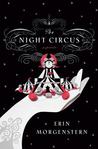
Review: The Night Circus

The Night CircusThe Night Circus by Erin Morgenstern

My rating: 3 of 5 stars

“Dreamlike” is the best adjective for this book about magic, secrets, and the wonders of the circus. Though the circus is rendered exclusively in black and white and shades of grey, The Night Circus bursts with color. The descriptions are truly the best part, capturing the allure of the circus, the vividness of life, and the way our struggles can make us feel. It’s a scrumptious read particularly suited to a cold winter’s night and a warm fire.

Erin Morgenstern’s tale follows two ancient, rival magicians who sign up two children for a life-long “game.” Without even explaining the “rules” of this game, or the point, or the stakes, the two children–Celia and Marco–learn magic. When they come of age, the arena for the game is set: a circus like no other. This circus, Le Cirque des Rêves (Circus of Dreams) operates only at night, is exclusively decorated in black, white, and greys, and features performances beyond Barnum & Bailey and the restrictions of reality. It is also a platform for the contest of wills between Celia and Marco.

But the original magicians don’t realize that their competitors are actually more similar than different, and what is intended as a fight turns into an all-consuming love, a love that imperils everyone who becomes ensnared in the circus.

The descriptions of late 1880-early 1900 America and Europe, the possibilities created by a circus without limits, the lush designs and ideas: these I love. I hope The Night Circus is someday made into a film, but the only suitable directors would be a) Terry Gilliam, b) Baz Luhrman, or c) Tim Burton, in that order. Those are the only directors I can see capturing the visual scope and detail Morgenstern puts out, so head’s up, guys.

However, I struggled with the plot. The first third of the novel just didn’t capture me, and with even the character’s names not being determined until later in the book–and not knowing what the game is or what the stakes may be–it was hard to “root” for anyone. The story moves forwards and backwards and sideways in time, making it a little confusing to follow. So it takes awhile for The Night Circus to work its magic on you–but magical it is.

View all my reviews

Leave a comment

Filed under Reading, Reviews

Review: The Golden City

The Golden City (The Golden City, #1)The Golden City by J. Kathleen Cheney

My rating: 4 of 5 stars

In a genre awash with elves, dwarves, and wizards, The Golden City is a splash of interest. There may be those sorts in the wider world, but The Golden City features the little-seen sereia (mermaids) and selkies, seals that can shed their skins to become human.

While still traditional magical creatures, these are wonderful bright spots in an overcrowded genre. I just loved getting to know the inner workings of mermaids and selkies. Sereia have a complicated social structure but are at nature similar to aristocratic humans. Selkies are a whiff of human with a great deal more seal; they’re a little simple, and lusty.

The story doubles its benefits by setting the story not in the traditional vaguely-British countryside, but rather in historical Portugal. This opens up whole new realms: the clothes they wear, the languages used, the traditions they keep, their religion and culture. It’s fantastic.

In The Golden City, Cheney has crafted a light and delicate story, part mystery, part spy tale, and the lightest touch of romance.

Oriana Peredes is a sereia–mermaid–who is a spy among the humans in the Golden City. She works as a companion for the Paris Hilton of the aristocracy–perhaps sweet, but empty-headed, and wanted by several suitors. The pair are on their way to a secret rendezvous with her mistress’s suitor when they are abducted. When her mistress is murdered right in front of her with elements of mysterious magic at work, Oriana puts aside her mission as a spy in order to find vengeance for her friend.

As she works to discover who tried to kill her, Oriana meets Duilio Ferreira, a police consultant and member of the nouveau riche. Oh, and he’s half-selkie.

Together they work to solve the case and protect the innocents of the city, and feel out the first touches of romance as they try to solve the riddle of destiny and whether it is even possible for a sereia and selkie to find love.

(HOWEVER, if you’re interested in paranormal romance, look elsewhere. This is a Victorian romance… in short, there is barely any more than a sideways glance and a flutter of the heart. It’s a nice change of pace, but I admit it was a tad unsatisfying.)

I picked this book up on a whim, and I am so glad I did! I can’t wait to read the next and learn more about these fascinating sea fantasies.

View all my reviews

Leave a comment

Filed under Reviews

Review: The Lies of Locke Lamora

The Lies of Locke Lamora (Gentleman Bastard #1)The Lies of Locke Lamora by Scott Lynch

My rating: 3 of 5 stars

I’m not sure I’ve ever had such trouble rating a book with such excellent writing. The truth, though, is that, while it is exceedingly well-written, it’s convoluted and faces so many different plot options it is hard to stick with the story.

Let’s start with the good stuff: Lynch has wrought a fantasy-tinged world in greater detail and clarity than the real world. His Camorr has layer upon layer of complexity, beauty, grime, seediness, character, and mystery. Despite the ample attention to detail, I wanted more. I wanted to know about the incredible Elderglass towers and how they were created, and how humans came to occupy them. I wanted a calendar of all the holidays in the city and descriptions of each festivity. I wanted to peek inside the temples of each of the 13 gods. It is rich and detailed and effortless; characters curse and revel in this very real world without a hint that this is fiction.

I’m also quite pleased with the confidence schemes that Lynch has concocted. They are as much of a joy to the reader as the characters committing them upon unwitting folk. Locke Lamora sells his false-face activities well, and I hungered for more of the like. In fact, I wished the whole book were nothing but a testament to the way Locke got himself in and out of one scrape after another.

That’s also the problem: from the first 1/3-1/2 of the book, that was what I thought I was reading: a lighthearted and amusing tale of a con men pulling a con. And I liked that. It was great fun trying to guess how Locke was going to manage the next touch against his enemy, wondering how close he could get to being caught.

But then the book took a sudden and dark turn, literally out of nowhere. It felt like this was not really one book, but three, smooshed together. To the point that, as much as I liked the characters and the overall world, I’m not sure I want to read any more adventures. I felt like the book I started and the book I finished were not at all related; the plot got twisty, and not always in a good way.

Possible spoilers to follow. Read at your own risk.

In vague terms, here are the major plot intersections I can identify:

  • Locke, as a child, is taken up by the Thiefmaker.
  • Locke, as a child, finds a new home with Chains.
  • Locke and his gang, now grown, are pulling a big con on some wealthy folks.
  • It seems the secret police are onto the con… oh no! Oh wait, no, that’s just more of Locke’s cleverness at work.
  • While doing a typical errand, Locke is encumbered by a marriage engagement he can’t easily escape. What will ever become of him?
  • A bad guy, heretofore unknown to the story, kidnaps Locke and requires he perform an impossible task.
  • OUT OF FREAKING NOWHERE, the bad guy kills the girl Locke was supposed to be engaged to, less than two chapters after it was introduced, forcing his boss to require Locke to help him fight the bad guy.
  • Double-cross by the bad guy. Things are not going at all according to plan.
  • Everyone you love is murdered. Locke swears revenge.
  • More murder, almost excessive. Bad guy takes over.
  • Other villain only previously hinted at turns out to be real and hatches a plan to get Locke.
  • Locke overcomes multiple obstacles and difficult situations to win the day, much the worse for wear.


I gotta say, I felt like I couldn’t really enjoy the book after the marriage-proposal feint. I’m not even sure what point it served; it feels like that could be cut entirely from the book without a mark of incident. It just seems too convoluted, and it made it hard to know what I was supposed to be cheering for at any given moment. Plus, dark-revenge-tale is deeply different from the lighthearted caper we were enjoying at first.

My other beef is the situation with female characters. Though there are ample women used as setpieces and secondary characters, some even with some mild action, this book is a sausage-fest. There’s even plenty of opportunity for a female character: one is mentioned repeatedly but never shows up. You could change one (or more) of the characters in Locke’s gang into women without at all changing the story. A few women toward the very end of the book see some action, but it seems half-hearted. Though characters–even a whole chapter!–claimed that women were not to be trifled with, it seemed more sentiment than truth, and made me wonder if Lynch was somehow afraid to write women characters (which is foolish, because his background ladies were really interesting! Just…not a lot to them.)

I’m not sure I would recommend this book. It feels like those who would like a fantasy caper might not like the end (like me) and those who might like a gore-heavy revenge story might not get through the lighter beginning material to see the stuff they liked. But it is incredibly well-written and I’m impressed with Lynch as a whole. Perhaps I’d like one of his books that ran shorter than 720 pages.

View all my reviews

Leave a comment

Filed under Reviews

Review: The Song of Achilles

The Song of AchillesThe Song of Achilles by Madeline Miller

My rating: 5 of 5 stars

I nearly double-majored in Classics, and the most enjoyable class I took in college was a Classics/Archaeology crossover class where we read classical texts then watched movies based on them to pick them apart for historical accuracy.

But that kind of knowledge is fairly niche now, and I don’t get a lot of opportunities to think about Homer and the Greek gods anymore.

Going back, though, is extremely satisfying. Anyone with more than a passing interest in The Iliad needs to immediately pick up this book — even if your only exposure to the tale is what you gleaned from “Xena: Warrior Princess” and the movie “Troy,” you’ll enjoy this book.

Achilles, the hero of the Iliad, is “the best of the Greeks,” and yet the Trojan War lasted 10 years as men fought for land, power, and the rights to the most beautiful woman in the world. But the original text provides very little insight into the life and character of this man.

That’s where The Song of Achilles comes in, telling Achilles’ story through the eyes of his most beloved, the footnoted and glossed-over Patroclus (laughably called Achilles’ “cousin” in the modern interpretation; sure, we believe he went to his death on behalf of his “cousin,” Hollywood. Suuuure.)

Tackling Greek myths for a modern audience is pretty tricky work: how do you remain faithful to a story format conceived thousands of years ago?

But Madeline Miller more than manages: her writing is deft, loving, and honors both human skill and god-gifted powers. You’ll believe the gods–tricky, unreachable, unassailable in their pretty deceptions–really do intercede into a human war, and you’ll also see how a change in the wind could be interpreted as a blessing from the gods.

The relationship between Achilles and Patroclus is nuanced, taking them from their time as children together up through and beyond Patroclus’ death. Their love as a couple is potent and poignant, and I sometimes had to stop reading to clutch the book to myself, hoping that, maybe, this time, Patroclus wouldn’t have to die.

Despite the homosexual relationship between Achilles and Patroclus, I wouldn’t call this a necessarily LGBT work. This is a Classics piece, and will be best loved by those who love the Classics. The text itself is vague on whether or not they would, by modern terms, be considered gay: do they love men–any men?–, or do they merely love each other? I’ll not spoil it, but Patroclus and Achilles both have moments where the rigidity of a sexual category are questioned.

The perhaps most incredible part of this story is how a demi-god manages to live when he knows, with complete certainty, that his early death is assured. How can you live a full life knowing you will not be able to grow old? What kind of person would chose the allure of glory and fame over life? The portrait of Achilles here painted is a believable structure of such a man.

I can’t wait for Miller to tackle The Odyssey next! (I hope she does!)

View all my reviews

Leave a comment

Filed under Reviews

Review: The Assassin’s Apprentice

Assassin's Apprentice (Farseer Trilogy, #1)Assassin’s Apprentice by Robin Hobb

My rating: 3 of 5 stars

I read most of Robin Hobb’s Liveship Traders/Rain Wilds series (and was eager to finish it, but it wasn’t completely written at that point!) years ago, and when I was leaving on a trip I thought I’d pick up another series of hers and take a little “fantasy vacation,” too.
I’m glad I was reading this one on a plane; otherwise, I might not have finished it.
In fact, I am not sure if I’ve read this one before or not, which maybe isn’t the best sign.
It’s not a bad story at all; it’s full of court intrigue and a light dusting of magic. Characters are relatable, I enjoy the castle keep setting, and I was pulled along to reach the end.
However, compared to the Liveship Traders series, (or at least my memories of it) this book was pretty dull.
I kept having the thought that, in the hands of another writer, this same story would have been more enlivened. As it was, it was like the narrator couldn’t decide if he was being unreliable or not. At first this is forgivable: it starts with our hero–a bastard son of the king without a formal name (awkward!)–as a young child. He has a child’s perspective and it makes sense that he wouldn’t necessarily recall some things.
But as the kid grows up and becomes the titular assassin’s apprentice, I just kept finding myself wanting more. More details about training to be an assassin, about how to kill, about his childhood training and his relationship with the others at the keep. Instead, things are mentioned frequently in passing, and more time is devoted toward side stories that frankly I never got particularly invested in. The end result is that I liked the book but feel like there was a lot of dithering and wasted time. It felt more like a book I was reading just because I was trapped on a plane than something I was really drawn to keep going with. The moments that seemed like potential for incredible action descriptions I found myself daydreaming about–how would I have written that? What could have happened on that misadventure? What greater depth could that scene show?
I read this on an ereader, so I don’t know page numbers, but I do know that the really exciting and interesting stuff–I’ll have to leave it out in case you decide to read it anyway–didn’t show up until I was 90% through with the book.
Then the action was over before I could blind and it turned out the last 5% of the book was filler, so that wasn’t a lot of room for a denouement, either.
Part of me is still curious about the rest of the trilogy, and though I mostly had figured out the twists in this one before they happened, it was still an interesting courtly intrigue type plot, so I’m curious as to what might happen next. But I wouldn’t rank it as engaging fantasy and I don’t feel pressed to immediately pick up the next book. Maybe it can wait until I need to wait in an airport again.

View all my reviews

Leave a comment

Filed under Reading, Reviews

Worldbuilding 101: For Authors

This talk has nice animation, but doesn’t get to the good stuff until about 3 minutes in.

Leave a comment

January 25, 2014 · 2:35 pm