Dead President Fact Sheet

After reading the excellent “Dead Presidents,” I realized, because it was written thematically rather than sequentially, that I was a bit muddled on my presidential trivia facts. So I went back through the book, like a crazy person, gave myself homework, and made a list.

Here’s a bunch of trivia about the presidents you probably didn’t know. You’re welcome.


  • George Washington- a tomb was built for him in the Capitol rotunda, but he isn’t buried in it
  • John Adams- died on July 4 and was kinda terrible father
  • Thomas Jefferson- “the Sage of Monticello”; didn’t include his presidency on his obelisk’s list of personal achievements
  • James Madison- his grave went unmarked for two decades after he had to sell his land to pay off his stepson’s gambling debt
  • James Monroe- ran unopposed for reelection, the only president (besides Washington) to do so
  • John Quincy Adams- died in the House of Representatives of a heart attack/very vocal “NO” vote
  • Andrew Jackson- “Old Hickory”; his pet parrot cursed loud and long at his funeral and had to be removed
  • Martin Van Buren- known as “The Little Magician”
  • William Henry Harrison- died after 1 month in office, so soon his family hadn’t even made it up to Washington yet
  • John Tyler- known as “His Accidency.” He had to hire the first presidential bodyguards.
  • James K. Polk- micromanaged his Cabinet and the whole presidency
  • Zachary Taylor- was thought to have been poisoned, was disinterred in the 1990s…nope, not poisoned.
  • Millard Fillmore- official White House biography calls him an “uninspiring man”
  • Franklin Pierce- Nathaniel Hawthorne wrote his campaign biography; his son died in the days before he took office, leading his wife to believe Franklin had somehow caused God’s wrath to be directed at them
  • James Buchanan- he adopted his niece, Harried Lane, after her parents died; as he was unmarried, she served as first lady
  • Abraham Lincoln- “the Great Emancipator”; was taken on the “Great American Death Tour” after he died; the impromptu stage built for his funeral has been used in every state funeral since
  • Andrew Johnson- first impeached president, but he wasn’t removed! He hired the first presidential doctor.
  • Ulysses S. Grant- Mark Twain bought the publishing rights to his memoir
  • Rutherford B. Hayes- “Rud”; created the first presidential center to protect/display his papers and artifacts; his election was known as the “ugliest, most contentious election ever”
  • James A. Garfield- killed by an assassin–with an assist from his terrible doctors
  • Chester Arthur-“Dude President”; first act as president was to cry in a bedroom
  • Grover Cleveland- big supporter of Hawaiian independence
  • Benjamin Harrison- grandson of William H. Harrison but didn’t like talking about it; gave us the tradition of the White House Christmas tree; also he married his niece, which is pretty icky
  • William McKinley- Mt. McKinley (in Alaska) was named after the president by an opportunistic prospector who was trying to lobby for the gold standard; the name was reverted to the original Diwali this year
  • Theodore Roosevelt- his daughter Alice Roosevelt Longworth was considered one of America’s greatest political wits and she was a pretty rowdy teenager, too
  • William Howard Taft- that bathtub story? It’s not true! ….But he did stress-eat and develop sleep apnea while in the White House
  • Woodrow Wilson- buried at the Washington National Cathedral with Helen Keller and a few other notables
  • Warren G. Harding- had the first presidential celebrity pet, his dog “Laddie Boy”
  • Calvin Coolidge- “Silent Cal”; a fan of artisinal cheese; his dad swore him into office at 2 in the morning, upon which they went back to bed
  • Herbert Hoover- invented a sport called “Hoover-Ball”
  • Franklin D. Roosevelt- first to plan his presidential library while in office, including a paper mache sphinx head of himself (you’d have to read it, it’s too hard to explain)
  • Harry S Truman- gave personal tours of his presidential library
  • Dwight D. Eisenhower- “Ike”; a toymaker friend created a set of presidential toys/collectibles to celebrate Ike’s presidency
  • John F. Kennedy- his eternal flame was jerry-rigged together the day before; Jackie is personally responsible for the “Camelot” mythos
  • Lyndon B. Johnson- robot LBJ tells jokes in the presidential library, which was intentionally built as a “vigorous, male building”
  • Richard Nixon- titled his comeback plan post-Watergate “Wizard” and was eventually seen as an expert in foreign policy
  • Gerald Ford- said “I am a Ford, not a Lincoln”
  • Jimmy Carter- n/a
  • Ronald Reagan- “The Great Communicator”; shot by an assassin but lived because he had good doctors; the “Legacy Project” is a concerted effort to get something named after Reagan in every county of the U.S.
  • George H.W. Bush- n/a
  • Bill Clinton- still very much alive, but the book noted that his cat, Socks, has his ashes at Clinton’s library
  • George W. Bush – n/a
  • Barack Obama- n/a

Leave a comment

Filed under Reading

Review: Dead Presidents

Dead Presidents: An American Adventure into the Strange Deaths and Surprising Afterlives of Our Nation's LeadersDead Presidents: An American Adventure into the Strange Deaths and Surprising Afterlives of Our Nation’s Leaders by Brady Carlson
My rating: 4 of 5 stars

Maybe it’s just because I’ve been listening to the “Hamilton” soundtrack too much, or that this year’s election cycle has continuously been called “unprecedented,” but “Dead Presidents” seems like the perfect book for 2016.

It is:
– a historical view on how each of our presidents was memorialized after his death
– an excellent source of perspective on politics in general
– hilarious
– thoughtful introspection on what it means to be American
– essential to all trivia fiends (you’ll have so much weird presidential knowledge!)

Die-hard history buffs might be a little frustrated by the format–rather than following presidents sequentially, they are grouped by themes related to their deaths–and I admit I definitely lost track of who was who a few times, but there’s a ordered list at the front you can always refer back to if you’ve gotten Calvin Coolidge confused with The Great Communicator.

Carlson’s book has great heart, and it’s clear he is really enamored of the subject. He provides excellent historical commentary (did you know the bathtub story about Pres. Taft is probably pure fiction?!) but layers it well with side notes and a generous understanding that most people would never think to undertake such a quest as visiting the tomb of every president. He knows it’s a little crazy, and he’s just tickled that you were interested enough to read his book.

As a Dallas native, this book brings an extra perspective. The chapter on Kennedy’s death surprises you by mostly glossing over the “controversy” regarding the number of shooters, and generally assumes you’re sick of conspiracy theories. Instead it focuses largely on how the city of Dallas has reacted to the legacy of being the city that killed Kennedy. It’s really interesting to see an outsider’s perspective.

This book is fantastic. I’ve already recommended it to no less than four people, and I think you should give it a shot, too.

View all my reviews

Leave a comment

Filed under Uncategorized

Review: The Brief Wondrous Life of Oscar Wao

The Brief Wondrous Life of Oscar WaoThe Brief Wondrous Life of Oscar Wao by Junot Díaz
My rating: 4 of 5 stars

It has been years since I have been so utterly challenged by a book. Junot Diaz breaks almost every conventional rule of literature—the story is nonlinear; characters are not major historical players despite being set in a historical moment of great change; mixes vulgarities with nerdy references in a way guaranteed to exclude most highbrow readers; jumps around in narration; makes frequent reference to a book most people probably hasn’t read, even if they should (In the Time of the Butterflies); avoids most dialogue punctuation—and yet transcends most books. Read this book to have your mind blown in the best possible way.

I had four years of Spanish in high school and it wasn’t enough, because they don’t teach words like “toto,” “puta,” and “culo” in high school (“pussy,” “whore,” and “ass.” You’ll need them in this book)—though Diaz presents a compelling reason to include them in the next lesson. I’ve never made such frequent use of Google translate as I did with this book, and many times there were words even there that couldn’t be looked up, that only brought up annotations for this very book.

But even if you don’t stop to look up all the words you don’t know, Diaz beautifully and elegantly communicates the feeling of being each character, of dealing with their struggles and their particular viewpoint. It’s rare that you can see inside a whole family in this way, each against each other and yet tied together as one unit, each struggling with their own challenges yet determined to be a united front against the world.

The title of this book and the blurb makes it seem like this is the story of one character—Oscar “Wao”—but that’s misleading. I’m not even sure, except for the end, that Oscar can be said to be the main character. No, this is a story about a family, individually and together, and about the legacy of immigration–both blessing and curse–that has impacted them all. It is a powerful and moving tale–even if it does stretch the limits of your translator.

View all my reviews

Leave a comment

Filed under Reviews, writing

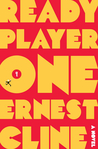
Review: Ready Player One

Ready Player OneReady Player One by Ernest Cline
My rating: 3 of 5 stars

If Ready Player One were a lasagna, it would be a little bit of meat, a thin layer of noodles, and a lot of cheese. Of course, some people really like cheesy lasagna, and some people haven’t eaten lasagna in a really long time and don’t remember what it’s supposed to be like so they like the first one they try. And that’s okay.
But that doesn’t mean this sci-fi lasagna is “world’s best.”
Anyway, Ready Player One has a clever concept: people in a future in which all the world is enthralled by an immersive alternate reality experience are challenged to complete a virtual-reality 1980’s-themed quest to get a lot of money. One kid with not much going for him discovers the first major clue–and learns about friendship and the meaning of life while tackling the quest.
It sounds kinda like a Lifetime movie. And really, that’s not that far off. Ready Player One’s biggest problem is being in love with references, references to the 1980s (in the U.S.), pop culture, D&D, and most of all, video games. So many references that it sometimes seems like the plot has been redirected just to fit in one more. It’s kinda like that guy from the office who just can’t let the joke alone already–everyone just finds a reason to get lunch somewhere else when he’s around.
I was really excited about this book. It was a sci-fi dystopia! There were video games! It was a best seller! But it turns out it’s mostly a fan-fiction combo of Tron and Charlie and the Chocolate Factory. There are lots of good ideas, but they’re underdeveloped (in favor of more references–gag), and it seems like we spend most of our time in the virtual reality of Oasis not because that’s where the story leads us but because author Ernest Cline didn’t think through all of what his futuristic world looks like. It’s also frustrating that the audience is left out of solving most of the puzzles because of information that is just never revealed to the reader (I mean, how do we know that there is a museum on a planet called Archaid?) and yet the major plot points might as well be written in neon for how obvious they are and how much they telegraph. Especially frustrating is the quite literal deux ex machina just when the protagonist gets in a tight spot. I mean, come on.
As a fan of science fiction dystopias, I was also frustrated that Cline didn’t quite think through the ramifications of his future. I mean, seriously, when the whole world is spending most of their time, in some form or another, in a virtual reality, why on earth would a guy who does that very thing be derided as a basement-dweller who never left his mom’s house? (Answer: he wouldn’t! That’s projecting current stereotypes into an imaginary 50-years in the future. The culture would have changed!) And why would anything in a virtual reality require as de rigour real-time travel? Spawn points are already a thing in our video games. Ain’t got time for that!
If you know what you’re getting—a whole lot of clever/cutesy references to the 1980s wrapped in a light dusting of futurism—Ready Player One is a fun read. Just make sure you know what kind of cheese you like on your pasta.

View all my reviews

Leave a comment

Filed under Reading, Reviews

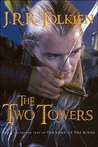
Review: The Two Towers

The Two Towers (The Lord of the Rings, #2)The Two Towers by J.R.R. Tolkien
My rating: 4 of 5 stars

J.R.R. Tolkien has a well-deserved place in lists of most beautiful prose, and Two Towers offers a strong recommendation on its own. It’s beautifully constructed (if a bit different from modern novel styles), and is enchanting. It has a way of sweeping the reader up and into a grandiose world of the mind—it’s really, really magical.

But it’s also slow in parts. All those lingering descriptions are great for a lazy afternoon but terrible if you’re waiting in line at the bank and just snatching a few sentences at a time. It’s mostly my fault it took me a month and a half to read, but the long, languishing paragraphs aren’t a lot of help in the speed department. So approach with time to linger.

This book is divided into two separate stories, and unlike the Peter Jackson movie, the stories are utterly separate, without switching back and forth. Though the Fellowship of the Ring ended with Frodo and Sam paddling off alone, you start out The Two Towers with the remainder of the fellowship, Aragorn, Gimli, and Legolas. They’re off on a race to find the two kidnapped hobbits, Merry and Pippin, and it’s an exciting action-packed adventure.

But then that storyline resolves half of the way through the book, with the remainder dedicated to the dreary, exhausting toil of Sam and Frodo (and sometimes Smeagol). It’s really rough to get through those parts sometimes, honestly, because it’s just such a death march. A well-written, beautifully rendered death march, but exhausting to try to drag yourself through.

(BTW, Sam is definitely the most heroic and honorable character in this series. He does not get enough credit.)

The book is wonderful. I want to go back and pick out all my favorite lines and treasure them. But I’m also grateful that I’m done with the book for now, and ready to move on to other things. Read when you have time.

View all my reviews

Leave a comment

Filed under Reading, Reviews

Review: InterWorld

InterWorld (InterWorld, #1)InterWorld by Neil Gaiman
My rating: 3 of 5 stars

“What if Neil Gaiman wrote a sequel to A Wrinkle in Time—what would that look like?”

“InterWorld” is the answer. Well, kind of.

InterWorld seems like a modern spiritual cousin of “A Wrinkle in Time,” except it’s less tightly organized and more definitively a young adult book.

InterWorld follows a boy (Joey Harken) as he discovers he has a special power—he can walk between worlds, parallel worlds, that are similar but not exactly the same as the Earth he knows. And that there are people who want to kill him, and all those like him, for their own nefarious purposes. Joey stumbles into a camp full of all the alternates of himself—the people descended from birds, the robotically enhanced humanoids, the girl Joeys (*gasp*!)—and has to be trained to use his powers to fight back against those who would destroy everything.

But this is a half-Gaiman book, so it’s not light on the tragedy. It’s handled in a very appropriate way, but it could be jarring to those who expect a kids’ book to be nothing but happiness and sunshine.

The story is a little jumpy and it’s hard to get attached to any of the characters besides Joey, but InterWorld has a lot of charm. It would be great for an emerging nerd in middle school, someone who could potentially get more into sci-fi later but is still a developing reader. Someone who feels a little bit like a misfit.

View all my reviews

Leave a comment

Filed under Reviews

Review: The Fellowship of the Ring

The Fellowship of the Ring (The Lord of the Rings, #1)The Fellowship of the Ring by J.R.R. Tolkien
My rating: 5 of 5 stars

I read this book a long, long while ago, and it was time to read it again. But this time, I’ve seen and loved the films, and that has undoubtedly affected my reading.

If anything, it enhanced it. I swear I could hear the theme music playing as I read, could hear that tremble in Gandalf’s voice when he talks about Moria. The movies aren’t an exact copy of the book, so both seem fresh, but the movie is so respectfully done that I found it enhanced my reading of the book.

And this book. This book. Wow. I found myself kind of indifferent to The Hobbit upon a reread, but this one is an international treasure for a reason. The descriptions are powerful and vivid, and I frequently felt I was on the journey with Frodo and the Fellowship as I stepped out each morning for a daily walk. Where The Hobbit fumbles a bit, The Fellowship of the Ring soars. It touches upon something truly magical and makes you want nothing more than to dive down further into it, to meet Tom Bombadil and Goldberry and Legolas and precious Samwise.

Few books can transport you like The Fellowship can. I’m grateful I found it just as enchanting on a reread as it has always been.

View all my reviews

Leave a comment

Filed under Reviews

Review: Uprooted

UprootedUprooted by Naomi Novik
My rating: 3 of 5 stars

I don’t know that I’ve ever boomeranged so intensely about a book. When I started reading, I would have easily given it a 5-star rating. At the end, I wanted to give it a 2. So I’m compromising and giving it a 3.
“Uprooted” is an incredible idea for anyone who likes dark fairy tales—or, you know, the originals. At the beginning, at least, it’s a Eastern European-flavored “Brothers Grimm” (yes, that wonderful/terrible movie!). And it’s rhapsodic! It’s so great! We follow the main character, (who I called “Agnes” in my head because I couldn’t figure out how to pronounce it), a peasant girl without much in her favor, as she is swept up by a stern and mysterious wizard to live for a term of 10 years in his brooding and chilly tower. He is known as “the Dragon,” and the story opens with a clever play on the “dragon abducting virgins” trope. In fact, that’s what I loved about the beginning: it is SO clever, and has such beautiful writing, and is so unexpected in so many ways. Things in the evil Wood were literally downright terrifying in ways you never see in modern fairytales anymore; Novik really knew how to make them scary!

And I was so completely on board—yes, this! Give me more of this! It’s so wonderful!

And then I started to get annoyed. And then really really pissed off.

The following airing of the grievances will be spoilery. Stop now if you’re thinking of reading it and want to be surprised.

It’s not too surprising that Agnes discovers she has magical abilities: she’s the heroine, it happens! But when the story went from “she has magic and it’s really really hard” to “she has magic and also she’s the best in the whole wide world,” I had a problem.

The story takes place over 1 year, and she’s like 16 or 18. She definitively begins the story as a confused young teen girl, all gawky knees and teen confusion and angst. But by the end, she seems… 25? 30? Very knowing and self-confident and instinctively talented at magic. But is there a logical progression between these two points? Hell no. Just 2/3 of the way through the book, Agnes just completely changes personalities. And because she’s the best most magicalist and youngest and suddenly confidentest and whatever, she comes across as a ridiculous Mary Sue character. There’s an early struggle, then other totally unrelated stuff happens, and suddenly she’s the best. Gag me.

Then there’s the forced and utterly unnecessary romance. It feels like someone late in the process said “you know what this book needs? Someone needs to have some sex!” But that is exactly what I found charming about the early part of the book—she had this really interesting (and frankly, rare) teacher-student relationship with the Dragon. It was perfect just as it was, as a deep if perhaps confusing connection. But then they have sex for no good reason…and it is totally inconsequential to the plot. I don’t know why I had to read it! Why did it matter? I don’t care! Plus it is totally creepy that he’s several hundred years old and she is, don’t forget, 16. This weirdness is even mentioned, and Agnes just laughs it off! No, address it! It’s weird! How is it not weird? Give me a reason, make it mean something, don’t just shoehorn a romantic subplot in there because it’s a woman-led story!

Then there’s the whole thing with the royal family. Just everything in that section…I don’t care. You know why? A bunch of characters are introduced and then murdered in very quick succession, and I am never given a chance to understand why they are important. And the Wood was already mysterious and dangerous as it was. Decamping the storyline to another city (and separating the Dragon and Agnes) just felt entirely unnecessary. And I really truly just don’t care what is happening to the royals. That could have been a sequel, but it felt crammed into this novel and for no good reason. It would have been better without it.

And the last thing that annoyed me was purely in the writing: characters seeming to think things to themselves but other characters answering as if they’d been speaking, and characters having multiple names, not always with the new name explained or even introduced in a logical way. The first issue made it seem like characters were reading minds, and that was just weird and unnecessary, and the second issue made it seem like there were a lot more characters than there really were, and then I had to go back and reread to figure stuff out.

I don’t know what to make of this book. I LOVED the first half. It was amazing. I loved the characters, I loved the ideas, I was afraid of the scary things, the writing was beautiful. The end was pretty okay, I guess, even if I disagree with a few nits. But from midway to nearly the end? Throw that right out. Rubbish.

Read at your own risk.

View all my reviews

Leave a comment

Filed under Reviews

The Three Ingredients for Talent

William Hung from American Idol

Some people lack self-awareness about their abilities, and that’s a real impediment to fostering talent.

I would like to propose a new way of thinking about talent.

It’s commonly held that there are basically two ways of imagining talent: being innate (“you’re a born genius!”) or being merely the result of hard work (the 10,000 hours theory).

But I don’t think that’s all of it. I think there’s a third dimension.

First, consider innate genius. If you’re born with the potential to be an incredible ballet dancer but are not ever given the opportunity to learn or perform ballet, would you still be a genius? Also, if you have a talent but choose not to nourish it with the fruit of hard labor, would you still be talented? Does it matter if you have the talent to write the Great American Novel if you never actually sit down at the keyboard? No. So talent is not enough.

But I also believe that hard work alone does not guarantee genius. I think we all know someone who is a very hard worker but whose work is just not quality. This kind of person may work hard every day, without necessarily ever achieving anything. After all, if all talent truly required was hard work, I think more people (in a fair world anyway) would be rewarded for their talents. But I’ve never heard of a Janitor of the Year award, and there is no doubt that some are incredibly hard workers. (Forgive me if there is such an award and I’ve somehow missed it.)

I think this occurs more often than we’d like to admit with self-published authors: hard-working and perhaps determined, but not necessarily producing good work. And that leads me to the new dimension that I think needs to be added to the discussion of talent: self-awareness.

The hard worker who is self-aware may realize their faults and work to improve them. The naturally talented person who is self-aware may understand the critical importance of perseverance. But the person from either arena who lacks self-awareness doesn’t achieve anything, the first because of laziness, the second because of obliviousness.

This probably won’t be a popular opinion: it’s considered culturally gauche to admit that not everyone can do every job, even if it is the absolute truth. (I will never be a ballerina because I was born with the wrong body type entirely; I will never be a surgeon because I am unwilling to spend that many years in school. I will never be an astronaut for a combination of both these reasons.) You can teach a ethos of hard work; you can expose people to many different activities so they may discover their natural talents—but how do you teach self-awareness?

This cuts both ways, by the way: people who are talented but who think they aren’t, people who suffer from imposter syndrome because they can’t handle the idea of their own successes.

I think self-awareness is a particularly tricky pill to swallow for an author or aspiring writer. On the one hand, every negative review cuts to the bone. On the other, you tell yourself you just have to put yourself out there, that those people just can’t stand your brilliance. Or you lack confidence, and don’t believe it when the positive reviews do start coming in.

What do you think about adding “self-awareness” to the requirements for talent? And is there anything we should do about it?

2 Comments

Filed under Uncategorized

Review: Ink and Bone

Ink and Bone (The Great Library, #1)Ink and Bone by Rachel Caine
My rating: 4 of 5 stars

It is shocking that an author has not previously written about the critical importance and value of books and libraries and made it the turning point of a novel. Thank goodness Rachel Caine did–this book is a joy!
It occupies an alternate history where the Library of Alexandria never burned but instead became the most powerful organization in the world, a storehouse of all knowledge. Even the printing press is not invented, replaced instead by the steampunkish magic of the Oculists, which allows the library total control of ALL reading material. Knowledge is power, literally, and those who hold the power of the library will go to great lengths to keep it.
I literally couldn’t put this book down. It reminds me, for a bit, of the spellbinding adrenaline I got from the Harry Potter series. But it’s also a completely different book, more brutal with readers’ feelings from the get-go. There are so many twists here and you’ll never see them coming.
Caine should be particularly proud of herself for writing a fiction novel that embraces diversity. I don’t think I’ve ever seen a Muslim character in a novel before; it was refreshing and interesting. Because of the conceit that the Library is everywhere, the characters could also be from everywhere, and Caine gave them a richness comparable to attending a world market.
This book was so much fun that I’m sad I’m done with it. I put off this review because I wanted to stay in that world longer, even just in my head! But now it’s time to buy the sequel…

View all my reviews

Leave a comment

Filed under Reading, Reviews