Tag Archives: review

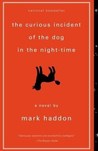
Review: The Curious Incident of the Dog in the Night-Time

The Curious Incident of the Dog in the Night-TimeThe Curious Incident of the Dog in the Night-Time by Mark Haddon

My rating: 4 of 5 stars

A lot of the time when we talk about writing, we say it’s because we “want to get into someone else’s head.”

But that’s not true, is it? A lot of the time, we want to be ourselves, but in someone else’s life. You want to stop being a truck driver who takes the same route to work every day, day after day, and be a prince fighting faeries instead; you want to not be a frazzled mother of three young kids and instead be a footloose woman who can pick up and find herself in countries totally different from your real world; you want to not be a lost teenager in a scary world with things out of your control, because you’d rather be a boy wizard who has amazing friends and literally saves the world.

The Curious Incident of the Dog in the Night-Time is a rare book that literally puts you inside someone else’s mind. And it’s incredibly disorienting at first, but all the more powerful for this transformation.

The Curious Incident of the Dog in the Night-Time is a story about a deeply autistic boy, Christopher, who discovers his neighbor’s dog is dead and decides to be a detective like the Sherlock Holmes stories he likes to read, and he writes down everything that happens in a book he began making as a class assignment.

Because he is autistic (and because author Mark Haddon is very good at what he does and has worked with special needs kids), Christopher’s writings are not like anything else. There’s very little emotion, not much introspection. There are math problems. Chapters are numbered with sequential prime numbers. There are very precise drawings of the patterns of the fabric of a new chair.

The presumably non-autistic reader is left to fill in a lot of the gaps in the story, because while Christopher is perhaps the most literal narrator in some senses (describing even the number of holes in someone’s shoe, and the exact color of the beans on the plate), his perceptual lapses means he truly can’t understand some things. But the reader can, making this book a lot more interactive between the character and the reader than most.

It’s hard to relate directly to Christopher, and that’s what makes this book so compelling. You see through his eyes and are frustrated that he misinterprets information that seems so obvious. The people all around him–even his pet rat sometimes!–are more like the reader than Christopher, and you feel their frustration with dealing with Christopher’s many needs, with his seeming dichotomy between a kid who is stunning at some things and completely empty in others.

It’s a lesson in empathy, if nothing else.

This book isn’t an easy read, and it’s not a happy read, either, and I’m mystified by the quotes on the cover exclaiming the “bleak humor” within, because I found nothing funny–just sad. Because as more children are diagnosed with autism and society finds ways to cope, much of what happens in the book is barely fiction for many parents and teachers and caregivers. I can’t imagine the pain it must cause those real parents who have to find strategies to manage real Christophers.

The Curious Incident of the Dog in the Night-Time is a fantastically written book, but be prepared for something a bit more weighty than your average fare.

View all my reviews

4 Comments

Filed under Reviews

Review: All There Is; Love Stories from StoryCorps

All There Is: Love Stories from StoryCorpsAll There Is: Love Stories from StoryCorps by Dave Isay

My rating: 5 of 5 stars

I am not a crier by nature. The Notebook didn’t make me cry; though I do always get a lip quiver when I watch Moulin Rouge, I don’t cry; and I don’t typically read a book or watch a movie with the intent that it’ll evoke some strong emotion.

So when I say that I have found the book I’ll keep handy in the event I’ll ever join a soap opera and need to sob on demand, know that means something.

All There Is: Love Stories from StoryCorps can make me cry in two pages. Not gentle tears, but complete face-twisting uninhibited emotion. And you should absolutely read it.

All There Is is a compilation of true stories collected by StoryCorps as part of their mission to collect stories of people’s lives. These will be given to the storyteller as a family keepsake and another copy goes to the Library of Congress, to pass on to future Americans. It’s a simple mission, but incredibly powerful. If you’ve never heard StoryCorps on the radio, go watch this animated version. It’s one of the stories in the book, but it’s a little different to see it. Go watch right now.

I don’t think this book is necessarily supposed to be sad. The first section is all about finding love, and the stories are all happy endings, and you can practically hear the giggles in the narrators’ voices as they describe their first dates with the people they spend their whole lives with. It’s charming and so authentic, though, it strikes a chord on your heartstrings like nothing else. It makes you believe in true love.

The second segment is about love lost, and that one packs a definite wallop. In fact, my fiance took the book away from me, because by the third story in, I was clutching him and crying uncontrollably. So, to be completely honest, I haven’t read the whole book–yet. I’m going to need to space it out, because this book is so moving it needs to be taken in small doses.

The final section is on love found again. If it’s anything like the first two, I’ll need the tissues handy.

This is no Chicken Soup for the Soul. No, All There Is is your favorite Chicken Soup story turned to 1000. It’s so raw and heartfelt and emotional, so matter-of-fact, so inherently inspirational and compelling, that I promise it will be like nothing else you’ve ever read.

Even if you’re not a crier and can’t bring yourself to read something that’s going to clear out your tear ducts, I recommend you buy this book, to support StoryCorps in their mission. Or donate to their cause.

It’s money well spent.

View all my reviews

Leave a comment

Filed under Reviews

Review: The Black Unicorn

The Black Unicorn (Magic Kingdom of Landover, #2)The Black Unicorn by Terry Brooks

My rating: 2 of 5 stars

Used book stores are amazing places, but they can lead to book-mania.
I blame the irrationality of book-mania for this book. It was in the clearance section (of Half Price Books! Even more cheap!), and I hadn’t read anything pure fantasy in awhile, and honestly it has a picture of a unicorn on the cover, so yeah, I bought it.
I realized about a third of the way through that I’d made a mistake, but I kept going–surely it will get better any time now.
It didn’t.
First, this is a sequel, but I’ve not read the first book in the series (oops), because I didn’t realize it was a No. 2 until after it was too late. So I didn’t know what was going on at first. Things eventually were kind of revealed, but…this plot needs work. Terry Brooks was clearly going for some kind of “know thyself” message, but it was really muddled. This was one of the rare books that I honestly thought would have been better if the main character had switched with the secondary character: that is, rather than mostly following lead character Ben Holiday, I kept wishing I could drag the perspective away and see what Willow, the tree-girl/sylph, was up to. Because while Ben spends the majority of the book totally lost and aimless, Willow has purpose. She may not know WHY she’s doing something, but she knows she should (oh the “my fairy magic told me so” excuse).
It was particularly upsetting when the BIG REVEAL made it up to Ben to suddenly know everything, when the reader knows Ben is completely clueless. It was like Spicoli from Fast Times at Ridgemont High suddenly became Sherlock Holmes. There was just NO WAY.
Also, it’s probably a bad idea to have one of your characters declare he’s not a deux ex machina. Odds are if he says he isn’t, the magical mysterious cat-like-fairy-creature doth protest too much.
Anyway, I’m relieved to be moving on from this one.

View all my reviews

2 Comments

Filed under Reviews

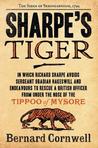
Review: Sharpe’s Tiger

Sharpe's Tiger (Sharpe, #1)Sharpe’s Tiger by Bernard Cornwell

My rating: 2 of 5 stars

This was not the right book for me. I read it out of family loyalty, honestly. It wasn’t poorly written–in fact, it’s a great example of really detailed historical fiction, and that’s impressive–but I just did not care. I tried, I really did, but this book was a very strong “meh” for me.

Private Richard “Dick” Sharpe is in the British army in 1799, fighting a war he doesn’t really understand or have any genuine interest in at all. In fact, he’s considering deserting, because the army is “boring.”
It quickly becomes less boring as he’s set up for assaulting an officer (who really really deserved that punch) and nearly dies thanks to the British “correctional” plan of flogging a man for any crime under the sun. But Sharpe is snatched from the jaws of horrible death by happenstance and a problem that needs a regular man with a bit of wit about him–sneaking in to the enemy Indian city to rescue, or at least take a message from, the captured officer inside.
I won’t give much more away, but of course Sharpe becomes the day’s hero and all is concluded with everyone but the enemy better off than he was before.
You’ll need an interest in military maneuvers for this book to work for you. I thought it was enough to like history, but no, this is a military history book above all else. It comes close to giving Sharpe the daring-do of Clive Cussler’s Dirk Pitt, but falls short, and though he’s clever, Sharpe is also common, so he’s no James Bond either. It’s refreshing, in a way, that the hero is far more average than most action books, but…for me, that also left him rather boring. He doesn’t so much as act as react to his surroundings, and though he does it remarkably well, I struggled to stay interested in this one.

Do give it a shot if you like reading detailed explanations of old fights, though.

View all my reviews

Leave a comment

Filed under Reviews

Review: The Disappearing Spoon

The Disappearing Spoon: And Other True Tales of Madness, Love, and the History of the World from the Periodic Table of the ElementsThe Disappearing Spoon: And Other True Tales of Madness, Love, and the History of the World from the Periodic Table of the Elements by Sam Kean

My rating: 4 of 5 stars

The Disappearing Spoon is a history of the periodic table of elements.

Some of you are going “ohhh goody!” and immediately adding it to your reading lists. (Let’s be friends!)

For everyone else, who perhaps needs a little convincing, let me tell you that you should most definitely read this book if any of the below apply:
* You work in some kind (any kind, really) of scientific research field
* You enjoy nonfiction history books
* Bill Nye the Science Guy is your hero
* You really enjoy being able to dish out random facts at parties
* You like science in a vague way but didn’t like all that memorization or math stuff

The Disappearing Spoon is a feat like no other. Sam Kean needs an award for his incredible dissolution of complex scientific ideas into information the smart but non-sciencey reader can absorb–things like packing oranges in crates as an analogy for the atomic structure of tin in its alpha and beta forms. It’s complex stuff, but he kept it both scientifically accurate AND interesting. I’ve known a number of researchers… lemme tell you, that is a feat.

And Kean really did his homework. In fact, you’re going to need two bookmarks to read this one. I struggled for about half of it before getting a second one; it makes a difference. You see, this book is heavily footnoted, and you really don’t want to miss out on the extra information. Sometimes it’s just a citation, but for the most part, it’s extra information that will make you say “WOW.” So get yourself a second bookmark to hold your place in the back, too.

Kean covers every element in the table (and yes, there’s a lot) so this book, while completely fascinating, is a bit of a slog at times. It’s challenging to maintain that thread, so for the busy reader, I’d recommend making this your before-bed book (or, more scandalously, your bathroom-time book), because you’re going to put it down a lot anyway. But you do want to complete it.

You’ll learn jaw-dropping facts like:
-the disappearing spoon is a real thing
-One Nobel Prize winner was referred to as “S.D. Mother” in the newspaper when she won
-Marie Curie was better known in her day for her impropriety and turbulent personal life than for her science
-some people drink silver as a health aid…with disastrous bright-blue results
-we really are all made of the same stuff as stars
-how, exactly, some of the deadly elements kill you
-one vest was worn by three Nobel Prize winners over the years
-the first “computers” were the women who worked on the Manhattan Project, running computations long-hand
-there are people who are absolutely obsessive about kilograms

You’ll get more science in this one book than you got in a year of high school education, but it will be freshly delivered on a gleaming plate of intrigue, personalities, and incredulity. It’s well worth your time to learn more than you ever thought possible.

View all my reviews

Leave a comment

Filed under Reviews, Science

Review: “The Ocean at the End of the Lane”

The Ocean at the End of the LaneThe Ocean at the End of the Lane by Neil Gaiman

My rating: 4 of 5 stars

It’s hard to describe The Ocean at the End of the Lane without revealing spoilers. Let’s start with this: This book is unlike any other I’ve ever read. It feels somewhat like a Grimm fairy tale, and any moral is similarly absent, or at least unobtrusive. Others have described it as having a 7-year-old narrator, but that’s only partially true. It’s a challenging, contemplative, but relatively quick read.

While at his book reading/signing, Gaiman noted with approval that one reviewer had called this a “book for readers,” meaning there is no real age distinction. I’m going to have to forcefully disagree. While most of this book is fairly all-ages, the horror-tinged parts are deeply scary. I wouldn’t give it to any child under 13, and then only if they were okay with being frightened. Unlike other horrors based in fantasy that can maybe be shrugged off, this one challenges the very core of a child’s (or adult’s!) feelings of safety and security. Proceed with caution.

A summary, trying to avoid any important spoilery bits: A man goes back to his childhood home, finding it much different. But the house down the lane looks shockingly similar to his memory of it. He feels compelled to go there, and sits and stares into the pond. From this vantage point, he remembers. He remembers the frights and thrills of his seventh year of life, and the monster he accidentally awoke, and the trials he and the girl from down the lane went through to try to overcome it.

I don’t think this book is for everyone. I really deeply enjoy Gaiman, and I still didn’t always enjoy this one in bits (I should have been prepared for the level of horror, perhaps, because of Sandman, but it took me by surprised anyway). It’s obviously deeply personal, drawing from elements of Gaiman’s real childhood and real life in ways his prior books. It feels as if we’ve unlocked some secret door in Gaiman’s mind, a parallel universe door in which this story is actually truth. The descriptions are vibrant and rich, and I very much wish I could go enjoy a meal with the Hempstock matriarchs.

Though this book debuted this summer, this feels more like a book for a dark and moody winter, when you’ve long forgotten the warmth of the sun.

View all my reviews

2 Comments

Filed under Reviews

Review: Tuesdays with Morrie

Tuesdays With MorrieTuesdays With Morrie by Mitch Albom

My rating: 4 of 5 stars

Though I previously read The Five People You Meet in Heaven, I somehow managed to miss Albom’s smash hit “Tuesdays with Morrie” until this week, when a colleague mentioned it as reference material I scrambled for the library (all praise the mighty haven of books!).
It’s safe to say that Albom’s career as a novelist would not have happened had he taken a different class in college. “Tuesdays With Morrie” is the discussion of “big questions” with Professor Morrie Schwartz. Albom had been in Morrie’s class in college–had taken all of his classes, in fact–and, when he heard about Morrie’s terminal illness, he had gone to visit his favorite professor, 16 years after they’d last seen each other. Week by week, the pair discussed the big scary questions that plague everyone, and Morrie, having the unique perspective perhaps only the terminally ill can claim, acts as the Wise Seer; Albom, and the reader, the disciples traveling afar.
Albom is clearly a talented writer, carefully folding in each bit of information about Morrie’s past as it becomes relevant to the story, but Albom would undoubtedly be just another talented fast-moving sportswriter without Morrie.
The book is poetic, a comfortable bedside-table read if you want to dream about a life beyond the mundane. It’s full of things we should all already know, but because there are so many books telling us we’re living wrong, we must not be getting the message.
Aphorisms aside, this is a good book about a teacher and the impression he can have on the lives around him. Mark this down as “possible end-of-year teacher gift.” I think most people, but teachers in particular, would like to feel they had lived as inspiring a life as Morrie Schwartz.
In the meantime, sometimes the best we can do is read about it, and take a moment to think on our own dreams and goals.

View all my reviews

Leave a comment

Filed under Reviews

Review: My So-Called Freelance Life

My So-Called Freelance Life: How to Survive and Thrive as a Creative Professional for HireMy So-Called Freelance Life: How to Survive and Thrive as a Creative Professional for Hire by Michelle Goodman

My rating: 4 of 5 stars

If you are considering a freelance gig–full-time or part-time, and especially if it’s in a creative field–pick up this book. Goodman leverages her extensive background as a freelance writer and editor to explain the tricky points of starting your own business, and does it all in a friendly girl-next-door tone that is reassuring despite a sometimes-stressful topic.

The book is divided into three parts: Initial set-up (“You Fled the Cube, Now What?”), Getting Ahead (“Sell, Baby, Sell”), and general topics (“Your So-Called Freelance Life”), and each part is divided into chapters on particular topics, like setting your price or figuring out insurance. And she covers a lot–despite the fluffy fun title, starting your own business is serious work, and Goodman reflects that. She offers practical advice, a trove of books and online resources, real anecdotes from freelancers of all stripes, and some wit along the way.

It’s not just for creative professionals, and Goodman does a great job of creating examples for people of all industries–for example, in a section about why you might want to go freelance and still be able to pay the bills, she says “More often than not, your breadwinning work will help you fuel your enthusiasm for the screenplay, crocheted handbags, or life-size ceramic replica of Margaret Cho you’re chipping away at on the side.”

Interestingly, this book IS targeted to women freelancers, something I guess I was supposed to assume from the cover’s pink writing but honestly surprised me when I realized it 20 pages in. Nothing about the front or back cover (except the pink) says this is a no-boys-allowed book, and I don’t think it really needs to be. Despite the occasional mention of things that are slightly gendered, like childcare, I think a man starting out on his own would benefit from Goodman’s sound advice as much as any woman. (I’m pretty sure the IRS doesn’t come after female freelancers only, if you know what I mean).

While it does claim to help freelancers from the beginning up, I’m not sure it quite does. I would have liked to see a whole chapter related to “getting your business started,” beyond the nuts-and-bolts “what do I charge?”-type questions. Though she mentions that all freelancers she knows have taken some kind of temp job to support their freelancing, she doesn’t really explain, and you don’t get a sense of the reality of the beginning of a business except through cobbled-together snippets scattered throughout. While the chapter on time management (at the end of the book–I had to skip ahead and read it sooner because it felt pretty urgent to me) might help a phone-always-ringing professional like Goodman, it doesn’t offer much for a newbie, so you’re more or less on your own there.

Similarly, I plan on picking this reference up again as topics become more relevant to me: protection against lawsuits isn’t at the top of my list when I’m still figuring out if getting a business card is worth it.

Overall, this was a very helpful and inspiring book and I’m glad I found it before I got my editing business off the ground.

View all my reviews

Leave a comment

Filed under Reviews

Review: The Year of the Flood

The Year of the Flood (MaddAddam Trilogy, #2)The Year of the Flood by Margaret Atwood

My rating: 3 of 5 stars

Once again, Atwood demonstrates her incredible command of language as well as her abilities with speculative fiction with The Year of the Flood, a not-quite-sequel to Oryx and Crake (and presumably a not-quite-prequel to MaddAddam, which comes out in September). They’re all based in the same destroyed Earth, and some characters overlap, but the stories could potentially be read as stand-alone pieces.

The Year of the Flood follows two survivors of “The Waterless Flood,” a global pandemic that has wiped out most, if not all, of humanity. The two women, Ren and Toby, independently survive with luck, flexibility to circumstance, and their shared background in God’s Gardeners, an environmentalist cult that had predicted some kind of human-ending “flood” and preached that their believers would be the ones to populate and tend the “new Eden” to come.

Not only is The Year of the Flood an intriguing story, it also is a warning: about caring for our environment, treating our food sources with respect, the dangers of the growth of megacorps and the privatization of public entities, genetic modification, experimentation divorcing from ethics, and the divide between rich and poor. (All that, and probably a bit more, really is in this book. If you are a huge fan of processed chicken and cutting down trees, this really isn’t the book for you–or is, if you don’t mind changing your habits.)

Atwood’s extensive research shines when it comes to God’s Gardeners. Rather than traditional saints, the Gardeners have environmentalists, famous and lesser-known, as their totems. Atwood, through Gardener leader Adam One, creates sermons dedicated to some of these environmentalist saints, weaving the events of the novel in with the history of the real-world environmentalists. She even includes hymns written for these holy days–and you can buy the CD on her website.

She has also clearly done research on plant-based remedies, beekeeping (I wonder if she and Neil Gaiman bond over that?), general plant care, and endangered species. (Side note: I sort of hope the twisted-but-awesome “Extinctathon” game she included in the book becomes real some day, though I hope far fewer real animals get added to the list).

Her world-building is nothing short of epic…but that made the problems I saw all the more jarring.

(Spoilers below)

Continue reading

Leave a comment

Filed under Reviews, Science

Review: The Inner Circle

The Inner CircleThe Inner Circle by Brad Meltzer

My rating: 3 of 5 stars

I listened to this book as an audiobook, and that may have affected my perception of it. I really wanted to like it–I loved the overarching mystery, and Meltzer clearly knows his stuff when it comes to little-known White House/Washington, D.C., history. But for every point in which he awed me with delicately folded in historical detail, there were two points where he had characters speaking or acting clunkily.
I mean, I know there needs to be an explanatory character in a mystery, just in case the audience really doesn’t get it, but characters who are otherwise repeatedly heralded as really smart cookies end up acting like total morons, with no apparent rational behind it. Additionally–and maybe this was just because of the audiobook that it stuck out more–but Meltzer uses the phrase “eyes locked” a gazillion times (I started counting, but the number got too big for me). Build the drama with another phrase, please!

As a writer, I found the unusual use of tense to tell the story very interesting: the main character speaks in present tense, while every other characters’ perspective is told in past tense. It took awhile to get used to, but ultimately allowed the reader (listener) to bond a bit more with Beacher, the lead character, while allowing Meltzer to continue with a broader omniscient view.

It was a great way to pass about 12 hours in a road trip, especially because I didn’t mind dozing through the stupid or boring bits. I feel like I know a lot more about the National Archive, and I loved the idea of a quiet detail-oriented archivist finding himself in the midst of a dangerous political intrigue–it just didn’t quite come together for me. I would recommend this book if you’re looking for a light political mystery and are a huge history nerd, but I won’t be giving the sequel my attention.

View all my reviews

Leave a comment

Filed under Reviews