Tag Archives: good fun books

Review: Skeleton Crew

Skeleton CrewSkeleton Crew by Stephen King

My rating: 3 of 5 stars

For a collection of short stories, this book took me forever to read. It’s an interesting peek behind the curtain of the famous writer while also being chock-full of scary, interesting, and mysterious tales. It’s a lot of fun, but I wouldn’t recommend trying to read it on your relaxing vacation (see: took me 3.5 months to read it all).

If you’ve read King’s famous “On Writing,” you may find this book extra interesting. He can’t help but reveal himself in these short stories, and when they are all collected together, it’s easy to see commonalities. For one, I feel like I have a real roadmap to Bangor, Maine (King’s beloved hometown). The laundry where he worked before he found a teaching job (and then became a writer) makes several appearances, and country roads in the vicinity twist and tangle until some of the more unruly characters appear. I have to wonder if King’s drug addiction lies behind some of the more nauseating and skin-crawling horrors: the rat-person in “Mona” in particular, and certainly the methodology in “Survivor Type.”

It’s interesting to read “The Mist” and King’s thoughts on it in the decades before it became a movie (his son Joe Hill even being “cast” as the precocious little kid in the story). The story, which opens the book, is one of the best, but is not the most frightening, by far. “The Jaunt” is a cheerful attempt at science-fiction, with the ending practically obvious from the get-go. The final story, “The Reach,” wasn’t horror in the slightest; it’s more of a quiet contemplation.

I found it intriguing that the horror factor in several of the stories (“The Mist,” “The Raft,” “The Monkey,” “Morning Deliveries (Milkman #2)”) is never clearly defined, explained, or even resolved. Particularly in “The Mist” and “The Raft,” bad things just sort of happen, and there isn’t a lot anyone–reader, character, perhaps writer?–can do about it.

While I enjoyed reading these stories because it allowed me to study King while he was at work (or, as he says, “my muse shat on my head–this happened as it always does, suddenly, with no warning.”), it reads like the grab-bag off his desk: a little of this, a little of that, some worth more, some not worth writing on the back of a napkin. It’s a ragtag bunch of stories, and shows the breadth of King’s talent and interests, but may not be for every reader.

View all my reviews

3 Comments

Filed under Reviews, Short Stories

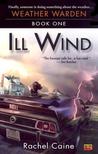
Review: Ill Wind

Ill Wind (Weather Warden, #1)Ill Wind by Rachel Caine

My rating: 4 of 5 stars

Some books are warm cozy blankets that you just want to snuggle into again and again. That’s Ill Wind for me. Rachel Caine writes with a welcoming, conversational style that makes it easy to forget you’re reading. This is the book (and series) that I most like to imagine as a TV show–it would make a damned good one.

The concept is so great, you’ll wish you’d thought of it first: the natural forces in the world are not entirely science–they’re a little bit magic. And so there are teams of Wardens who can manipulate those magics, whose only jobs are to keep Mother Nature from killing us all. Humans using magic + science to stop sentient storms from destroying the earth? Why hasn’t this show been made already!? (Weather Channel should pick it up; it has a 100% chance of awesomeness.)

Our hero is Joanne Baldwin, a Weather Warden who is in way over her head. She’s too young yet to have earned her Djinn helper, but it is urgent that she get someone more powerful to aid her. Chased by Wardens who don’t know the whole story and hunted by an unknown rival, Joanne sprints off to an intense race to survive. Along the way, she discovers that everything she has been led to believe about the supernatural Djinn is way off: humans are enslaving them, twisting them to their will.
Besides, when they’re wild, they can be damn sexy–well, at least one of them, with scenes so hot it’ll make your skin sizzle.
This is my second or third read of this book, and it doesn’t stop being fun and enthralling. I can’t recommend it enough.

It’s the first in the series, and they really do get better from here.

View all my reviews

Leave a comment

Filed under Reviews

Review: Blackbirds

Blackbirds (Miriam Black, #1)Blackbirds by Chuck Wendig

My rating: 4 of 5 stars

It’s got to be hard to find work when your main talent is coming up with detailed, grisly, and inventive ways for people to die. (Though I suppose it’s possible your accountant or barista is also imagining all the ways you could bite it…) However, Chuck Wendig seems to have figured it out with the incredible Blackbirds.

Let’s just say this wasn’t a typical book to be enjoying beachside, and I was more than a little worried that someone would notice I was reading about murders, suicides, and horrible accidents and out me as the weirdo I am.

I’ve never read Wendig before, though I have long intended to. What an introduction! Blackbirds features Miriam Black, one of the most original characters I’ve ever encountered.

Miriam is a deeply disturbed girl, and for good reason: she can see how people will die. The slightest touch sends her a detailed view of death; something she cannot avoid and seemingly cannot stop, despite her efforts. In fact, she has long since given up, and lives as a carrion bird, taking just enough from the dead to get by herself, flitting from place to place, foul-mouthed and alone.

She is a tragic figure, and yet likeable. She’s vulnerable, though she’d hate for anyone else to really know it. She’s an absolute trainwreck and she has a terrible past that we see in fragments. Poor girl; her whole life is fragments.

Through a variety of accidental encounters, Miriam finds herself caring for someone for the first time in years. This, however, is also unfortunate: she has seen that he is going to expire (in a truly macabre way) with her name on his lips. Even before he is dead, he haunts her nightmares.

Miriam is an incredible character, and I can’t wait to read more of this series (even if it does leave my stomach swirling at times). Wendig is an inspiration, and a reminder that stepping outside the bounds of normal can reap huge rewards. He earned at least one fan in me.

View all my reviews

4 Comments

Filed under Reviews

Review: Sex Criminals

Sex Criminals, Volume 1: One Weird Trick  (Sex Criminals #1-5)Sex Criminals, Volume 1: One Weird Trick by Matt Fraction

My rating: 4 of 5 stars

Funny. Poignant. Beautiful. Oh, and it has sex in it.

It’s pretty rare that my fiance reads a book then says, “OMG, you HAVE to read this.” So it was a big deal. And I devoured it. This comic is gorgeous and probably deserves the “Comic of the Year” banner the New York Times gave it (though Saga, Volume 1 really can’t be forgotten).

This comic answers a question everyone has asked themselves at some point: “If I could freeze time everytime I had an orgasm, what would I do?”

…Of course everyone has asked that question.

For Suzie and Jon, the answers vary, but when they meet and discover they aren’t alone in this crazy ability, they decide–of course–to rob a bank.

In other words, Sex Criminals is a totally run-of-the-mill story.

Just kidding. It’s irreverent, but it’s also fairly deep. (Spoilers to follow, but really you should read this comic anyway and most of this stuff is introduced right away.)

When Suzie’s dad is killed in an act of random violence when she is 10, she struggles to cope. Her mom is barely holding herself together, and Suzie is left to process it all on her own. She finds solace in the quiet of the bathtub, where the running water can erase sound and leave her to just “be.” Except…the water under the tap feels [em]really good[/em]…and time stops.

Suzie struggles to figure out puberty and this ability (can everyone do this? Why don’t any of the books explain this!?) all alone, and uses what she calls “The Quiet” (this time-frozen thing) to work out her feelings. She grows into a smart girl who loves libraries, and is desperate to save her local library, even if it means buying up every book, one at a time.

That’s how she meets Jon. They have an instant connection; even reading about it feels like reliving the Best First Date Ever. And then, when they have sex… woah. They discover, finally, they aren’t alone in this ability. And then they hatch a plan.

Can I just stop for a minute and talk about the art? Man, this kind of book is why comics/graphic novels need to exist. You just couldn’t get the same effect in reading about how Suzie’s elementary classroom had a motivational poster that says “Reading is Sexy” and get the same kind of laugh I did when I noticed the derpy frog poster in the background of an otherwise tragic scene. There are visual clues like that everywhere, and it is just …amazing. And Suzie and Jon look like real people. Praise be to Chip Zdarksy for drawing a woman with kick-ass HUMAN proportions! It’s so refreshing.

And then there’s the colors! You’ll just have to see it to know what I mean, but The Quiet is really transcendental art. It’s gorgeous.

Sex Criminals is definitely a book for an adult…well… it might also be a book for a teenager who is still figuring out that whole sexuality thing, though the cover alone might freak out the parental types. While sex is important to the story, it is always tasteful and the art is never more than PG-13, though the brash and totally careless way the characters talk about sex is definitely going to be a turnoff for some readers (don’t worry; the sex acts described in the high school are all made up. I think.).

This really a science-fiction/Bonnie-and-Clyde/coming-of-age book and … it’s just great. True, author Matt Fraction and artist Chip Zdarksky may have come up with the concept as a way to tell as many sex jokes as possible, but I can’t blame them for that, and I can’t wait to read more. And see more.

(This book only got 4 stars because I think the pacing may be a little uneven. We’ll see. There was one section that, while still pretty to look at and which gave me a giggle, made me really glad we bought the volume rather than the individual comics. That story was…a tad thin.)

View all my reviews

Leave a comment

Filed under Reviews

Review: The Thousand-Dollar Tan Line

The Thousand-Dollar Tan Line (Veronica Mars, #1)The Thousand-Dollar Tan Line by Rob Thomas

My rating: 4 of 5 stars

TV and movie screenwriter Rob Thomas may bring the noir novel back–and that is a wonderful thing.

“The Thousand-Dollar Tan Line” is the first in what may be a series of Veronica Mars books that follow after the TV show AND the recent movie (Rob would be a fool if there weren’t more!). If you’ve never seen either the show or the movie, here’s the rough notes: Modern noir/murder mystery with all the basic elements but replace the solitary and case-worn older male PI with a 28-year-old petite blonde and a penchant for snarky comebacks. What isn’t there to love about this?!

[Full disclosure: I was one of the folks who Kickstarted the recent movie. I didn’t discover the TV show until about a year and a half ago, though, so I wouldn’t consider myself a super-fan or anything. It’s a darn adorable show and I enjoyed the movie. Plus I got a cool T-shirt. But I wasn’t planning on buying this book: it was loaned to me by a friend who not only had never seen or heard of VMars in other incarnations, but didn’t know about the Kickstarter stuff.]

NOTE: Don’t read this book OR this review any further if you want to see the movie but haven’t. The novel will spoil a bunch of the movie for you, in a very casual way. So see the movie first for optimum flow!

Things are a bit tense for Veronica on the open of the book. Her dad is still recovering from his serious injuries–he’s doing well, but isn’t back to himself and isn’t allowed to work–and though Veronica has been manning the PI desk while he’s gone, there haven’t been any cases. Money is starting to look tight, and Veronica’s decision to drop her whole career path and life to return to the private investigator life in Neptune is starting to look questionable at best. (For once, though, Logan isn’t at the heart of some scandal; he’s tucked away doing important military things and is barely in contact.)

But when first one, then two college girls go missing while spring-breaking at Neptune, the city council wants them found…and don’t trust corrupt and/or stupid Sheriff Lamb to keep ruining Neptune’s image. Veronica goes on the case–forcing her to face straight-on her father’s understandable fears for her safety.

It’s a great mystery, and unlike some others, I didn’t see the result coming at all. The story has all the same snap and zest as the show/movie, and it felt like returning to a beloved but slightly changed town. Perhaps it shouldn’t have surprised me so much, but Rob Thomas is excellent with dialogue. It’s like he’s somehow channels 20-something women today, which is pretty crazy. The non-dialogue bulk of the story is solid, even though there are some minor things a long-form writer (versus a screenwriter) would have done differently (that’s probably something only the really devoted reader will notice, however). It’s a lot of fun and would make the perfect summer read. I can’t wait for there to be more.

But… well, I couldn’t give it 5 stars because of a plot decision that is both minor and a major spoiler, depending on your perspective. It never felt plausible and threw off my feeling that this was a realistic concept.

SPOILERS BELOW
It seems like a complete betrayal of readers for Veronica’s estranged mother to also just “happen” to be the step-mother of one of the missing girls. I mean, really? First, that the daughter would have selected to go to Neptune for spring break instead of ANYWHERE else. Second, that she would then go missing. Third, that her missing persons case would have some seriously hinky twists to it?

It all felt too contrived. I am all for more drama and intrigue with Veronica’s mother, and we did get some interesting character development out of the situation, but for a first novel in what will hopefully be a series, it felt like Rob threw that in merely to play “rehash all the important characters from Veronica’s past.”

There was no reason for her mom to make an appearance in this. No plausible explanation, even, for the scenario to come up. Maybe if this had been a later novel I could have accepted the “amazing coincidence” of Lianne being involved in a case Veronica had to solve, but this was just a little too much for me and it felt trite.

Overall, this is a really fun book and I hope to see more. The noir genre is old and had been pretty musty. A feisty and smart gal like Veronica may be exactly what it needs to come back to life.

View all my reviews

3 Comments

Filed under Reviews

Review: The Penelopiad

The PenelopiadThe Penelopiad by Margaret Atwood

My rating: 4 of 5 stars

After reading The Song of Achilles, I has a ken for more. I came to the right place with The Penelopiad by the outstanding Margaret Atwood.

Much like The Song of Achilles, the Penelopiad is a retelling of a classic tale from a new perspective. The Penelopiad, you might say, is the companion book to The Odyssey: the story told by Queen Penelope to match Odysseus’ epic.

In The Odyssey, just in case you’ve forgotten, the hero Odysseus is just trying to get home after 10 hard years in the Trojan War. But he’s pissed off Poseidon, making water travel difficult, and he gets into one scrape after another for 10 whole years. When he finally gets home, his wife and kingdom are beset by “suitors” after his money, so he tricks the suitors then defeats them with his skill with the bow that only he can string. Then, because he’s pissed, he kills all the suitors: all 110 of them or so.

A mere footnote in the story, however, is the death of 12 maids: they are accused of having been raped by the suitors (or having had sex with, depending on your view) and are forced to clean the hall of their spilled blood. Then, Odysseus and his son Telemauchus hang the maids. Odysseus retakes his throne and lives out his life.

The Penelopiad turns everything on its head. All of Odysseus’ grand achievements are thrown into question, and the 12 hanged maids form a Fury chorus to chant and sing out the story. Penelope is given shape beyond her “loyalty,” and is finally rewarded for her cleverness, her patience, her skill in running a kingdom all alone for 20 years and fending off the suitors.

This book was an eye-opener for me. I’d read the Odyssey, of course, but I don’t think I even noticed the maids, much less worried about the absolute unfairness of their plight. While I did think of Penelope a bit more, I didn’t reach beyond the story I was told: I took her loyalty at face-value as it was presented.

Until The Penelopiad threw off the covers. There was so much MORE to find in this story! The 12 maids, mere teenagers at best, were punished for something they had no control over: slaves can’t tell a prince “no.” Of all the people Odysseus killed, only the maids hadn’t really done anything to deserve it. They are literal pawns in this story.

Penelope is barely more, yet Atwood saw how much potential was in Penelope, and her relationship with Helen, the most beautiful–and most bitchy–woman in the ancient world. Penelope is there, plodding along in Helen’s shadow, trying to get by and having to work three times as hard, while Helen prances about and starts wars with the toss of her pretty little head. No wonder Atwood’s Penelope has some bite to her!

I got to meet Margaret Atwood, actually, and had her sign this book for me. Even though this was not the first of her books I discovered, this was the one that most rocked my world. During her presentation, she talked about this book, and how the injustice of the maids really stood out to her.  From snippets and bare mentions in the original text, she crafted this whole lush, emoting world for these women: it’s remarkable.

This book is a delight. Classics fans will get more out of it than someone new to the tale, but the story structure is enchanting regardless. It’s a lesson in deft storytelling and a joy to read. I only wish it were longer.

View all my reviews

2 Comments

Filed under Reviews

Review: The Song of Achilles

The Song of AchillesThe Song of Achilles by Madeline Miller

My rating: 5 of 5 stars

I nearly double-majored in Classics, and the most enjoyable class I took in college was a Classics/Archaeology crossover class where we read classical texts then watched movies based on them to pick them apart for historical accuracy.

But that kind of knowledge is fairly niche now, and I don’t get a lot of opportunities to think about Homer and the Greek gods anymore.

Going back, though, is extremely satisfying. Anyone with more than a passing interest in The Iliad needs to immediately pick up this book — even if your only exposure to the tale is what you gleaned from “Xena: Warrior Princess” and the movie “Troy,” you’ll enjoy this book.

Achilles, the hero of the Iliad, is “the best of the Greeks,” and yet the Trojan War lasted 10 years as men fought for land, power, and the rights to the most beautiful woman in the world. But the original text provides very little insight into the life and character of this man.

That’s where The Song of Achilles comes in, telling Achilles’ story through the eyes of his most beloved, the footnoted and glossed-over Patroclus (laughably called Achilles’ “cousin” in the modern interpretation; sure, we believe he went to his death on behalf of his “cousin,” Hollywood. Suuuure.)

Tackling Greek myths for a modern audience is pretty tricky work: how do you remain faithful to a story format conceived thousands of years ago?

But Madeline Miller more than manages: her writing is deft, loving, and honors both human skill and god-gifted powers. You’ll believe the gods–tricky, unreachable, unassailable in their pretty deceptions–really do intercede into a human war, and you’ll also see how a change in the wind could be interpreted as a blessing from the gods.

The relationship between Achilles and Patroclus is nuanced, taking them from their time as children together up through and beyond Patroclus’ death. Their love as a couple is potent and poignant, and I sometimes had to stop reading to clutch the book to myself, hoping that, maybe, this time, Patroclus wouldn’t have to die.

Despite the homosexual relationship between Achilles and Patroclus, I wouldn’t call this a necessarily LGBT work. This is a Classics piece, and will be best loved by those who love the Classics. The text itself is vague on whether or not they would, by modern terms, be considered gay: do they love men–any men?–, or do they merely love each other? I’ll not spoil it, but Patroclus and Achilles both have moments where the rigidity of a sexual category are questioned.

The perhaps most incredible part of this story is how a demi-god manages to live when he knows, with complete certainty, that his early death is assured. How can you live a full life knowing you will not be able to grow old? What kind of person would chose the allure of glory and fame over life? The portrait of Achilles here painted is a believable structure of such a man.

I can’t wait for Miller to tackle The Odyssey next! (I hope she does!)

View all my reviews

Leave a comment

Filed under Reviews

World Destruction Reading List

Reddit’s r/books thread recently had a conversation about best dystopian novels. There were a lot on the list I hadn’t heard of, and I have a particular love for dystopias (I’ve written two and a half, so far!).

So, for my benefit and yours, here’s a compilation of the crowd-sourced dystopian titles (plus some that I didn’t find on reddit), in no particular order, you should read:

  • Earth Abides, George R Stewart
  • The Passage, Justin Cronin
  • Do Androids Dream of Electric Sheep?, Philip K. Dick
    • Doctor Bloodmoney, Philip K. Dick
  • Foundation, Isaac Asimov
  • Oryx & Crake; The Year of the Flood; MaddAddam – trilogy by Margaret Atwood
    • A Handmaid’s Tale, Margaret Atwood
    • Positron, Margaret Atwood
  • Never Let me Go, Kazuo Ishiguro
  • A Brave New World, Aldus Huxley
  • 1984, George Orwell
  • A Canticle for Leibowitz
  • Wool, Hugh Howey
  • Swan Song, Robert R. McCammon
  • Wastelands anthology, John Joseph Adams
  • Y The Last Man,  Brian K. Vaughan (comics)
  • The Walking Dead,  Robert Kirkman (comics)
  • Lucifer’s Hammer, Larry Niven and Jerry Pournelle
  • The Road, Cormac McCarthy
  • I Am Legend, Richard Matheson
  • Ashes, Ashes, Jo Treggiari
  • Alas, Babylon, Pat Frank
  • The Giver, Lois Lawry
  • Cloud Atlas, David Mitchell
  • The Postman, David Brin
  • This Perfect Day, Ira Levin
  • Day of the Triffids, John Wyndam
  • World War Z, Max Brooks
  • The Stand, Stephen King
  • Plague Year, Jeff Carlson
  • The Genesis of Shannara, Terry Brooks
  • The Deluge, Mark Morris
  • Robopocalpyse, Daniel Wilson
  • Windup Girl, Paolo Bacigalupi
  • We, Yevgeny Zamyatin
  • Emberverse series, R.M.Stirling
  • Shades of Grey, Jasper Fforde
  • Noughts and Crosses, Malorie Blackman
  • The Tripods, John Christopher
  • Mortal Engines, Phillip Reeve
  • The Children of Men, P.D. James
  • The Hunger Games trilogy,
  • Dog Stars, Peter Helle
  • The Last Policeman, Ben H Winters
  • Idlewild; Edenborn; and Everfree, Nick Sagan
  • The Maze Runner, James Dashner
  • The Time Machine, H.G. Wells

Undead Rising coverFor a new way to destroy the world, buy Undead Rising: Decide Your Destiny, available in print and on Kindle. Your choices shape the story! When you die in the book, sometimes you rise again as a zombie, unlocking new adventures.

4 Comments

Filed under Reading

Review: Transmetropolitan (all)

Transmetropolitan V. 1-10Transmetropolitan V. 1-10 by Warren Ellis

My rating: 5 of 5 stars

Transmetropolitan is a comic book, and anyone remotely interested in dystopias needs to immediately stop what she is doing, go buy all these books, and read them before continuing with life. Yes, it’s that good.

This is a review for ALL 10 collected volumes. I’m going to write the review in the style of the comics, so if you’re ridiculously sensitive to explicit language, you’d better stop reading now. (But it’s really your loss.)

To say Spider Jerusalem is a muckraking journalist is to put it lightly. No–Spider does not just rake muck; he wallows in it while tripping on sixteen kinds of heroine pumped directly into his veins through the City’s sewers while he ejaculates into the ensuing muck. He is dirty, foul, horrible–and the only goddamn person left in the entire City who has the balls to take on the corrupt government and the injustices of a city of the future.

He is a despicable, low-down uncaring asshole because he cares too much to let the city (and the country) destroy itself through ignorance and petty distractions.

So: Transmetropolitan follows journalist Spider Jerusalem as he gets reacquainted with the City, a (not far enough) far-future metropolis swarming with all the problems of real cities, if the problems were turned to 11 and injected with a form of swarming AIDS. In the style of many brilliant authors before him, Ellis is working with hyper-exaggerated features of the real world to show us the many problems with our own–and it’s unnerving.

First, be impressed with the level of deranged thought Ellis has put into his City: of course there is porn for children! And people commonly eat the meat of endangered animals–or heck, try out some food from Long Pig (don’t worry, they’re only clones!). “Maker” technology allows you to create pretty much anything at home, and journalists sometimes employ “source gas” to record info from unwitting sources while still managing to make it past security. While you’re enjoying the future, make sure you get one of the many DNA splices–try the one that allows you to take massive doses of drugs and alcohol without dying. Or maybe you’re totally past the human experience–why not join the Transients and splice with alien DNA? Or really embrace the cloud and become nothing more than a bunch of floating molecules. Groovy.

It’s amazing, and immersive, and simultaneously plausible and disgustingly far-fetched.

Much like Spider Jerusalem. It’s like the Deadpool of journalists, seemingly throwing normal tactics out the window. But really, he’s just good. In fact, I know journalists like him. Spider is, if anything, alarmingly realistic. He’s devoted in a time when many reporters seem like shills. He’s dogged and willing to take risks. He has a gift for it, something that can’t really be taught and must come from some burning fuel within. He’s addicted to the thrill of the chase–and sometimes that puts people he talks to in the line of danger. But mostly, that makes people want to open up to him. Because he loves them, even while he hates them to the core.

In other words, Spider Jerusalem is my hero. I want to give Warren Ellis a hug for writing something so transgressive, so daring and truly sickening, and I want to make this series required reading for EVERYONE. The world would be better for it if more people paid as much attention to goings-on as Spider does.

Go buy these books. You may find it hard to read them sometimes, but don’t you dare fucking stop. You need to take your medicine, world.

View all my reviews

Leave a comment

Filed under Reviews, Uncategorized

Review: MaddAddam

MaddAddam (MaddAddam Trilogy, #3)MaddAddam by Margaret Atwood

My rating: 4 of 5 stars

Margaret Atwood clearly enjoyed writing the conclusion to her most recent post-apocalyptic trilogy. Her enthusiasm is sometimes palpable. There are mini-jokes and obscure references, and at times you can almost hear her snort with amusement at a turn of phrase. It’s a fascinating conclusion to a possible future, but the story is uneven and ends with a fizzle rather than a bang. (Perhaps that’s the way a story about “life finding a way” should end, however.)

MaddAddam completes the story begun with Oryx and Crake and continued with The Year of the Flood. The post-human creatures known as the Crakers are developing in ways their mad-scientist creator hadn’t anticipated, but they are still fundamentally helpless against hostility and don’t truly comprehend fear. The group of former cult members known as the God’s Gardeners and the big-brained MaddAddam scientists who helped create the Crakers are the only (known) humans left: except for the delirious Jimmy and two less-than-human Painballers, men who survived a man-eat-man prison game and now feel nothing but a need for violence.

The story mostly follows Toby–the ultra-practical former God’s Gardener to whom the Crakers gravitate–and Zeb, the man who bridged the gap between the God’s Gardeners and the MaddAddamites. Frustratingly, even though this feels like it truly ought to be Toby’s story outright, much of the interesting action is left to Zeb. The reader finally understands (most of) what happened with Jimmy and Crake and God’s Gardener leader Adam One.

It turns out that the day-to-day mechanics of survival are pretty mundane, and though that is the part o the story left for Toby to recount, there’s just not a lot that hasn’t already been covered. Besides, unlike Jimmy/Snowman in “Oryx and Crake,” Toby and Zeb are pretty good at basic survival. Though it isn’t glamorous, the basic needs are met. That leaves Toby with little to actually tell the reader.

Zeb, on the other hand, turns out to be a bountiful mine of information, as he (beyond believability) was present for just about every critical juncture in the Story of How The World Bit It. Zeb is not just Adam One’s right-hand man; he’s his brother. From their twisted abusive childhoods up through the discovery of super-genius Glenn/Crake and the founding of the God’s Gardeners cult, Zeb knows everything interesting, and he recounts his life story to Toby as they slowly allow themselves to fall in love.

For an otherwise intense and compelling story, the touches of romance between the two come off as cloying and unnecessary. Toby frets over “does he love me or not” more than I cared for. Frankly, it seemed a bit unlike her–though of course that could be the point. It felt like the romance was not there because it developed naturally, but because Toby needed something else to talk/think about beyond “are we going to survive today?” (Personally, survival alone would have been enough reason for me to read more.)

The best parts are undoubtedly when Toby recounts watered-down versions of Zeb’s stories to the incredulous and trusting but incredibly naive Crakers. Here we see one way myths could have been founded: trying to understand something that is beyond our scope. These parts are hilarious and frustrating and awe-inspiring all at the same time.

(Some spoilers below)
Personally, I’m frustrated with the way historically feminist writer Margaret Atwood handled the female characters. Sometimes it seems like Toby is the only useful female in the whole story, and that, apparently, is only because she is post-menopausal and otherwise, apparently, useless. Rebecca, who–while certainly a secondary character–at least had a distinct personality in “The Year of the Flood,” was reduced to scenery. Ren and Amanda are vehicles for other peoples’ trauma; they were not only assaulted by the Painballers, but raped by the Crakers, in a confusing scene that is later referred to only as a “cultural misunderstanding.” I didn’t even BELIEVE a rape had actually happened until Amanda turned up pregnant; some clearer, less vague, writing at that pivotal scene would have been helpful. And then, in a final affront, when it comes to the critical battle, ALL the women–except for Toby, who as we said “did not count”–are excluded because of concerns over their well-being. It is ridiculous, to me, that so many would have spent their time getting pregnant, and all at roughly the same time.

And after the final battle, the story just…sort of stops. Toby loses all her voice, and the story shifts over to one of the Crakers, a character who grows from a boy to a man during the novel. While this transition is perhaps inevitable, as the Crakers represent the “next phase” of humanity, it is unsatisfying. This is Toby’s story, and for it to be passed off without her even having a say in it feels incomplete and unfair. Rather than the “drop the mic” ending we got in “Oryx and Crake,” this ending feels like sneaking offstage while the audience isn’t looking. It feels like Atwood just didn’t know what to do so she just…stopped.

The book isn’t bad–certainly not–but I admit to being a touch disappointed in this final story in this rare post-apocalyptic survival story. I’d give it 3.5 stars.

This book could probably be read alone, but you’ll get a lot more out of the series as a whole if you read them in sequence. Or you could just read “Oryx and Crake” and be satisfied; that’s the best of the series, anyway.

View all my reviews

3 Comments

Filed under Reading, Reviews