Tag Archives: good fun books

Review: Ship of Destiny

Ship of Destiny (Liveship Traders, #3)Ship of Destiny by Robin Hobb

My rating: 4 of 5 stars

I’ve been waiting to read this book for something like 15 years. Robin Hobb‘s Liveship Traders series was the first to make me desperate for the next book…but it wasn’t written yet. But I also didn’t have much patience, so when I couldn’t get my hands on the book for a month, I gave up, moved on to other things, and forgot about it.

Until I saw Ship of Destiny in a used bookstore! Despite the long wait, Ship of Destiny did not disappoint!
Ship of Destiny is an epic fantasy that features stunning dragons, angsty/crazy talking ships, a horrible pirate, a fierce and bold woman, and desperate policitians. It’s fantastic. Robin Hobb’s knowledge of wooden galleys is incredible and makes it feel like you’re really there, feeling the sway of the swell and lash of the wind. Though the story is incredibly complex–following many paths simultaneously–it is easy to follow and all comes together beautifully.

It is one of those books that you’re both eager finish and sad to put down. It’s an epic conclusion to a great series, and I’m glad to finally have closure on it.

View all my reviews

Leave a comment

Filed under Reading, Reviews

Review: Trigger Warning

Trigger Warning: Short Fictions and DisturbancesTrigger Warning: Short Fictions and Disturbances by Neil Gaiman

My rating: 3 of 5 stars

I’m a huge Neil Gaiman fan. Let’s just get that out of the way. I cried when he signed my copy of The Ocean at the End of the Lane because I was so excited.

But this book barely got its 3rd star from me. If you’re already a fan of Gaiman, there is very little in this short story collection that you haven’t already read somewhere else, or for free via his blog. It’s a collection of short stories with no coherent reason behind them, no theme, no real organization. It feels, honestly, like a book put together because someone–and probably not the author?–said it would be great to be able to sell more books.

I find that a little frustrating.

That said, there were three stories out of this collection that really made the whole thing worthwhile. If you buy it and feel like me, just skip to the end of the book: that’s where the good stuff is hidden.

First, we have a delightful little short story from the witch’s perspective in “Sleeping Beauty.” It’s dark, mysterious, and does a great job following close to the theme and tone of the real Grimm fairy tale. It’s very quick, but really enjoyable.

The second story is also about “Sleeping Beauty.” This one, “The Sleeper and the Spindle,” has since been made into an illustrated book. It may be the best story in the collection: it re-imagines both “Sleeping Beauty” and “Snow White” so that the women can be the heroes and live in neighboring kingdoms. I don’t want to reveal too much, but let’s just say if you love either the Disney version, the original story, or the “10th Kingdom” TV serial, you will most certainly adore this story. It’s just fantastic.

The final feather in this hat is “Black Dog”–an additional story featuring Shadow Moon, the main character in American Gods. Even if you found American Gods to be a challenging book for you, I think you’ll like this story, which is straightforward, touches on some delicious little-known history, and is really scary. Gaiman owes me about two hours of sleep for this story–I stayed up past my bedtime to get to the big ending, and then couldn’t stop thinking about it!

It’s that last story that changed my mind on whether the book as a whole was a good purchase. I don’t know that I’ll ever read large chunks of it again, but the ones I loved, I LOVED, so that makes it worth it to me.

View all my reviews

Leave a comment

Filed under Reading, Reviews

Review: Caliban’s War

Caliban's War (Expanse, #2)Caliban’s War by James S.A. Corey

My rating: 4 of 5 stars

Vomit zombies, a missing child, a possibly sentient planet, a foul-mouthed grandmother politician, dirty-dealing intra-galaxy feuds, a kickass Polynesian warrior, a noble rogue spaceship captain, a brilliant scientist on the edge of despair—this book has everything you could want and more. It’s an engrossing space epic that lives up to the expectations of the first book and leads you desperate for the next one.
If you’re a fan of modern sci-fi shows like Firefly or Battlestar Galactica, and yearn for the depth offered by Asimov or the wicked-cool ideas about how real people would operate in space like in Ender’s Game, this is a book–a series!–you’ll need to pick up.

Following the first (also excellent) book Leviathan’s Wake, Caliban’s War opens with the personal drama of a kidnapped girl and the reappearance of a monster that can survive in the void of space and quickly spirals out to encompass a battle that stretches from Jupiter to Mars.

Our honorable but now-hardened Captain Holden stumbles into the kidnapping and can’t help himself from vowing to find her. Her father, Prax, a biologist from the solar system’s breadbasket planet on Ganymede, guides the crew of the Rocinante as they hurtle from planet to planet to unravel the mystery: who would kidnap a sick little girl…and many other children? And who unleashed the protomolecule monster that attacked hard-line Martian Marine Bobbie and her entire crew?

It turns out the bad apples from the previous book aren’t quite gone, but this time it’s beyond what Holden’s blurt-to-the-system go-to strategy can handle. Luckily he is saved by the fantastically written Avarasala, a shrewd and calculating–but ultimately good-hearted–politician from Earth (I sure wouldn’t want to get on her bad side!).

There are so many great, well-rounded characters in this book that it’s hard to make space for all of them in this review: just trust me. And still I get the thrill of adventure with the incredible, believable, descriptions of humans trying to accommodate life outside of Earth. Everything from the effects of different gravities on human development to what kind of plants would be most beneficial to grow on a space station, to the cultural issues that may stem from human colonies on vastly different planets–it’s a pleasure.

The only thing I can think to ding in this book is that it’s set in the far-ish future and yet frequently references 20th-century American cultural touchpoints (will Alien really still be relevant when we’re actually living in orbit around Jupiter?) but that’s done for the reader’s benefit, not for the realism. And it’s a heckuva lot of fun, I can’t deny.

View all my reviews

Leave a comment

Filed under Reviews

Ender vs. Katniss: Let the Games Begin

Ender Wiggen vs. Katniss Everdeen

When I recently read Ender’s Game, I really wanted to root for him. He is the protagonist, after all! And so many people seem to really idolize him and the book. But perhaps he’s a creation of his time: we have a lot more YA heroes to look up to now!

In that spirit, here’s a head-to-head comparison of Ender Wiggen in Ender’s Game with Katniss Everdeen in The Hunger Games.*
*Note: Just to make it fair, and because I’ve only read one of Orson Scott Card’s books, we’ll hold this to JUST the first book in each series. Also, this is books only.
Name Ender Wiggen Katniss Everdeen
Problem: Problem—Picked as a child to defeat the alien bugger race, because adults say so Has to fight to the death in an arena, because adults say so
Special Talent Being smart Skill with a Bow&Arrow
Character Flaws Accidentally harming others Being generally unlikeable
Age 6-13 16
Setting Future Earth/The Battle School/space Future United States (in the form of Panem)/The Arena
Parents Essentially check out of his life forever. Father deceased; mother mentally absent.
Sister Valentine Prim
Younger Friend Bean Rue
Semi-Friendly Adult Tutor Colonel Graff Haymitch
Adult Who Kinda Cares Mazer Rackem Effie Trinket
“Friends” Alai, Petra, Dink, Shen, Bean Peeta, Rue, Gale, Cinna
People to Fight All the other kids Almost all the other kids, except Rue and Peeta
The Twist Despite thinking he’s been in training, Ender has actually been fighting the buggers…and defeated them. Katniss exploits the system of the Hunger Games to keep, for the first time, two players alive, by defying The Capitol and risking her own life.

Who Wins?

Honestly, when I was reading Ender’s Game, I figured I’d do a post like this, and the “twist ending” would be that Katniss and Ender would instead decide they are so similar that they should just be BFFs, and together they would take down the adults.

But then… the end of Ender’s Game. Ender just keeps letting himself be manipulated, even when he’s an old man! He never really seems to act on his own, in that whole book, so I can only assume that if Ender Wiggen were placed in the Hunger Games with Peeta in that final pivotal moment, he would have killed Peeta because the Gamemakers said so and then felt sad about it.

If placed in Ender’s circumstances, I feel like Katniss would constantly try to rebel against the teachers at Battle School, and would ultimately lead a student rebellion, leading to peace with the distant bugger race.

For that reason, in a direct one-to-one contest, I’ve gotta give it squarely to Katniss Everdeen.

What do you think? Who’s the stronger protagonist?

9 Comments

Filed under Reading

Review: Kushiel’s Dart

Kushiel's Dart (Phèdre's Trilogy, #1)Kushiel’s Dart by Jacqueline Carey

My rating: 4 of 5 stars

Kushiel’s Dart is the most engaging and detailed fantasy world I’ve encountered in years. It’s brilliantly plotted, highly original, well-paced, and shows both immense and believable character change over time. It’s a great book.

But I won’t be reading any more of the series, and it’s not a book I could recommend to most readers.

As good as it is, the subject matter made the book a little hard for me to read, and I imagine a lot of readers would be similarly uncomfortable. You see, the lead character is an anguisette: she feels pain as pleasure, leading her to become groomed as a courtesan-spy specializing in those who like to inflict pain.

Which can lead to some fairly uncomfortable descriptions.

To be fair, Jacqueline Cary doesn’t get obscene in her descriptions at all. They are artful in revealing just enough to paint a picture in your mind’s eye, guiding the direction but not actually getting too explicit. But it’s enough to make me uncomfortable reading those scenes (and there are many). That being said, I think many Fifty Shades of Grey detractors would LOVE this book, because it does a lot of what “Fifty Shades” failed to do: a) stress the importance and sanctity of the safety signal, b) clarify that even if it looks like it is abuse, the protagonist is enjoying herself intensely, c) shows concern from partners when something seems to go wrong, and d) demonstrates a clearly defined relationship (there’s even a literal contract!). If that weren’t enough, the “rules” of the submission are made clear when another character attempts to violate the protagonist; it’s a clearly horrible thing, outside of her normal business.

All that really endeared the book to me. As did the rich character background of the the narrator, Phredre. She is selected for her destiny when barely a child, and the reader follows her as she grows, develops, and discovers that she has been chosen by the angel Kushiel to be his Dart, a one-in-a-million creature who fully experiences pain as pleasure. She learns her way as a servant, then as courtesan, then begins her service. On the surface, she is merely pleasing her clients for money; more deeply, though, she is using them–and being used–to discover secrets, part of a plot she doesn’t fully understand until her whole world is shattered suddenly, forcing her on her own to seek vengeance.

It’s powerful, and Carey masterfully transforms Phredre and truly demonstrates how “all those who yield are not weak.” It’s brilliantly done.

The world itself is even more complex. Based on a near-earth world, the land of Terre d’Ange exists near versions of England, Ireland, Greece, and Russia. The real brilliance here is Carey draws from the real-life mythologies and tropes of these lands as she forms the distinctive cultures for each area. This helps make them seem realistic, and yet they remain laced with the fantastical. The reader with an appreciation for history and mythology will find shadows of the real-life counterparts in each region within the novel. And yet the mythologies and culture of Terre d’Ange is like none other.

Were it not for my own personal discomfort with the dominance-submissive theme, I would rate this book 5 stars. It’s fantastic. But it’s not for all readers–including me. As such, I look forward to reading some other series Carey may produce.

View all my reviews

Leave a comment

Filed under Reviews

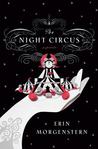
Review: The Night Circus

The Night CircusThe Night Circus by Erin Morgenstern

My rating: 3 of 5 stars

“Dreamlike” is the best adjective for this book about magic, secrets, and the wonders of the circus. Though the circus is rendered exclusively in black and white and shades of grey, The Night Circus bursts with color. The descriptions are truly the best part, capturing the allure of the circus, the vividness of life, and the way our struggles can make us feel. It’s a scrumptious read particularly suited to a cold winter’s night and a warm fire.

Erin Morgenstern’s tale follows two ancient, rival magicians who sign up two children for a life-long “game.” Without even explaining the “rules” of this game, or the point, or the stakes, the two children–Celia and Marco–learn magic. When they come of age, the arena for the game is set: a circus like no other. This circus, Le Cirque des Rêves (Circus of Dreams) operates only at night, is exclusively decorated in black, white, and greys, and features performances beyond Barnum & Bailey and the restrictions of reality. It is also a platform for the contest of wills between Celia and Marco.

But the original magicians don’t realize that their competitors are actually more similar than different, and what is intended as a fight turns into an all-consuming love, a love that imperils everyone who becomes ensnared in the circus.

The descriptions of late 1880-early 1900 America and Europe, the possibilities created by a circus without limits, the lush designs and ideas: these I love. I hope The Night Circus is someday made into a film, but the only suitable directors would be a) Terry Gilliam, b) Baz Luhrman, or c) Tim Burton, in that order. Those are the only directors I can see capturing the visual scope and detail Morgenstern puts out, so head’s up, guys.

However, I struggled with the plot. The first third of the novel just didn’t capture me, and with even the character’s names not being determined until later in the book–and not knowing what the game is or what the stakes may be–it was hard to “root” for anyone. The story moves forwards and backwards and sideways in time, making it a little confusing to follow. So it takes awhile for The Night Circus to work its magic on you–but magical it is.

View all my reviews

Leave a comment

Filed under Reading, Reviews

Review: Juliet, Naked

Juliet, NakedJuliet, Naked by Nick Hornby

My rating: 4 of 5 stars

Sometimes I get disillusioned with the world and it starts to feel like the only way I’ll find that spark of beauty is with fantasy, by somehow altering reality, because I just can’t handle the mediocrity of it all.

When I feel like that, I ought to read something by Nick Hornby. He’s a master at looking at the same drab, dreary everyday world and turning up a gem.

Juliet, Naked chronicles what it means to be a fan of a piece of art–music, in particular–and how our perceptions of art can vary from person to person (even from creator to devotee) and what that can mean.

The story focuses on the work of imaginary temporarily famous ’80s rocker Tucker Crowe, who produced at least one album that seized the world with its intensity and then mysteriously stopped performing. The sudden absence of the artist–and the more than two decades with no news at all–leaves super-fans like the British low-tier professor Duncan grasping at rumors and imagination.

Duncan is the literal leader of an online Tucker Crowe fanclub, endlessly obsessed with and analyzing the old albums. His long-time girlfriend, Annie, just accepts that as part of her life–drab, dreary, not worth mentioning.

Until a “raw” version of Tucker Crowe’s hit album is released, sending Duncan into a premature delirium of excitement and Annie into her first real venture into Duncan’s online fandom. The album–and the feelings and thoughts and contemplation it triggers–sets off an unexpected chain of events and totally changes the world for Duncan, Annie, and even Tucker Crowe.

It’s a really great modern book. And when I say modern, I mean it: it’s still strange and wonderful when a book mentions everyday things like cell phones and, heck, the internet! And Hornby did a great job capturing the intensity of a super-fan and balancing that with the reactions of “everyday” fans. It made me think about my appreciation of music and art in general, and what it means to be a creator.

Juliet, Naked is both a thoughtful contemplation of the way music appreciation affects us as well as a deliciously jolly and realistic look at what makes life worth living.

View all my reviews

Leave a comment

Filed under Reading, Reviews

Review: The Golden City

The Golden City (The Golden City, #1)The Golden City by J. Kathleen Cheney

My rating: 4 of 5 stars

In a genre awash with elves, dwarves, and wizards, The Golden City is a splash of interest. There may be those sorts in the wider world, but The Golden City features the little-seen sereia (mermaids) and selkies, seals that can shed their skins to become human.

While still traditional magical creatures, these are wonderful bright spots in an overcrowded genre. I just loved getting to know the inner workings of mermaids and selkies. Sereia have a complicated social structure but are at nature similar to aristocratic humans. Selkies are a whiff of human with a great deal more seal; they’re a little simple, and lusty.

The story doubles its benefits by setting the story not in the traditional vaguely-British countryside, but rather in historical Portugal. This opens up whole new realms: the clothes they wear, the languages used, the traditions they keep, their religion and culture. It’s fantastic.

In The Golden City, Cheney has crafted a light and delicate story, part mystery, part spy tale, and the lightest touch of romance.

Oriana Peredes is a sereia–mermaid–who is a spy among the humans in the Golden City. She works as a companion for the Paris Hilton of the aristocracy–perhaps sweet, but empty-headed, and wanted by several suitors. The pair are on their way to a secret rendezvous with her mistress’s suitor when they are abducted. When her mistress is murdered right in front of her with elements of mysterious magic at work, Oriana puts aside her mission as a spy in order to find vengeance for her friend.

As she works to discover who tried to kill her, Oriana meets Duilio Ferreira, a police consultant and member of the nouveau riche. Oh, and he’s half-selkie.

Together they work to solve the case and protect the innocents of the city, and feel out the first touches of romance as they try to solve the riddle of destiny and whether it is even possible for a sereia and selkie to find love.

(HOWEVER, if you’re interested in paranormal romance, look elsewhere. This is a Victorian romance… in short, there is barely any more than a sideways glance and a flutter of the heart. It’s a nice change of pace, but I admit it was a tad unsatisfying.)

I picked this book up on a whim, and I am so glad I did! I can’t wait to read the next and learn more about these fascinating sea fantasies.

View all my reviews

Leave a comment

Filed under Reviews

Review: Gone Girl

Gone GirlGone Girl by Gillian Flynn

My rating: 5 of 5 stars

“Gone Girl” is without a doubt the best, most original book I’ve read all year. Maybe in the past few years. It’s outstanding, and if you even remotely like crime novels or TV shows, you need to read this book.

I know, it’s super-hyped and sometimes you may not want to read a book because it can’t possibly be that good and books sometimes get popular because of some unquantifiable zeitgeist. Worry not: “Gone Girl” is just genuinely good and surprising.

It’s the kind of book that makes you say, “OMIGOD, you HAVE to read this book!” because you desperately want someone to talk to about it.

It’s a book that says, “Oh, you think you’ve seen this on “Law & Order” that one time? You think you know what’s coming? WHAM! YOU KNOW NOTHING!”

It’s the kind of book that made me wonder, initially, if my newly acquired husband could ever turn out to be a murderer. And then it made me wonder if maybe I had it in me to be a murderer.

“Gone Girl” really takes the crime novel standards and turns them on their ear. It’s revolutionary in a lot of ways. I mean, how often are you allowed to view the story from the perspective of suspect #1–and yet don’t know if he did it or not?

The set-up is that it is Nick and Amy’s fifth wedding anniversary, and their marriage has started to unravel. Nothing major, just bits here and there; it’s not what it was. And then Amy goes missing. As is so common in crime shows and books and in real life, suspicion automatically falls on Nick.

I won’t reveal more than that, because as much as I want to talk about this book, the surprises are worth keeping secret for other readers–they’ll hit you like a club to the head.

The story is incredible for the writing alone (excluding the truly brilliant plot for a moment). It’s told from both Nick’s perspective–he talks to you as if you’re perhaps his little mental Jiminy Cricket, or an audio diary–and from excerpts from Amy’s diary, which retells parts of their lives, leading up to the cataclysm, from their first meeting all the way up to the collapse of their marriage. The tone is spot-on: it sounds just like normal people. I’ve never seen real-life captured so thoroughly on the page, so intimately intertwining the reader and the author’s voice. Gillian Flynn is a helluva writer. Plus, I used to live in Missouri, where the book is set, and I am astounded by the little details only a Missourian would pick up on, little things like the blanket adoration for the Cardinals baseball team–things that make these people seem very much alive.

I guarantee, no matter how much a TruCrime connoisseur you think you are, you will be surprised, pleased, disturbed and amazed by this book. I absolutely cannot recommend it enough.

View all my reviews

3 Comments

Filed under Reading, Reviews

My Top 10 Most Influential Books

I was challenged to the silly “book duel” on Facebook by an acquaintance, and though I typically don’t like those sorts of “pass it on” challenge deals, this was good to think about.

So here are the top ten books that have the most influenced me thus far:

I’ve been challenged to a “book duel,” which sadly doesn’t mean throwing books at other people. But it does mean listing 10 of the books that most influenced me. (I will be opting out of the “challenging” of others. Answer if you wish.) My top 10 most influential books, in no particular order:

1. The Power of One, by Bryce Courtenay
2. The Handmaid’s Tale, by Margaret Atwood
3. Grimm’s Fairy Tales, by the Brothers Grimm –the older, far scarier and more demented versions
4. Sandman comics, all of them, by Neil Gaiman
5. The Bible, without the context of which I wouldn’t understand much of modern literature, in addition to any faith-related benefits
6. Ella Minnow Pea, by Mark Dunn, for showing me how flexible and creative writing can be.
7. Eats, Shoots & Leaves, by Lynne Truss, for my early editing education and one good panda joke
8. The Weather Wardens series by Rachel Caine, because she’s a local author who started young and made it big.
9. Black Beauty, by Anna Sewell. I just love that book.
10. Jane Eyre, by Charlotte Bronte.

Also, it wasn’t until I wrote this up that I realized I’ve MET three out of the 10 authors on this list; if we exclude the ones that are long dead, my percent leaps up to 50%! Wow!

What would make your list? What do you recommend?

2 Comments

Filed under Reading