Category Archives: Uncategorized

The Right to Be Forgotten: Vanishing Online

Earlier this week I wrote about the problems of writing samples vanishing from the internet as sites are taken down. Today I wanted to think about the reverse: things staying “stuck” online, even when they’re out of date, wrong, or no longer a good representation of who you are.

This video sums it up really well:

What happens when you want something to go away, off the internet?

I still feel badly for early-00s object-of-mockery “Star Wars kid,” who filmed himself imagining he was a Jedi (because who doesn’t?!) and whose friends took the video and put it online without his permission, catapulting him to unwanted fame and relentless mockery. While most of the world was laughing at his antics, that was one of the first really incredible cases of cyberbullying. But there was no recourse, no way to pull the plug.

I mean, at least Rebecca Black only had herself (and her parents) to blame for that atrocity of the song. And she’s laughing all the way to the bank… she could have pulled the video early on if she’d wanted to. But she got fame, like she wanted (kinda).

There’s a special subset of women who are also up against the “permanence” of the Internet: they’ve had their faces and/or bodies stolen, via images pulled off their computers or manipulated, in what is now known as “revenge porn.” (In some particularly sickening cases, these women are intentionally harassed: links sent to family, friends, and their places of work. Their home addresses advertised online, accompanied by threats.) Though the FBI has started to make moves against the perpetrators, there’s still limited recourse, and existing laws don’t fully protect the individuals in question. It’s an uphill battle.

But what about totally legal things? Did you know that if you have a mugshot taken, it may be taken and put online–even if you aren’t ever charged with a crime? The mugshots are public record, so it’s technically entirely legal for this to happen. The unscrupulous photo-advertisers then ask for money to have the images taken down.

I think it’s really important that we think about our “digital footprints,” both how to preserve the parts we want (such as writing samples) and how to erase the parts that may not deserve to be shared into infinity. We don’t have a solution yet, but I hope we do, someday.

Leave a comment

Filed under Uncategorized

How Marriage is Different

wedding bouquet

I’ve been married about 8 months now, and I was trying to explain to a group of friends from college what it’s like. And I’m struggling. They are single or couples-living-together, and I desperately wanted to make marriage sound awesome. Because I like it pretty well!

But everything I could think of just made marriage sound lame and/or pretty much the same as a nonmarried couple that’s living together. Stuff like having someone to take care of you when you’re sick. Or being totally ok with staying in and watching marathons of a cartoon instead of putting on pants one weekend. Or not always having to be the one to do the dishes.

Like I said, I’m having trouble explaining why that stuff is all cool.

Even the governmental benefits of being married have either not yet manifested themselves (like managing dual property) or haven’t been too easy (filing married

-person taxes sucked this year, in part because taxes for writers are a little different).

So what’s the point?

The biggest boon I’ve personally experienced since getting married has been not the result of moving in together or of a piece of paper. It came from the public declaration: legitimacy.

Both my relationship with my partner and my relationship to society as an adult have become solidified, apparently, because I wore a white dress and he wore a suit and we made some promises to each other. People who have known me for years, since I was little, are starting to listen to me like I have actual input. New people I meet at work are a little more likely to relax a bit if I share a “husband story” at lunch. I give off the impression of being “settled down” (even if I don’t feel it!). We fit into a nice tidy societal compartment.

Sometimes conversations about marriage equality rights focus on the benefits, the legal stuff: undisputed hospital visitation rights, automatic powers of attorney, inheritance, health insurance, adoption, taxes. And those are all good, concrete things that–I believe–everyone who loves deeply should be able to acquire. But the most significant benefit of marriage, the one that will be most hard-won, will be that simple societal acceptance, being seen, officially, as one familial unit.

It’s a pretty great perk. And one of the reasons marriage is awesome…and why there should be more of it.

P.S. Congratulations to the newlyweds in Alabama today!

Leave a comment

Filed under Uncategorized

Something’s Hinky About The “New” Book by Harper Lee

To kill a mockingbird

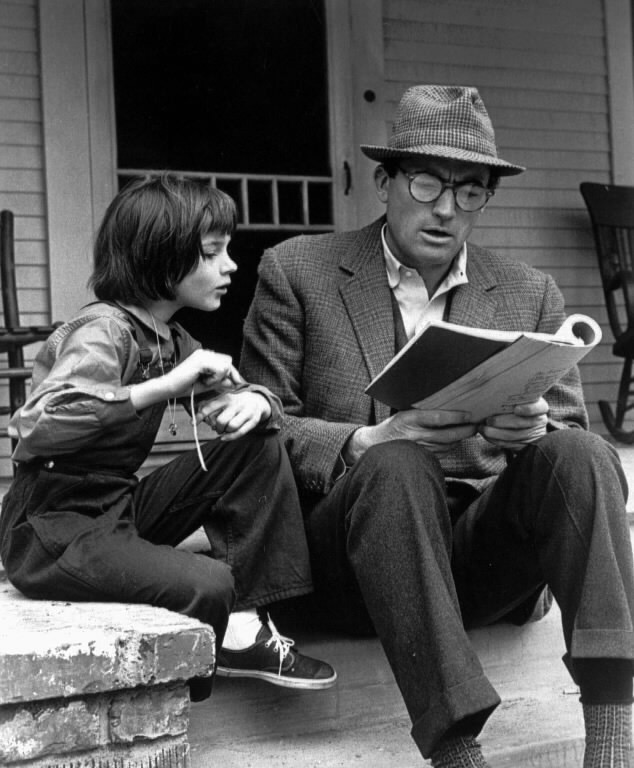
Like everyone with a soul and a 4th-grade reading level, I love Harper Lee’s iconic book To Kill a Mockingbird. It’s a classic for good reason.

But I just can’t jump on the enthusiasm train for the news that HarperCollins will soon be publishing a “long lost” sequel.

Harper Lee is a notoriously private author, the exceptional writer who resisted publishing any further Mockingbird spinoffs for 50 years. What changed?

I’m not the only one to feel suspicious: some journalists have been digging up dirt and connecting the dots. Dots like the death of Lee’s sister and estate-guardian only three months ago, and Lee’s forgetfulness and confusion following a stroke in 2007.

You can read the article here.

I hope I’m wrong, but my gut feeling is this is a money grab that may harm the legacy of one of the most beloved American authors of all time.

I won’t be preordering.

Leave a comment

Filed under Publishing, Reading

Why Millennials Have Trust Issues

Yesterday I read yet another article analyzing the actions and reactions of my generation, Millennials.

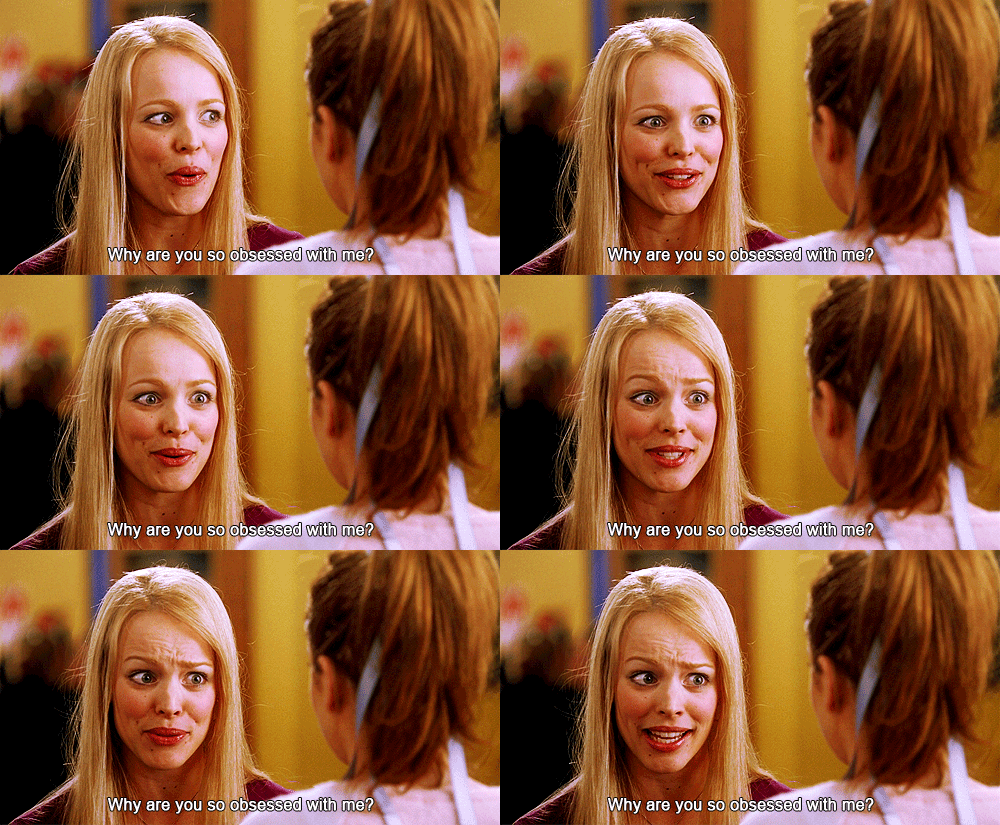
First and foremost, I’d like Regina George to speak to marketers and people of other generations on behalf of my people:
I mean we’re the most-studied generation. There have even been studies on that.
Anyway, here’s the inciting article: Why Millennials Don’t Trust Anything
Before even reading the article, I answered the headline’s implied question: Because we haven’t been given a really good reason why we should?
 
Let’s see:
  • Banks: Bunch of high-profile banking scandals blended thoroughly with a multitude of really terrible customer service experiences. Oh, and that little thing we’ll call the mortgage crisis of 2008.
  • Jobs: Our parents/we have seen too many cases where “loyal” people who gave their all to a company were summarily fired/had their benefits reduced. Doesn’t seem like the loyalty is reciprocated. Compound that with the many folk who are trained for a professional career but can’t find work in their area.
  • Owning a Home: It’s hard to own a home when you’re having job and money-related issues. And we’re prudent enough to be mistrustful in case we get trapped in the next wave of housing issues: no one wants to be “underwater.”
  • Marriage: It’s really expensive, everyone keeps telling us that we’re going to get divorced anyway (even though that statistic isn’t accurate), and we also want to feel “settled” as adults before we make a really adult financial decision.
  • Medical costs: They just suck. And all the very loud, loosely-fact-based political nonsense in the news doesn’t make anyone feel better.
  • The Environment: We’re still having fights about climate change. That’s just silly. Even if you “disagree” with the scientific fact about it, can’t we agree that it’s a good idea not to pollute?
  • Social Issues: A lot of young people (not all, I’ll say, with probability, but a lot) grew up with messages of acceptance and compassion for others (thanks, Sesame Street and Mr. Rogers!). Personally, I’ve been really disappointed in how this kind of stuff plays out in the real world, and how much intolerance there is, over really trivial crap. (I’m not even talking about Big Issues, necessarily. Even the level of “what game console do you play on?” can be fraught!) Plus there has been an awful lot of really bad stuff going on socio-politically around the world. I want to believe in Sesame Street‘s messages, but it sometimes feels like the world doesn’t want to agree with me.
So, this article in particular talks about “our” trust in blogs over traditional media. I’m a pretty big advocate for “traditional media,” having come from there education-wise. But it’s getting harder and harder to lobby on their side: I’m looking at you in particular, TV news.
That said, this is one thing I’ll disagree with: I trust traditional news sources for their veracity over blogs 95% of the time. Particularly on fact-related issues. I got in an argument with someone yesterday about a particular trendy news item, and posted a link to the New York Times. He posted back a link to an editorial on a website that sells crap…and called the NYTimes biased. Holy cow, that’s crazy.
I will say I go to blogs for more colorful types of reading, the types of things that used to be covered in the “Features” or “Lifestyles” sections of a newspaper. But sadly, that probably comes from a) the proliferation of those kinds of blogs and b) the fact that that department was the first to go when newspapers started getting budget cuts.
Do I think we’re “bashing tradition,” as the article says? Hell no. I think we’re just reacting in a very rational way.
What do you think? Is your generation maligned in articles? How?

4 Comments

Filed under Uncategorized

Review: When Bad Things Happen to Good People

When Bad Things Happen to Good PeopleWhen Bad Things Happen to Good People by Harold S. Kushner

My rating: 3 of 5 stars

This is one of the books on the “must-read” list for people struggling with grief of some kind (if there is such a list; dreadful). In it, Rabbi Harold Kushner endeavors to explain why, exactly, bad things happen to good people, and how we should react to it.

It’s clearly a book that has resonated with many people, and with good reason: Kushner doesn’t seem to be talking down to the audience at all, for he has known deep grief. The impetus for the book was the death of his son at 14 years old, having lived his short life with a terrible rare illness known as progeria. As a man of faith, a teacher in his community, and a man who has suffered great personal loss, he is uniquely positioned to address these questions from the same vantage as the reader.

He does an incredible job nailing the kinds of things people say in an attempt to make the suffering person feel better; perhaps an even better job explaining why these things are hurtful, and how they make the grieving person feel. I found myself nodding along; yes, yes, that is how it feels when that happens.

The crux of Kushner’s argument is that the story of Job is a blueprint of grief, and it posits three things:
1) God is all-powerful.
2) God is just.
3) Job (and humans in general) is good.

His theory says that all three things cannot be true: if God is all-powerful, his actions toward Job are unjust or Job is not actually good. If God is just, he may not be all-powerful. If Job is good, then God cannot be both just and all-powerful.

Kushner solves this riddle by deciding that God is in fact not all-powerful, that there are limitations on His power, some self-imposed in the form of allowing free will, and some created by the ambiguously named force “Fate.”

He says that his understanding of God is that God does not give people terrible wasting fatal illnesses, does not kill babies when they are new-born, does not test people’s faith with unbearable suffering for no reason. His understanding of God is that He gives the strength to go on despite these troubles, to encourage compassion and kindness.

For the first half of the book, I felt like this was a book every person of faith should read. But then we got to the second half, and I found myself disagreeing with Kushner, even while I liked what he said. I just can’t get behind it. For one thing, Kushner holds that God does not give people illnesses or kill people off: I have to wonder if he remembers anything from Exodus–the plagues, perhaps? He also seems to say that God doesn’t interfere with people’s lives directly, which is a fine enough thing to believe, I guess, but that also is directly contradicted by several Biblical stories–Elijah, Samuel, David, Moses, Noah, Ruth….lots of stories of direct intervention.

For me, Kushner’s argument just doesn’t quite hold up, for those reasons.

I hope this book gives comfort to those who seek it, but it just left me unsettled.

View all my reviews

Leave a comment

Filed under Reading, Reviews

Ender vs. Katniss: Let the Games Begin

Ender Wiggen vs. Katniss Everdeen

When I recently read Ender’s Game, I really wanted to root for him. He is the protagonist, after all! And so many people seem to really idolize him and the book. But perhaps he’s a creation of his time: we have a lot more YA heroes to look up to now!

In that spirit, here’s a head-to-head comparison of Ender Wiggen in Ender’s Game with Katniss Everdeen in The Hunger Games.*
*Note: Just to make it fair, and because I’ve only read one of Orson Scott Card’s books, we’ll hold this to JUST the first book in each series. Also, this is books only.
Name Ender Wiggen Katniss Everdeen
Problem: Problem—Picked as a child to defeat the alien bugger race, because adults say so Has to fight to the death in an arena, because adults say so
Special Talent Being smart Skill with a Bow&Arrow
Character Flaws Accidentally harming others Being generally unlikeable
Age 6-13 16
Setting Future Earth/The Battle School/space Future United States (in the form of Panem)/The Arena
Parents Essentially check out of his life forever. Father deceased; mother mentally absent.
Sister Valentine Prim
Younger Friend Bean Rue
Semi-Friendly Adult Tutor Colonel Graff Haymitch
Adult Who Kinda Cares Mazer Rackem Effie Trinket
“Friends” Alai, Petra, Dink, Shen, Bean Peeta, Rue, Gale, Cinna
People to Fight All the other kids Almost all the other kids, except Rue and Peeta
The Twist Despite thinking he’s been in training, Ender has actually been fighting the buggers…and defeated them. Katniss exploits the system of the Hunger Games to keep, for the first time, two players alive, by defying The Capitol and risking her own life.

Who Wins?

Honestly, when I was reading Ender’s Game, I figured I’d do a post like this, and the “twist ending” would be that Katniss and Ender would instead decide they are so similar that they should just be BFFs, and together they would take down the adults.

But then… the end of Ender’s Game. Ender just keeps letting himself be manipulated, even when he’s an old man! He never really seems to act on his own, in that whole book, so I can only assume that if Ender Wiggen were placed in the Hunger Games with Peeta in that final pivotal moment, he would have killed Peeta because the Gamemakers said so and then felt sad about it.

If placed in Ender’s circumstances, I feel like Katniss would constantly try to rebel against the teachers at Battle School, and would ultimately lead a student rebellion, leading to peace with the distant bugger race.

For that reason, in a direct one-to-one contest, I’ve gotta give it squarely to Katniss Everdeen.

What do you think? Who’s the stronger protagonist?

9 Comments

Filed under Reading

Review: Ender’s Game

Ender's Game (The Ender Quintet, #1)Ender’s Game by Orson Scott Card

My rating: 3 of 5 stars

Ender’s Game is one of those books that everyone just assumes you read in school as assigned reading, then they look shocked when they discover you hadn’t. Well, now I have.

It’s an interesting science-fiction book, and definitely would be classified as “young adult” now. The story–in case you also are late to the party–is about Ender Wiggen, a genius-level boy who is selected by mysterious government men to join the Battle School. These men are entrusted with the care of many such excellent children, with the goal of training them to be perfect soldiers, and, in Ender’s case, the perfect commander, in the human fight against the alien buggers. Because of this, Ender is subjected to trial after trial, both interpersonal as well as intellectual. He is isolated and suffers much. Meanwhile, back at home, his also-genius and somewhat sociopathic siblings Valentine and Peter concoct their own schemes to meddle in Earth politics and gain power…even as children.

The book really shines in the zero-G/null gravity tactical battles, which, according to the preface written by author Orson Scott Card, was what started the whole thing anyway. Card tackles the challenges of combat–distance and hand-to-hand–in three dimensions, adding challenges we just won’t face on Earth (hopefully). It’s easy to see why directors thought this would make a great movie; these scenes are vivid and enthralling.

Otherwise, I found the story a little far-fetched. Ender a super-duper genius at just 6? He certainly doesn’t have interactions like a 6-year-old. I’ll accede that possibly he could be really smart and particularly verbal and accept the language as it is, but even super-geniuses need a certain level of human companionship. I also don’t know that I ever fully bought into the validity of the scheme of isolation to produce leadership, that having no friends was explicitly what was going to make Ender a good leader. Which is one of the main conceits of the book…

Card notes in his preface that, when the book was first published, he received angry letters from parents who claimed no gifted child would talk like that. I’m not sure I see anything that seems totally out of the realm of possibility…not just for gifted children, but for any children. Kids can be sadistic bastards, yo. (And I think we as a culture may have gotten over that squeamishness some, at least in fiction, with Harry Potter and Katniss Everdeen, among many others, being highly cogent.)

I love the space stuff, but don’t particularly love the overall message and themes of this book. Perhaps I’m too old to really appreciate the tortured-youth of it; the adults just seem like unforgivable assholes to me.

The ending–the final ending, after the buggers have been defeated–felt so horribly tacked-on and unformed that it really took a lot away from the book for me. It felt like Card desperately wanted a happy ending for this character he unduly tortured but didn’t know how to get there, so slapped together 20 pages of falderal so he can write sequels. While I’m glad I finally read this book, I don’t think I’ll be pursuing the others.

Card’s highly controversial/offensive personal views–he is an active Mormon and has been outspoken about his disgust toward homosexuality, and has been a generous donor to anti-gay marriage folks–is interesting. I bought this book second-hand because I don’t support his views personally and therefore didn’t want extra money going to him, and perhaps that made it top-of-mind for me…but for all that he was anti-homosexuality, his book could very easily be read as including it in a positive way. It’s something the reader would have to bring to the book, so to speak, but there’s an awful lot of male nudity (I wish I’d kept tabs on how often the word “naked” was used!) and there’s a fight scene in a shower featuring highly lathered and soapy naked teenage boys. There are barely two female characters in the whole book; it’s not a huge leap. Worth thinking about, anyway.

(Related: I found it interesting/odd that religion is apparently gone from this Earth at the beginning of the book–banned, it seems–except that Jews are held in high regard, and by the end Ender has inadvertently created a religion? That seemed inconsistent.)

View all my reviews

Leave a comment

Filed under Reading, Reviews

2014 Year in Books

I like to use Goodreads.com to catalog what I’ve read (and to write reviews for all of them). Sometimes I forget what I’ve read or wanted to read, and it’s a great app. This year, just like last, I participated in a self-appointed reading challenge: 30 books by the end of the year. I managed to get to 33. But as a bonus, all the books I read just in 2014 are in one neat little list.
Here are the stats:
Books read: 33
Graphic novels: 8*
Male authors: 14
Female authors: 13
Most-read author (page/word count): Margaret Atwood
Most-read author (titles): Gail Simone (5)
Genres: Fantasy, Non-fiction; Horror; Science-Fiction; Chick Lit, Literary; Graphic Novels; Mystery
Most common genre: Fantasy (12 titles)
Books by Genre: 
2014 books by genre
Favorite Book: The Song of Achilles, Madeline Miller
Most-Hated Book: Sick Puppy, Carl Hiasson
Comics read as single-issues (and therefore didn’t count as a “book” in Goodreads): SagaBlack Widow, Bitch Planet, She-Hulk, Star Wars, Sandman prequel
*The graphic novel count is tough: I didn’t input all the single issues I read (they seemed too short to count as full “books”) and the collection of all the issues of Transmetropolitan counted as 1 book…but would have otherwise been 10. As such, Warren Ellis also gets recognition as a most-read author (10 graphic novels in one collected book).
What does your Year in Books look like? Any surprises?

Leave a comment

Filed under Reading

Review: Dragonsong

Dragonsong (Harper Hall, #1)Dragonsong by Anne McCaffrey

My rating: 3 of 5 stars

Dragonsong is a quick light read that brings dragons big and small to life. This book would make a great transition for the How to Train Your Dragon lovers out there.

Despite this book having “Volume One” predominantly on the cover, I have no idea if this is the first book in the series or not: it reads like the first book in a variant series off an original, but I had the hardest time figuring out where to start. Since this one claimed to be a volume one, I jumped in here. But I may have guessed wrong.

Interestingly, it claims to be “science fiction,” but aside from the foreward, which tells the reader this takes place in an alternate Earth and mentions some sci-fi mumbo-jumbo, Dragonsong entirely reads like a YA fantasy novel. (In fact, the foreward mostly makes it seem like someone dared author Anne McCaffrey that should couldn’t sell fantasy as sci-fi. I guess she managed it…sorta?)

And that’s not at all a bad thing–particularly because it was written before “young adult” was even a genre.

The story focuses on the awkward and gangly Menolly, a girl from the Sea-Hold, a grim and rough sort of place. She is disparaged for having a talent in music and her parents–the leaders of her Hold–forbid it, for fear of disgracing the hold. After she badly cuts her hand, it seems music is out of the question anyway. In frustration and a fit of teenaged pique, Menolly leaves her home and stumbles into a nest of the secretive and mysterious fire lizards–pocket dragons, essentially. With her clever tunes and kind heart, Menolly wins the trust and adoration of the fire lizards, particularly nine, who follow her and are bonded to her. When she ultimately has to return to civilization out of necessity, she finds people respect and admire her for her skill with the fire lizards, and her music is appreciated rather than castigated.

This is the kind of story that I wish I’d written. I enjoy the storyline very much, but compared to modern similar stories, it’s barely sketched out, there’s not any closure or explanation (why did her father think it was wrong for girls to sing, but later other people think it’s more than ok?), and it just sort of mentions pivotal moments. It feels incomplete or hurried. I wish we could see a much longer version of this, with a great deal of backstory, richness, and detail. I want to know more about the dragons! I want to know why it’s so peculiar that she could impress nine! I want to know why some places are so closed-off but others are super-casual.

I may be in luck: McCaffrey has written a lot about the dragons of Pern, so maybe there is more for me to find out. As an introduction, this book was pleasant, easy, and… relatively insubstantial, more of an appetizer than a meal.

View all my reviews

Leave a comment

Filed under Reading, Reviews

Review: Stone Mattress

Stone Mattress: Nine TalesStone Mattress: Nine Tales by Margaret Atwood

My rating: 3 of 5 stars

Margaret Atwood’s collection of nine short stories retains her incredible ability with the written language. The writing cannot be faulted, but the collection is awash in quiet tragedy. Furthermore, when the first several stories are not stand-alone but overlapping narratives, but all the following are utterly separate the book feels… well, like half a book pasted together with a bunch of random stories.

I hesitate to say I didn’t like Stone Mattress–with such memorable and haunting prose, how couldn’t I?–but this maybe wasn’t the right time for me to read a book so sad.

Whether intentional or not, all the stories in this collection are threaded through with the slow tragedies and indignities of old age. And there are many: lost memories, lost sex drives, lost eyesight, lost independence, lost purpose, lost spouses… The losses weigh heavily.

Even the stories supposedly not at all about old age, such as “Lucus Naturae,” could be read as being about old age and its unstoppable reach, as insidious as fear of the different and the strange. And just as final in the end.

As I said, it’s not a bad time for me to read about old people being attacked by the young, their homes burned to make room for the younger, bitter generation. It’s not a good time to read about an old writer who has become unhinged from reality, choosing instead of let herself be dissolved into the fantasy land she spent her life creating. But then, is there ever a good time?

My grandfather passed away suddenly recently, and I finally got to visit my other grandfather, who is suffering from the effects of Alzheimer’s disease and could not remember who I am or why I was there. Between these two experiences, Stone Mattress is a very raw and close collection for me. It’s too much like the real tragedies I noticed in both situations.

There aren’t many books that tackle the hoary edges of time. We often assume, as a culture, that old age is the end of the line, that all stories must be told past-tense. For that reason, that bravery, Stone Mattress is a welcome treatise…even if I’m not ready to think on its meanings and significance. When you’re in a suitably contemplative mood, muster your strength and try this collection.

View all my reviews

Leave a comment

Filed under Reading, Reviews