Category Archives: Reviews

Review: Zombies, Run! 5K Training

I typically exclusively review books, but…I’m gonna make an exception for Zombies, Run! Yeah, it’s an app, but it’s an app that tells a story — it just also happens to teach you how to get in shape and motivates you to run.

It turns out, someone yelling “zombies, run!” in your ear is powerful motivation to get running.

Zombies, Run! is an app for iPhone/iPod and Android devices. I, being a complete non-runner and couch-potato enthusiast, just finished with the beginner level, Zombies, Run! 5K Training. When I bought it, it was $2.99 — the best $2.99 I’ve ever spent.

Basically, it’s a interactive story, in that the voices in your head(phones) will tell you to do things and you’re expected to actually do them. In participating, you unlock more of the story. It’s great motivation if you a) like zombies, b) like British accents, c) have no idea how to run and d) are bored by normal workouts.

In other words, what’s not to love?

Zombies, Run! 5K Training begins when your helicopter crash-lands outside one of the few remaining human settlements. You’ve got to shuffle to the base before the zombs get you. From there, the doctor looks you over and breaks the news: everyone on the base has to earn their keep somehow. Luckily (or, unfortunately, depending on perspective) a slot among the runners has just opened up. Over the next 8 weeks, you will train 3x a week with the doctor until you’re in prime getting-supplies-and-fleeing-from-zombies condition.

Fun, yeah? It’s great. Zombies, Run! 5K Training has action, adventure, romance, tragedy, mystery and tons of humor. It’s so good, I started having dreams that the base needed me on the days I wasn’t running. I hate having to skip a day because I want to know what’s going to happen next.

If you think you have even an inkling that you might like learning how to run while hearing a zombie story, download it. Right now. You won’t regret it.

—–

Now, because I was a total newbie to all things running, I screwed up a couple of times. I’ve made notes that might help someone else. Learn from my mistakes, people!

  • Don’t try to run when the temperature is over 105 degrees.
    I didn’t finish the program in 2 months, as scheduled, because Texas summers are so hot you feel like dying every time you inhale. I had to take a break for a few weeks to let things cool down, totally throwing off my momentum.
  • Buy some cheap athletic clothes.
    When I first started, I had the attitude “I’m just going to sweat in it, who cares what it looks like?” Well, it turns out that stuff made for running is actually more comfortable to run in. Who knew, right? Besides, if you only have one shirt, you are not going to want to put it on by the third workout after it’s been twice christened by sweat. Buy yourself some shirts.
  • Don’t run on uneven paths.Another mistake that delayed my workout–in trying to hide from the painfully scorching sun, I once switched my jogging path to the unpaved, but far shadier, one nearby. Turns out your ankles aren’t supposed to move horizontally when you step down. I was limping for weeks. Don’t do it, kids.
  • Download some heavy-bass music.
    In between story sections, you’ll be able to listen to music. You want to pick something that has a beat you can fall into step with. Look up some running music suggestions — the internet is full of them–and pick the ones that make you happy; you’ll be hearing them a lot. My personal favorites (it’s possible I had a theme in mind):

    • “Bad Moon Rising” -Creedence Clearwater Revival
    • “Toxic” – Britney Spears
    • “Another One Bites the Dust” – Queen
    • “I Ran (So Far Away)” – Flock of Seagulls
  • Buy yourself a case so you don’t have to hold anything.
    The one time I had to hold my phone while I ran was the most stressful sucktastic thing ever. Don’t do it. Besides, you’ll get your sweat all over it. It’s not worth it.
  • Do it!
    It’ll be great, seriously. I feel so much stronger than I did before I started, and I have more energy, too. I can’t recommend this app enough.

Leave a comment

Filed under Reviews

Review: The Subversive Copy Editor

The Subversive Copy Editor: Advice from Chicago (or, How to Negotiate Good Relationships with Your Writers, Your Colleagues, and Yourself)The Subversive Copy Editor: Advice from Chicago by Carol Fisher Saller

My rating: 4 of 5 stars

I picked up this book when I was first really starting But I am very well aware that not everyone is as privileged to be taught that fundamentals of editing from experienced professionals who also happen to be professors, as I was. (Shout-out to Maggie and Jake at Mizzou!) For you, I say: Read this book!

Saller tackled the difficult task of talking about a fairly dry subject while making it accessible to folks who knew nothing as well as folks who know a lot. And kept it interesting.

There are two parts: 1) How to work with the text in the readers’ best interest and 2) How to work.

The first section (How to work with the text) lays out the “subversive” approach Saller advocates: basically, do no harm… even if that means not adhering completely strictly to the stylebook. (*cue communal gasp of shock from the true pedants*)

This is my philosophy, and it’s great! I think it’s the best way to keep a story true to the author’s vision while making the story comprehensible to the reader.

But it’s tricky when you’re a new copyeditor, because it more or less requires you know all the rules and then willfully choose to ignore them when it is appropriate to the book. (There’s a big difference between not changing something because you don’t know it’s wrong and not changing something because it’s wrong but it makes sense for the story.) This means acknowledging that every story is different and will have distinct needs.

Personally, I think that’s a beautiful thing, but not every editor or writer will agree with me.

The second part–how to do the business stuff–was what I was really reading the book for, and that’s the half that earned this book only 4 stars instead of 5. It told me a lot of what I already knew here, too, but the difference was that it said stuff that I figure most business people should know. Things like “don’t pick needless fights,” and “be nice to others.” I realize that’s probably idealistic of me to think most people already know that kind of thing, and it certainly is good advice for the utterly clueless, but that wasn’t really what I was coming to the table for. Aside from the one chapter on freelancing, there wasn’t a lot that I found truly applicable to my career–especially as it is increasingly unlikely that publishing house jobs will continue to exist in the future (but I’ll knock on wood, anyway). And the freelancing chapter didn’t match the kind of freelancing I actually do, so even that wasn’t ideal.

That being said, this book was great. I think it might be particularly good for a writer who is fearful of handing her manuscript over to a copyeditor or doesn’t really understand why she should bother. (We can help, I promise! In fact, we LOVE to help!)

View all my reviews

Leave a comment

Filed under Editing, Reviews

Review: A Long Way Down

A Long Way DownA Long Way Down by Nick Hornby

My rating: 4 of 5 stars

This is the best book about four people not dying that you’ll ever read.

I didn’t know what A Long Way Down was about before I picked it up based on a recommendation. Now that I’ve read it, I’m struggling to describe it. It’s a book about suicide, but it’s not very depressing; it’s also not deeply inspirational–it is very real. It’s a good book, and I think you should read it, and maybe that’s enough of a description.

A Long Way Down centers on four people who each independently decide they would like to kill themselves by jumping off a tall building on New Year’s Eve. Except their individual sojourns are interrupted when the others have the same idea, and they all agree to come down from the building that night. But that’s not really a happy thing; now they’ve even failed at suicide and don’t know what to do with themselves.

It was purely by coincidence that I read this book during Suicide Prevention Week. While I found this book to be an excellent portrayal of deep sadness, it does have its funny parts. That being said, that doesn’t mean suicide is a funny topic, and if you are feeling like ending your life, please seek help. I hesitate to suggest that this book would help you if you were feeling that way, but it might.

Now an aside for writers: Stop what you are doing and pick this book up NOW. You’ll get a look at realistic characters like nothing else. I worship Nick Hornby for this skill. He created four completely individual characters who have very little in common and who feel completely separate.

You’ve got: a narcissistic former TV personality who can’t stop himself from being a screw up; a teenager who is decidedly unhinged and drug-addled; a sad-sack older woman who really needs to get out more; and a wayward American musician who has lost track of his life’s purpose. And it’s amazing.

Another brilliant portion of this book is the way Hornby gives voice to each character, as it is told from four distinct perspectives. This allows the reader to ‘hear’ what a character thinks of himself…and what everyone else thinks of him. It’s genius, and incredibly revealing.

And that says a lot, because I’m struggling to think of much that actually HAPPENS in this book. It never drags–on the contrary, I always looked forward to reading the next page–but an action-filled drama this is not. It’s amazing that so much story could be packed into so little motion. Great swaths of this story take place with people just sitting around a room together awkwardly, and it’s brilliant and perfect.

A Long Way Down is a rather unexpected book, but it provides a great lesson in empathy. In fact, I think that’s the biggest thing I got from this book: the deep and abiding selfishness of suicide. All teenagers and self-absorbed persons should have to read it to learn what this kind of navel-gazing looks like from the outside. It’s marvelous.

A Long Way Down is a great book and I’d recommend it to anybody. I can’t imagine, however, that a non-famous author could ever have gotten this book off the ground–how do you pitch a story about people not dying? Luckily for us, Hornby managed it

View all my reviews

Leave a comment

Filed under Reviews

Review: The Forgotten Garden

The Forgotten GardenThe Forgotten Garden by Kate Morton

My rating: 2 of 5 stars

The Forgotten Garden is a contemporary attempt to blend fairy tales with rich realistic backgrounds–and so struggles to do either well.

The writing in this behemoth of a book is so good–the descriptions are vivid and thoughtful, the flavor of the words changes with the location, and there is a tapestry of (female) characters (more on that in a moment)–but the plot is so clunky as it strives to wind together a history over four generations of women while also incorporating fairy tale elements that it overbalances itself and becomes pedantic and predictable.

The Forgotten Garden is about the search for heritage spanning generations and time. Cassandra is the main character, the modern incarnation of a streak of women with tragedy lacing their lives. Struggling to find a sense of meaning in her own life after her sudden tragedy, Cassandra takes up the quest begun by her grandmother 30 years prior to find her grandmother, Nell’s, lost family. How was a small child left alone on a ship to Australia? Who would abandon a sweet child with just a book of fairy tales and a white suitcase on a voyage across half the earth?

But the mystery traces back even further, as Morton shows us the delicate familial situation of Nell’s mother and cousin, and the tragedy that pulled Nell’s grandmother from her place of wealth and power.

Got that?
1860s-Woman leaves rich family, has kids
– Woman is dead, daughter Eliza is rescued by wealthy uncle
1913-Child is found all alone in ship that berths in Australia
1975-Child, now grown and known as Nell, seeks to find out her past; gets interrupted by her own family struggles
2012-Granddaughter of Nell, after her grandmother’s death, seeks to understand all of the prior mysterious history

When I realized that there were no major male characters in this book, that it was literally a rare bird of a story that highlighted women, I desperately wanted to like it. It is almost certain the author pulled her concepts from sweet-but-tragic children’s stories like A Little Princess and The Secret Garden. I love those stories, so I loved those aspects I recognized in The Forgotten Garden, but it’s just too much and the story feels forced.

Perhaps it’s a consequence of the overlapping nature of this story, which flits between women and over eras as the tale unfolds, but the “mysteries” turned out to be pretty predictable–I knew the ending by the halfway point, but still had to slog through the rest of the story–and it was frustrating that, in a non-Gothic modern story, “circumstances” would frequently pop up to answer long-dormant questions. Oh, you happen to enjoy art? Well I happen to have these totally rare sketches on hand, today only! And two pages later, BOOM, you’re related to the artist.

And that kind of thing happened ALL THE TIME.

It’s just too contrived. That kind of magical circumstance would have been great if this story had just embraced itself as a fairy tale, but it insisted on remaining mundane and realistic. You can’t have both frequent miraculous occurrences and realism without both falling short.

This was also a stupidly tragic book. I recommend most of the characters get counseling; does everyone seriously need a deep and painful tragedy to haunt them their whole life? Maybe it’s the genre, I don’t know, but I found it unnecessary. Even in the end, I’m not convinced of anyone’s happiness.

I also have a beef with two of the main “villain” characters. To be fair, the author did try to contextualize and rationalize at least some of their personalities, but it just wasn’t enough. These two were chronic bitches. They were poisonous to all around them–even at the sake of their own happiness. It was so frustrating, and also so shallow. It made the Victorian Aunt, in particular, a one-dimensional meanie. I hoped, the whole time, that someone would push her out a high window (and then, when her “comeuppance” DID come, it was so trite and otherwordly that I just rolled my eyes).

I was hopeful for this book, but ultimately it was a disappointment.

View all my reviews

Leave a comment

Filed under Reviews

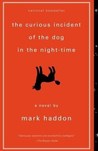
Review: The Curious Incident of the Dog in the Night-Time

The Curious Incident of the Dog in the Night-TimeThe Curious Incident of the Dog in the Night-Time by Mark Haddon

My rating: 4 of 5 stars

A lot of the time when we talk about writing, we say it’s because we “want to get into someone else’s head.”

But that’s not true, is it? A lot of the time, we want to be ourselves, but in someone else’s life. You want to stop being a truck driver who takes the same route to work every day, day after day, and be a prince fighting faeries instead; you want to not be a frazzled mother of three young kids and instead be a footloose woman who can pick up and find herself in countries totally different from your real world; you want to not be a lost teenager in a scary world with things out of your control, because you’d rather be a boy wizard who has amazing friends and literally saves the world.

The Curious Incident of the Dog in the Night-Time is a rare book that literally puts you inside someone else’s mind. And it’s incredibly disorienting at first, but all the more powerful for this transformation.

The Curious Incident of the Dog in the Night-Time is a story about a deeply autistic boy, Christopher, who discovers his neighbor’s dog is dead and decides to be a detective like the Sherlock Holmes stories he likes to read, and he writes down everything that happens in a book he began making as a class assignment.

Because he is autistic (and because author Mark Haddon is very good at what he does and has worked with special needs kids), Christopher’s writings are not like anything else. There’s very little emotion, not much introspection. There are math problems. Chapters are numbered with sequential prime numbers. There are very precise drawings of the patterns of the fabric of a new chair.

The presumably non-autistic reader is left to fill in a lot of the gaps in the story, because while Christopher is perhaps the most literal narrator in some senses (describing even the number of holes in someone’s shoe, and the exact color of the beans on the plate), his perceptual lapses means he truly can’t understand some things. But the reader can, making this book a lot more interactive between the character and the reader than most.

It’s hard to relate directly to Christopher, and that’s what makes this book so compelling. You see through his eyes and are frustrated that he misinterprets information that seems so obvious. The people all around him–even his pet rat sometimes!–are more like the reader than Christopher, and you feel their frustration with dealing with Christopher’s many needs, with his seeming dichotomy between a kid who is stunning at some things and completely empty in others.

It’s a lesson in empathy, if nothing else.

This book isn’t an easy read, and it’s not a happy read, either, and I’m mystified by the quotes on the cover exclaiming the “bleak humor” within, because I found nothing funny–just sad. Because as more children are diagnosed with autism and society finds ways to cope, much of what happens in the book is barely fiction for many parents and teachers and caregivers. I can’t imagine the pain it must cause those real parents who have to find strategies to manage real Christophers.

The Curious Incident of the Dog in the Night-Time is a fantastically written book, but be prepared for something a bit more weighty than your average fare.

View all my reviews

4 Comments

Filed under Reviews

Review: All There Is; Love Stories from StoryCorps

All There Is: Love Stories from StoryCorpsAll There Is: Love Stories from StoryCorps by Dave Isay

My rating: 5 of 5 stars

I am not a crier by nature. The Notebook didn’t make me cry; though I do always get a lip quiver when I watch Moulin Rouge, I don’t cry; and I don’t typically read a book or watch a movie with the intent that it’ll evoke some strong emotion.

So when I say that I have found the book I’ll keep handy in the event I’ll ever join a soap opera and need to sob on demand, know that means something.

All There Is: Love Stories from StoryCorps can make me cry in two pages. Not gentle tears, but complete face-twisting uninhibited emotion. And you should absolutely read it.

All There Is is a compilation of true stories collected by StoryCorps as part of their mission to collect stories of people’s lives. These will be given to the storyteller as a family keepsake and another copy goes to the Library of Congress, to pass on to future Americans. It’s a simple mission, but incredibly powerful. If you’ve never heard StoryCorps on the radio, go watch this animated version. It’s one of the stories in the book, but it’s a little different to see it. Go watch right now.

I don’t think this book is necessarily supposed to be sad. The first section is all about finding love, and the stories are all happy endings, and you can practically hear the giggles in the narrators’ voices as they describe their first dates with the people they spend their whole lives with. It’s charming and so authentic, though, it strikes a chord on your heartstrings like nothing else. It makes you believe in true love.

The second segment is about love lost, and that one packs a definite wallop. In fact, my fiance took the book away from me, because by the third story in, I was clutching him and crying uncontrollably. So, to be completely honest, I haven’t read the whole book–yet. I’m going to need to space it out, because this book is so moving it needs to be taken in small doses.

The final section is on love found again. If it’s anything like the first two, I’ll need the tissues handy.

This is no Chicken Soup for the Soul. No, All There Is is your favorite Chicken Soup story turned to 1000. It’s so raw and heartfelt and emotional, so matter-of-fact, so inherently inspirational and compelling, that I promise it will be like nothing else you’ve ever read.

Even if you’re not a crier and can’t bring yourself to read something that’s going to clear out your tear ducts, I recommend you buy this book, to support StoryCorps in their mission. Or donate to their cause.

It’s money well spent.

View all my reviews

Leave a comment

Filed under Reviews

Review: The Black Unicorn

The Black Unicorn (Magic Kingdom of Landover, #2)The Black Unicorn by Terry Brooks

My rating: 2 of 5 stars

Used book stores are amazing places, but they can lead to book-mania.
I blame the irrationality of book-mania for this book. It was in the clearance section (of Half Price Books! Even more cheap!), and I hadn’t read anything pure fantasy in awhile, and honestly it has a picture of a unicorn on the cover, so yeah, I bought it.
I realized about a third of the way through that I’d made a mistake, but I kept going–surely it will get better any time now.
It didn’t.
First, this is a sequel, but I’ve not read the first book in the series (oops), because I didn’t realize it was a No. 2 until after it was too late. So I didn’t know what was going on at first. Things eventually were kind of revealed, but…this plot needs work. Terry Brooks was clearly going for some kind of “know thyself” message, but it was really muddled. This was one of the rare books that I honestly thought would have been better if the main character had switched with the secondary character: that is, rather than mostly following lead character Ben Holiday, I kept wishing I could drag the perspective away and see what Willow, the tree-girl/sylph, was up to. Because while Ben spends the majority of the book totally lost and aimless, Willow has purpose. She may not know WHY she’s doing something, but she knows she should (oh the “my fairy magic told me so” excuse).
It was particularly upsetting when the BIG REVEAL made it up to Ben to suddenly know everything, when the reader knows Ben is completely clueless. It was like Spicoli from Fast Times at Ridgemont High suddenly became Sherlock Holmes. There was just NO WAY.
Also, it’s probably a bad idea to have one of your characters declare he’s not a deux ex machina. Odds are if he says he isn’t, the magical mysterious cat-like-fairy-creature doth protest too much.
Anyway, I’m relieved to be moving on from this one.

View all my reviews

2 Comments

Filed under Reviews

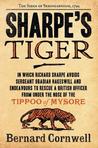
Review: Sharpe’s Tiger

Sharpe's Tiger (Sharpe, #1)Sharpe’s Tiger by Bernard Cornwell

My rating: 2 of 5 stars

This was not the right book for me. I read it out of family loyalty, honestly. It wasn’t poorly written–in fact, it’s a great example of really detailed historical fiction, and that’s impressive–but I just did not care. I tried, I really did, but this book was a very strong “meh” for me.

Private Richard “Dick” Sharpe is in the British army in 1799, fighting a war he doesn’t really understand or have any genuine interest in at all. In fact, he’s considering deserting, because the army is “boring.”
It quickly becomes less boring as he’s set up for assaulting an officer (who really really deserved that punch) and nearly dies thanks to the British “correctional” plan of flogging a man for any crime under the sun. But Sharpe is snatched from the jaws of horrible death by happenstance and a problem that needs a regular man with a bit of wit about him–sneaking in to the enemy Indian city to rescue, or at least take a message from, the captured officer inside.
I won’t give much more away, but of course Sharpe becomes the day’s hero and all is concluded with everyone but the enemy better off than he was before.
You’ll need an interest in military maneuvers for this book to work for you. I thought it was enough to like history, but no, this is a military history book above all else. It comes close to giving Sharpe the daring-do of Clive Cussler’s Dirk Pitt, but falls short, and though he’s clever, Sharpe is also common, so he’s no James Bond either. It’s refreshing, in a way, that the hero is far more average than most action books, but…for me, that also left him rather boring. He doesn’t so much as act as react to his surroundings, and though he does it remarkably well, I struggled to stay interested in this one.

Do give it a shot if you like reading detailed explanations of old fights, though.

View all my reviews

Leave a comment

Filed under Reviews

Review: The Disappearing Spoon

The Disappearing Spoon: And Other True Tales of Madness, Love, and the History of the World from the Periodic Table of the ElementsThe Disappearing Spoon: And Other True Tales of Madness, Love, and the History of the World from the Periodic Table of the Elements by Sam Kean

My rating: 4 of 5 stars

The Disappearing Spoon is a history of the periodic table of elements.

Some of you are going “ohhh goody!” and immediately adding it to your reading lists. (Let’s be friends!)

For everyone else, who perhaps needs a little convincing, let me tell you that you should most definitely read this book if any of the below apply:
* You work in some kind (any kind, really) of scientific research field
* You enjoy nonfiction history books
* Bill Nye the Science Guy is your hero
* You really enjoy being able to dish out random facts at parties
* You like science in a vague way but didn’t like all that memorization or math stuff

The Disappearing Spoon is a feat like no other. Sam Kean needs an award for his incredible dissolution of complex scientific ideas into information the smart but non-sciencey reader can absorb–things like packing oranges in crates as an analogy for the atomic structure of tin in its alpha and beta forms. It’s complex stuff, but he kept it both scientifically accurate AND interesting. I’ve known a number of researchers… lemme tell you, that is a feat.

And Kean really did his homework. In fact, you’re going to need two bookmarks to read this one. I struggled for about half of it before getting a second one; it makes a difference. You see, this book is heavily footnoted, and you really don’t want to miss out on the extra information. Sometimes it’s just a citation, but for the most part, it’s extra information that will make you say “WOW.” So get yourself a second bookmark to hold your place in the back, too.

Kean covers every element in the table (and yes, there’s a lot) so this book, while completely fascinating, is a bit of a slog at times. It’s challenging to maintain that thread, so for the busy reader, I’d recommend making this your before-bed book (or, more scandalously, your bathroom-time book), because you’re going to put it down a lot anyway. But you do want to complete it.

You’ll learn jaw-dropping facts like:
-the disappearing spoon is a real thing
-One Nobel Prize winner was referred to as “S.D. Mother” in the newspaper when she won
-Marie Curie was better known in her day for her impropriety and turbulent personal life than for her science
-some people drink silver as a health aid…with disastrous bright-blue results
-we really are all made of the same stuff as stars
-how, exactly, some of the deadly elements kill you
-one vest was worn by three Nobel Prize winners over the years
-the first “computers” were the women who worked on the Manhattan Project, running computations long-hand
-there are people who are absolutely obsessive about kilograms

You’ll get more science in this one book than you got in a year of high school education, but it will be freshly delivered on a gleaming plate of intrigue, personalities, and incredulity. It’s well worth your time to learn more than you ever thought possible.

View all my reviews

Leave a comment

Filed under Reviews, Science

Review: “The Ocean at the End of the Lane”

The Ocean at the End of the LaneThe Ocean at the End of the Lane by Neil Gaiman

My rating: 4 of 5 stars

It’s hard to describe The Ocean at the End of the Lane without revealing spoilers. Let’s start with this: This book is unlike any other I’ve ever read. It feels somewhat like a Grimm fairy tale, and any moral is similarly absent, or at least unobtrusive. Others have described it as having a 7-year-old narrator, but that’s only partially true. It’s a challenging, contemplative, but relatively quick read.

While at his book reading/signing, Gaiman noted with approval that one reviewer had called this a “book for readers,” meaning there is no real age distinction. I’m going to have to forcefully disagree. While most of this book is fairly all-ages, the horror-tinged parts are deeply scary. I wouldn’t give it to any child under 13, and then only if they were okay with being frightened. Unlike other horrors based in fantasy that can maybe be shrugged off, this one challenges the very core of a child’s (or adult’s!) feelings of safety and security. Proceed with caution.

A summary, trying to avoid any important spoilery bits: A man goes back to his childhood home, finding it much different. But the house down the lane looks shockingly similar to his memory of it. He feels compelled to go there, and sits and stares into the pond. From this vantage point, he remembers. He remembers the frights and thrills of his seventh year of life, and the monster he accidentally awoke, and the trials he and the girl from down the lane went through to try to overcome it.

I don’t think this book is for everyone. I really deeply enjoy Gaiman, and I still didn’t always enjoy this one in bits (I should have been prepared for the level of horror, perhaps, because of Sandman, but it took me by surprised anyway). It’s obviously deeply personal, drawing from elements of Gaiman’s real childhood and real life in ways his prior books. It feels as if we’ve unlocked some secret door in Gaiman’s mind, a parallel universe door in which this story is actually truth. The descriptions are vibrant and rich, and I very much wish I could go enjoy a meal with the Hempstock matriarchs.

Though this book debuted this summer, this feels more like a book for a dark and moody winter, when you’ve long forgotten the warmth of the sun.

View all my reviews

2 Comments

Filed under Reviews