Category Archives: Reviews

Review: Stone Mattress

Stone Mattress: Nine TalesStone Mattress: Nine Tales by Margaret Atwood

My rating: 3 of 5 stars

Margaret Atwood’s collection of nine short stories retains her incredible ability with the written language. The writing cannot be faulted, but the collection is awash in quiet tragedy. Furthermore, when the first several stories are not stand-alone but overlapping narratives, but all the following are utterly separate the book feels… well, like half a book pasted together with a bunch of random stories.

I hesitate to say I didn’t like Stone Mattress–with such memorable and haunting prose, how couldn’t I?–but this maybe wasn’t the right time for me to read a book so sad.

Whether intentional or not, all the stories in this collection are threaded through with the slow tragedies and indignities of old age. And there are many: lost memories, lost sex drives, lost eyesight, lost independence, lost purpose, lost spouses… The losses weigh heavily.

Even the stories supposedly not at all about old age, such as “Lucus Naturae,” could be read as being about old age and its unstoppable reach, as insidious as fear of the different and the strange. And just as final in the end.

As I said, it’s not a bad time for me to read about old people being attacked by the young, their homes burned to make room for the younger, bitter generation. It’s not a good time to read about an old writer who has become unhinged from reality, choosing instead of let herself be dissolved into the fantasy land she spent her life creating. But then, is there ever a good time?

My grandfather passed away suddenly recently, and I finally got to visit my other grandfather, who is suffering from the effects of Alzheimer’s disease and could not remember who I am or why I was there. Between these two experiences, Stone Mattress is a very raw and close collection for me. It’s too much like the real tragedies I noticed in both situations.

There aren’t many books that tackle the hoary edges of time. We often assume, as a culture, that old age is the end of the line, that all stories must be told past-tense. For that reason, that bravery, Stone Mattress is a welcome treatise…even if I’m not ready to think on its meanings and significance. When you’re in a suitably contemplative mood, muster your strength and try this collection.

View all my reviews

Leave a comment

Filed under Reading, Reviews

Review: Kushiel’s Dart

Kushiel's Dart (Phèdre's Trilogy, #1)Kushiel’s Dart by Jacqueline Carey

My rating: 4 of 5 stars

Kushiel’s Dart is the most engaging and detailed fantasy world I’ve encountered in years. It’s brilliantly plotted, highly original, well-paced, and shows both immense and believable character change over time. It’s a great book.

But I won’t be reading any more of the series, and it’s not a book I could recommend to most readers.

As good as it is, the subject matter made the book a little hard for me to read, and I imagine a lot of readers would be similarly uncomfortable. You see, the lead character is an anguisette: she feels pain as pleasure, leading her to become groomed as a courtesan-spy specializing in those who like to inflict pain.

Which can lead to some fairly uncomfortable descriptions.

To be fair, Jacqueline Cary doesn’t get obscene in her descriptions at all. They are artful in revealing just enough to paint a picture in your mind’s eye, guiding the direction but not actually getting too explicit. But it’s enough to make me uncomfortable reading those scenes (and there are many). That being said, I think many Fifty Shades of Grey detractors would LOVE this book, because it does a lot of what “Fifty Shades” failed to do: a) stress the importance and sanctity of the safety signal, b) clarify that even if it looks like it is abuse, the protagonist is enjoying herself intensely, c) shows concern from partners when something seems to go wrong, and d) demonstrates a clearly defined relationship (there’s even a literal contract!). If that weren’t enough, the “rules” of the submission are made clear when another character attempts to violate the protagonist; it’s a clearly horrible thing, outside of her normal business.

All that really endeared the book to me. As did the rich character background of the the narrator, Phredre. She is selected for her destiny when barely a child, and the reader follows her as she grows, develops, and discovers that she has been chosen by the angel Kushiel to be his Dart, a one-in-a-million creature who fully experiences pain as pleasure. She learns her way as a servant, then as courtesan, then begins her service. On the surface, she is merely pleasing her clients for money; more deeply, though, she is using them–and being used–to discover secrets, part of a plot she doesn’t fully understand until her whole world is shattered suddenly, forcing her on her own to seek vengeance.

It’s powerful, and Carey masterfully transforms Phredre and truly demonstrates how “all those who yield are not weak.” It’s brilliantly done.

The world itself is even more complex. Based on a near-earth world, the land of Terre d’Ange exists near versions of England, Ireland, Greece, and Russia. The real brilliance here is Carey draws from the real-life mythologies and tropes of these lands as she forms the distinctive cultures for each area. This helps make them seem realistic, and yet they remain laced with the fantastical. The reader with an appreciation for history and mythology will find shadows of the real-life counterparts in each region within the novel. And yet the mythologies and culture of Terre d’Ange is like none other.

Were it not for my own personal discomfort with the dominance-submissive theme, I would rate this book 5 stars. It’s fantastic. But it’s not for all readers–including me. As such, I look forward to reading some other series Carey may produce.

View all my reviews

Leave a comment

Filed under Reviews

Review: Medusa’s Gaze and Vampire’s Bite

Medusa's Gaze and Vampire's Bite: The Science of MonstersMedusa’s Gaze and Vampire’s Bite: The Science of Monsters by Matt Kaplan

My rating: 2 of 5 stars

I had really looked forward to this book. Mythical monsters plus informative history, what’s not to love? I bought it for my husband as a gift and was delighted when I found it idling on his nightstand. But now I see why. It’s interesting in places, sure (hey, wanna read some kooky accounts about real zombies? I know I do!) but it’s a struggle to hold your interest. The story is artificially paced (why start an explanation with the wrong answer only to correct it a page later?), leans heavily on modern movies, and cherry picks when it will refer to social sciences.

If you love mythical beasts and know much about Greco-Roman literature, you’re going to come away from this book bored and/or annoyed.

The problem seems to stem from author Matt Kaplan’s unyielding insistence on two things: 1) all mythical beasts must be directly related to something observed in the natural world, and 2) once science has a logical explanation for something, it ceases to be frightening. I disagree with him on both counts.

While I agree that the original storytellers probably did see something that sparked a story in their minds, I disagree that there has to be some kind of one-to-one relationship. For example, Kaplan explains in length that massive boar mentioned in Greek mythology probably never existed, that there is no evidence of an actual super-boar who was impervious to weapons. I believe I speak for all the readers when I say: “no shit.” But why would there even have to be? Is it such a stretch to believe and accept that a creative thinker might have concocted the story entirely?

The boar and the Nemean lion, are, of course, just the most basic examples. I don’t need to believe anything remotely chimeric actually existed for me to believe that a storyteller could come up with the idea. Why the concept that a person found a pile of mismatched fossils in a stream bed and came to believe it was a terrible monster, is it not just as plausible that a storyteller looked around and invented the creature from the characteristics of other natural beasts? That perhaps this explanation came not from literal physical creatures but from symbolism? (Medusa is a great example as a symbol: a woman so beautiful she attracts a god’s unwanted assault is reborn–hence snakes–into a monster who drives all men away and can destroy them with but a look. We don’t need actual snake-haired people!)

I guess I’m offended that Kaplan has left so little room for human ingenuity. Particularly when there is so much evidence of it all around.

My second issue is that he believes people aren’t afraid of monsters that no longer seem realistic thanks to scientific discoveries. Perhaps they aren’t as prominent as monsters as we discover new things to be afraid of, but that discounts the many people who ARE afraid of those things and context. What do I mean by context? I mean, yes, if you ask me in the middle of the day what I’m afraid of, a big scary animal is not going to be the top of my list. But you bet when I’m in the dark in the woods I suddenly begin imagining I’m being stalked by a huge and terrifying predator (despite knowing full-well in my human brain how unlikely it is that a tiger is stalking me in the parking lot). Most irksome is that Kaplan’s evidence for the lack of fear-factor is overwhelmingly modern TV and movies. … Except he’s not watching the same stuff I am, apparently. I mean, Supernatural has many frightening episodes and chilling stories, for example, and I know it’s fiction. Just because Twilight told a different, non-scary story about vampires does not mean that the vampires in True Blood aren’t decidedly scary (ok, in moments. That show is all over the place). And Interview with a Vampire, which he cites in the book, was quite scary to me!

So I don’t know. I think this book might be a good lazy read for a TV and movie buff who has a light interest in Classics, or maybe for the Classics nerd who wants something different. But I don’t recommend seeking a deep understanding or passion from this monster montage.

View all my reviews


Undead Rising coverWant better monsters? Go buy Undead Rising: Decide Your Destiny, available in print and on Kindle. Your choices shape the story! When you die in the book, sometimes you rise again as a zombie, unlocking new adventures.

Leave a comment

Filed under Reading, Reviews

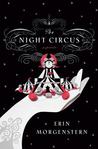
Review: The Night Circus

The Night CircusThe Night Circus by Erin Morgenstern

My rating: 3 of 5 stars

“Dreamlike” is the best adjective for this book about magic, secrets, and the wonders of the circus. Though the circus is rendered exclusively in black and white and shades of grey, The Night Circus bursts with color. The descriptions are truly the best part, capturing the allure of the circus, the vividness of life, and the way our struggles can make us feel. It’s a scrumptious read particularly suited to a cold winter’s night and a warm fire.

Erin Morgenstern’s tale follows two ancient, rival magicians who sign up two children for a life-long “game.” Without even explaining the “rules” of this game, or the point, or the stakes, the two children–Celia and Marco–learn magic. When they come of age, the arena for the game is set: a circus like no other. This circus, Le Cirque des Rêves (Circus of Dreams) operates only at night, is exclusively decorated in black, white, and greys, and features performances beyond Barnum & Bailey and the restrictions of reality. It is also a platform for the contest of wills between Celia and Marco.

But the original magicians don’t realize that their competitors are actually more similar than different, and what is intended as a fight turns into an all-consuming love, a love that imperils everyone who becomes ensnared in the circus.

The descriptions of late 1880-early 1900 America and Europe, the possibilities created by a circus without limits, the lush designs and ideas: these I love. I hope The Night Circus is someday made into a film, but the only suitable directors would be a) Terry Gilliam, b) Baz Luhrman, or c) Tim Burton, in that order. Those are the only directors I can see capturing the visual scope and detail Morgenstern puts out, so head’s up, guys.

However, I struggled with the plot. The first third of the novel just didn’t capture me, and with even the character’s names not being determined until later in the book–and not knowing what the game is or what the stakes may be–it was hard to “root” for anyone. The story moves forwards and backwards and sideways in time, making it a little confusing to follow. So it takes awhile for The Night Circus to work its magic on you–but magical it is.

View all my reviews

Leave a comment

Filed under Reading, Reviews

Review: Juliet, Naked

Juliet, NakedJuliet, Naked by Nick Hornby

My rating: 4 of 5 stars

Sometimes I get disillusioned with the world and it starts to feel like the only way I’ll find that spark of beauty is with fantasy, by somehow altering reality, because I just can’t handle the mediocrity of it all.

When I feel like that, I ought to read something by Nick Hornby. He’s a master at looking at the same drab, dreary everyday world and turning up a gem.

Juliet, Naked chronicles what it means to be a fan of a piece of art–music, in particular–and how our perceptions of art can vary from person to person (even from creator to devotee) and what that can mean.

The story focuses on the work of imaginary temporarily famous ’80s rocker Tucker Crowe, who produced at least one album that seized the world with its intensity and then mysteriously stopped performing. The sudden absence of the artist–and the more than two decades with no news at all–leaves super-fans like the British low-tier professor Duncan grasping at rumors and imagination.

Duncan is the literal leader of an online Tucker Crowe fanclub, endlessly obsessed with and analyzing the old albums. His long-time girlfriend, Annie, just accepts that as part of her life–drab, dreary, not worth mentioning.

Until a “raw” version of Tucker Crowe’s hit album is released, sending Duncan into a premature delirium of excitement and Annie into her first real venture into Duncan’s online fandom. The album–and the feelings and thoughts and contemplation it triggers–sets off an unexpected chain of events and totally changes the world for Duncan, Annie, and even Tucker Crowe.

It’s a really great modern book. And when I say modern, I mean it: it’s still strange and wonderful when a book mentions everyday things like cell phones and, heck, the internet! And Hornby did a great job capturing the intensity of a super-fan and balancing that with the reactions of “everyday” fans. It made me think about my appreciation of music and art in general, and what it means to be a creator.

Juliet, Naked is both a thoughtful contemplation of the way music appreciation affects us as well as a deliciously jolly and realistic look at what makes life worth living.

View all my reviews

Leave a comment

Filed under Reading, Reviews

Review: And Then There Were None

And Then There Were NoneAnd Then There Were None by Agatha Christie

My rating: 3 of 5 stars

And Then There Were None is an old-school murder mystery novel in the truest sense: it was originally published in 1939, and, of course, is written by mystery great Agatha Christie.

It’s interesting to see how some writing tropes have changed in 75 years: things like dialogue placement and word tense are pretty different. In fact, I doubt a modern publisher would give “And Then There Were None” a close look because of those differences, despite the interesting story.

The set-up is this: 10 strangers are called to a mansion in an isolated island, whereupon a gramophone announces that each is accused of murder in some way. And then, one by one, the visitors are killed off, while the survivors scramble to figure out who could have done it, why, and who is next.

In that, it feels a lot like Clue: The Movie; there’s a lot of scrambling about from room to room, trying to guess at straws. Much like Clue, it also features all manners of death, so you never know what will come next. I actually looked to see if Clue was inspired by this book–it looks like no, but there are strong similarities.

However, when you reach the end, we lose the similarities.

(Spoilers to follow)

Because this book does not conform to the mystery structure we’ve all come to know: no one figures it out and saves the day. In fact, the police arrive a full 24 hours after the last victim has died, and leave without having figured it out. It isn’t until the epilogue that anything is explained, and–well, honestly, I think Christie may have cheated the reader some. I don’t think the result is truly “guessable”; it’s a rigged game.

That unsatisfactory ending was a disappointment to me, but it is a good lesson that sometimes the old standby structure is there for a reason. And, of course, it’s not wrong to mess with it. Just not something that appealed to me in this case.

View all my reviews

Leave a comment

Filed under Reading, Reviews

Review: The Golden City

The Golden City (The Golden City, #1)The Golden City by J. Kathleen Cheney

My rating: 4 of 5 stars

In a genre awash with elves, dwarves, and wizards, The Golden City is a splash of interest. There may be those sorts in the wider world, but The Golden City features the little-seen sereia (mermaids) and selkies, seals that can shed their skins to become human.

While still traditional magical creatures, these are wonderful bright spots in an overcrowded genre. I just loved getting to know the inner workings of mermaids and selkies. Sereia have a complicated social structure but are at nature similar to aristocratic humans. Selkies are a whiff of human with a great deal more seal; they’re a little simple, and lusty.

The story doubles its benefits by setting the story not in the traditional vaguely-British countryside, but rather in historical Portugal. This opens up whole new realms: the clothes they wear, the languages used, the traditions they keep, their religion and culture. It’s fantastic.

In The Golden City, Cheney has crafted a light and delicate story, part mystery, part spy tale, and the lightest touch of romance.

Oriana Peredes is a sereia–mermaid–who is a spy among the humans in the Golden City. She works as a companion for the Paris Hilton of the aristocracy–perhaps sweet, but empty-headed, and wanted by several suitors. The pair are on their way to a secret rendezvous with her mistress’s suitor when they are abducted. When her mistress is murdered right in front of her with elements of mysterious magic at work, Oriana puts aside her mission as a spy in order to find vengeance for her friend.

As she works to discover who tried to kill her, Oriana meets Duilio Ferreira, a police consultant and member of the nouveau riche. Oh, and he’s half-selkie.

Together they work to solve the case and protect the innocents of the city, and feel out the first touches of romance as they try to solve the riddle of destiny and whether it is even possible for a sereia and selkie to find love.

(HOWEVER, if you’re interested in paranormal romance, look elsewhere. This is a Victorian romance… in short, there is barely any more than a sideways glance and a flutter of the heart. It’s a nice change of pace, but I admit it was a tad unsatisfying.)

I picked this book up on a whim, and I am so glad I did! I can’t wait to read the next and learn more about these fascinating sea fantasies.

View all my reviews

Leave a comment

Filed under Reviews

Review: Gone Girl

Gone GirlGone Girl by Gillian Flynn

My rating: 5 of 5 stars

“Gone Girl” is without a doubt the best, most original book I’ve read all year. Maybe in the past few years. It’s outstanding, and if you even remotely like crime novels or TV shows, you need to read this book.

I know, it’s super-hyped and sometimes you may not want to read a book because it can’t possibly be that good and books sometimes get popular because of some unquantifiable zeitgeist. Worry not: “Gone Girl” is just genuinely good and surprising.

It’s the kind of book that makes you say, “OMIGOD, you HAVE to read this book!” because you desperately want someone to talk to about it.

It’s a book that says, “Oh, you think you’ve seen this on “Law & Order” that one time? You think you know what’s coming? WHAM! YOU KNOW NOTHING!”

It’s the kind of book that made me wonder, initially, if my newly acquired husband could ever turn out to be a murderer. And then it made me wonder if maybe I had it in me to be a murderer.

“Gone Girl” really takes the crime novel standards and turns them on their ear. It’s revolutionary in a lot of ways. I mean, how often are you allowed to view the story from the perspective of suspect #1–and yet don’t know if he did it or not?

The set-up is that it is Nick and Amy’s fifth wedding anniversary, and their marriage has started to unravel. Nothing major, just bits here and there; it’s not what it was. And then Amy goes missing. As is so common in crime shows and books and in real life, suspicion automatically falls on Nick.

I won’t reveal more than that, because as much as I want to talk about this book, the surprises are worth keeping secret for other readers–they’ll hit you like a club to the head.

The story is incredible for the writing alone (excluding the truly brilliant plot for a moment). It’s told from both Nick’s perspective–he talks to you as if you’re perhaps his little mental Jiminy Cricket, or an audio diary–and from excerpts from Amy’s diary, which retells parts of their lives, leading up to the cataclysm, from their first meeting all the way up to the collapse of their marriage. The tone is spot-on: it sounds just like normal people. I’ve never seen real-life captured so thoroughly on the page, so intimately intertwining the reader and the author’s voice. Gillian Flynn is a helluva writer. Plus, I used to live in Missouri, where the book is set, and I am astounded by the little details only a Missourian would pick up on, little things like the blanket adoration for the Cardinals baseball team–things that make these people seem very much alive.

I guarantee, no matter how much a TruCrime connoisseur you think you are, you will be surprised, pleased, disturbed and amazed by this book. I absolutely cannot recommend it enough.

View all my reviews

3 Comments

Filed under Reading, Reviews

Review: Skeleton Crew

Skeleton CrewSkeleton Crew by Stephen King

My rating: 3 of 5 stars

For a collection of short stories, this book took me forever to read. It’s an interesting peek behind the curtain of the famous writer while also being chock-full of scary, interesting, and mysterious tales. It’s a lot of fun, but I wouldn’t recommend trying to read it on your relaxing vacation (see: took me 3.5 months to read it all).

If you’ve read King’s famous “On Writing,” you may find this book extra interesting. He can’t help but reveal himself in these short stories, and when they are all collected together, it’s easy to see commonalities. For one, I feel like I have a real roadmap to Bangor, Maine (King’s beloved hometown). The laundry where he worked before he found a teaching job (and then became a writer) makes several appearances, and country roads in the vicinity twist and tangle until some of the more unruly characters appear. I have to wonder if King’s drug addiction lies behind some of the more nauseating and skin-crawling horrors: the rat-person in “Mona” in particular, and certainly the methodology in “Survivor Type.”

It’s interesting to read “The Mist” and King’s thoughts on it in the decades before it became a movie (his son Joe Hill even being “cast” as the precocious little kid in the story). The story, which opens the book, is one of the best, but is not the most frightening, by far. “The Jaunt” is a cheerful attempt at science-fiction, with the ending practically obvious from the get-go. The final story, “The Reach,” wasn’t horror in the slightest; it’s more of a quiet contemplation.

I found it intriguing that the horror factor in several of the stories (“The Mist,” “The Raft,” “The Monkey,” “Morning Deliveries (Milkman #2)”) is never clearly defined, explained, or even resolved. Particularly in “The Mist” and “The Raft,” bad things just sort of happen, and there isn’t a lot anyone–reader, character, perhaps writer?–can do about it.

While I enjoyed reading these stories because it allowed me to study King while he was at work (or, as he says, “my muse shat on my head–this happened as it always does, suddenly, with no warning.”), it reads like the grab-bag off his desk: a little of this, a little of that, some worth more, some not worth writing on the back of a napkin. It’s a ragtag bunch of stories, and shows the breadth of King’s talent and interests, but may not be for every reader.

View all my reviews

3 Comments

Filed under Reviews, Short Stories

Review: The Lies of Locke Lamora

The Lies of Locke Lamora (Gentleman Bastard #1)The Lies of Locke Lamora by Scott Lynch

My rating: 3 of 5 stars

I’m not sure I’ve ever had such trouble rating a book with such excellent writing. The truth, though, is that, while it is exceedingly well-written, it’s convoluted and faces so many different plot options it is hard to stick with the story.

Let’s start with the good stuff: Lynch has wrought a fantasy-tinged world in greater detail and clarity than the real world. His Camorr has layer upon layer of complexity, beauty, grime, seediness, character, and mystery. Despite the ample attention to detail, I wanted more. I wanted to know about the incredible Elderglass towers and how they were created, and how humans came to occupy them. I wanted a calendar of all the holidays in the city and descriptions of each festivity. I wanted to peek inside the temples of each of the 13 gods. It is rich and detailed and effortless; characters curse and revel in this very real world without a hint that this is fiction.

I’m also quite pleased with the confidence schemes that Lynch has concocted. They are as much of a joy to the reader as the characters committing them upon unwitting folk. Locke Lamora sells his false-face activities well, and I hungered for more of the like. In fact, I wished the whole book were nothing but a testament to the way Locke got himself in and out of one scrape after another.

That’s also the problem: from the first 1/3-1/2 of the book, that was what I thought I was reading: a lighthearted and amusing tale of a con men pulling a con. And I liked that. It was great fun trying to guess how Locke was going to manage the next touch against his enemy, wondering how close he could get to being caught.

But then the book took a sudden and dark turn, literally out of nowhere. It felt like this was not really one book, but three, smooshed together. To the point that, as much as I liked the characters and the overall world, I’m not sure I want to read any more adventures. I felt like the book I started and the book I finished were not at all related; the plot got twisty, and not always in a good way.

Possible spoilers to follow. Read at your own risk.

In vague terms, here are the major plot intersections I can identify:

  • Locke, as a child, is taken up by the Thiefmaker.
  • Locke, as a child, finds a new home with Chains.
  • Locke and his gang, now grown, are pulling a big con on some wealthy folks.
  • It seems the secret police are onto the con… oh no! Oh wait, no, that’s just more of Locke’s cleverness at work.
  • While doing a typical errand, Locke is encumbered by a marriage engagement he can’t easily escape. What will ever become of him?
  • A bad guy, heretofore unknown to the story, kidnaps Locke and requires he perform an impossible task.
  • OUT OF FREAKING NOWHERE, the bad guy kills the girl Locke was supposed to be engaged to, less than two chapters after it was introduced, forcing his boss to require Locke to help him fight the bad guy.
  • Double-cross by the bad guy. Things are not going at all according to plan.
  • Everyone you love is murdered. Locke swears revenge.
  • More murder, almost excessive. Bad guy takes over.
  • Other villain only previously hinted at turns out to be real and hatches a plan to get Locke.
  • Locke overcomes multiple obstacles and difficult situations to win the day, much the worse for wear.


I gotta say, I felt like I couldn’t really enjoy the book after the marriage-proposal feint. I’m not even sure what point it served; it feels like that could be cut entirely from the book without a mark of incident. It just seems too convoluted, and it made it hard to know what I was supposed to be cheering for at any given moment. Plus, dark-revenge-tale is deeply different from the lighthearted caper we were enjoying at first.

My other beef is the situation with female characters. Though there are ample women used as setpieces and secondary characters, some even with some mild action, this book is a sausage-fest. There’s even plenty of opportunity for a female character: one is mentioned repeatedly but never shows up. You could change one (or more) of the characters in Locke’s gang into women without at all changing the story. A few women toward the very end of the book see some action, but it seems half-hearted. Though characters–even a whole chapter!–claimed that women were not to be trifled with, it seemed more sentiment than truth, and made me wonder if Lynch was somehow afraid to write women characters (which is foolish, because his background ladies were really interesting! Just…not a lot to them.)

I’m not sure I would recommend this book. It feels like those who would like a fantasy caper might not like the end (like me) and those who might like a gore-heavy revenge story might not get through the lighter beginning material to see the stuff they liked. But it is incredibly well-written and I’m impressed with Lynch as a whole. Perhaps I’d like one of his books that ran shorter than 720 pages.

View all my reviews

Leave a comment

Filed under Reviews